Asia
Cambodia
Khmer kingdom of the mythical Angkor temples (UNESCO 1992), the moving memory of the Khmer Rouge genocide, and paradise islands of the Gulf of Thailand — one of Southeast Asia's most complete destinations.
- Capital
- Phnom Penh
- Currency
- Riel cambodgien (KHR)
- Languages
- Khmer, Anglais (tourisme), Français (résiduel)
- Budget
- From €50/day/person
Cambodia at a glance
Cambodia is one of Southeast Asia's great historical and spiritual destinations. Wedged between Thailand to the west, Laos to the north, Vietnam to the east and the Gulf of Thailand to the south, this 17-million-strong kingdom concentrates on 181,000 km² a remarkable density of heritage: the colossal temples of Angkor (capital of the Khmer Empire from the 9th to 15th centuries), the still-vivid memory of the Khmer Rouge genocide (1975-1979, 1.7 million dead), the residual francophonie from the French protectorate (1863-1953), millennial rice-growing landscapes, and a subtle cuisine that lacks the international fame of Thai or Vietnamese but fully deserves the detour.
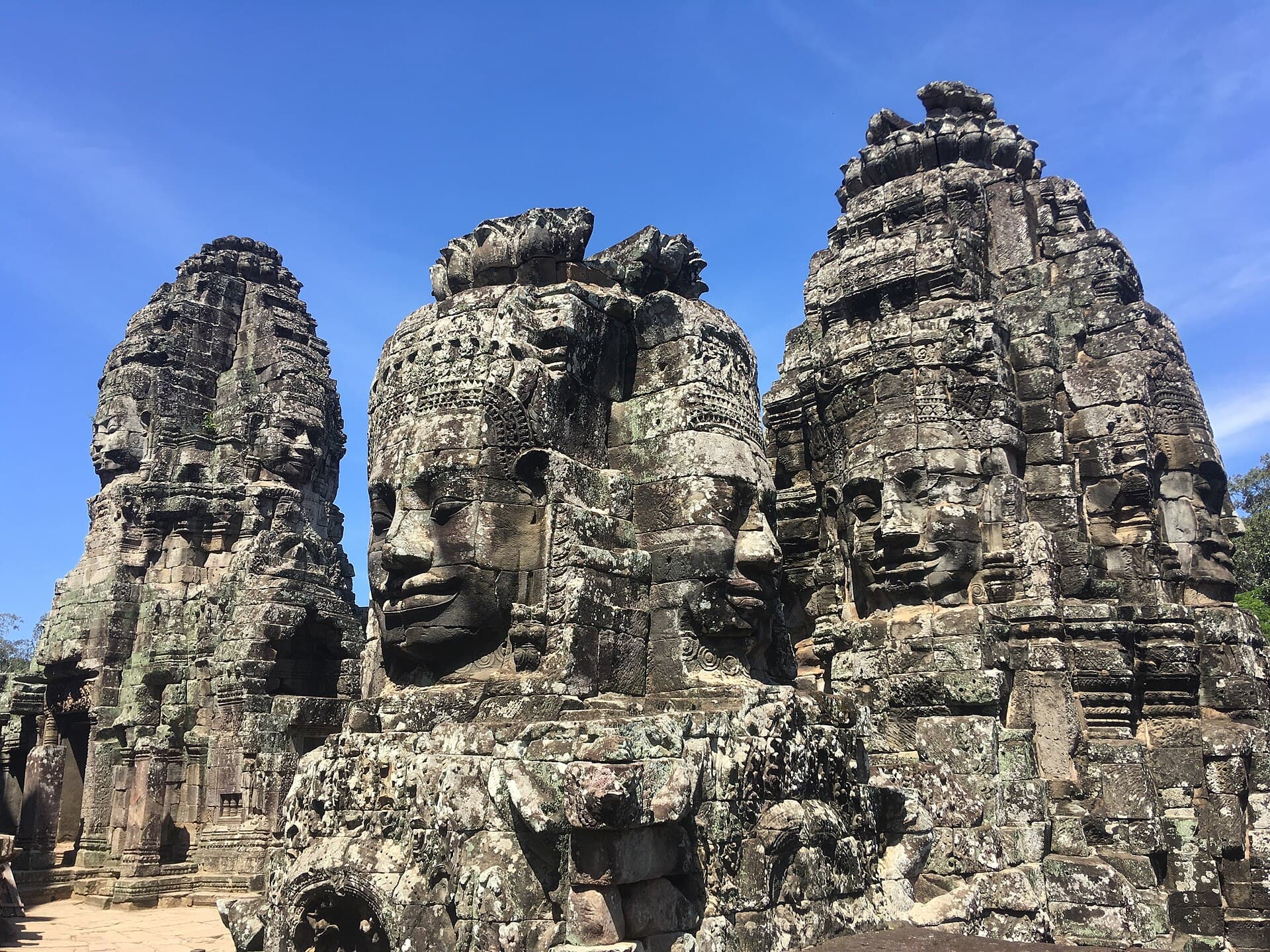
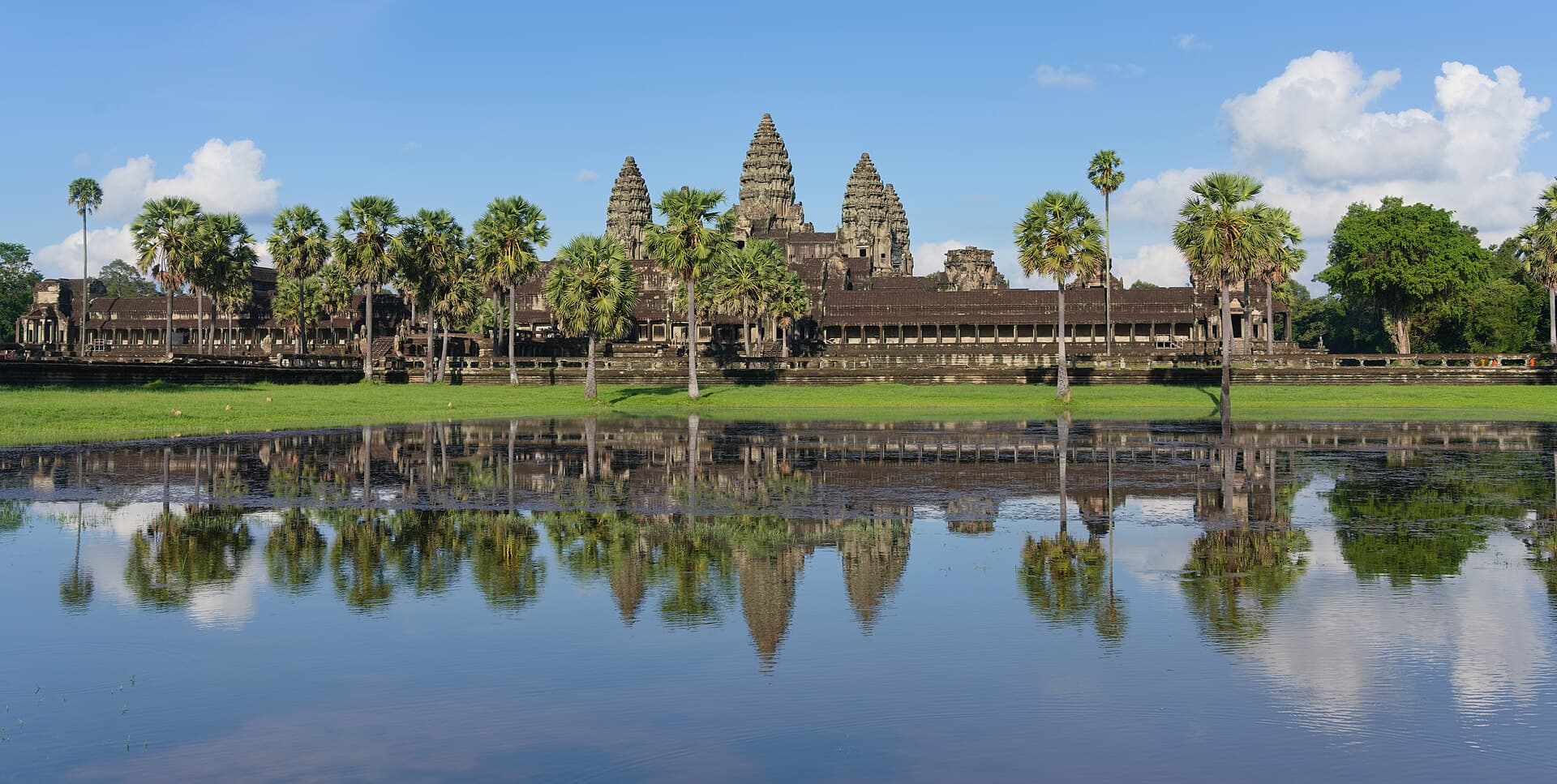
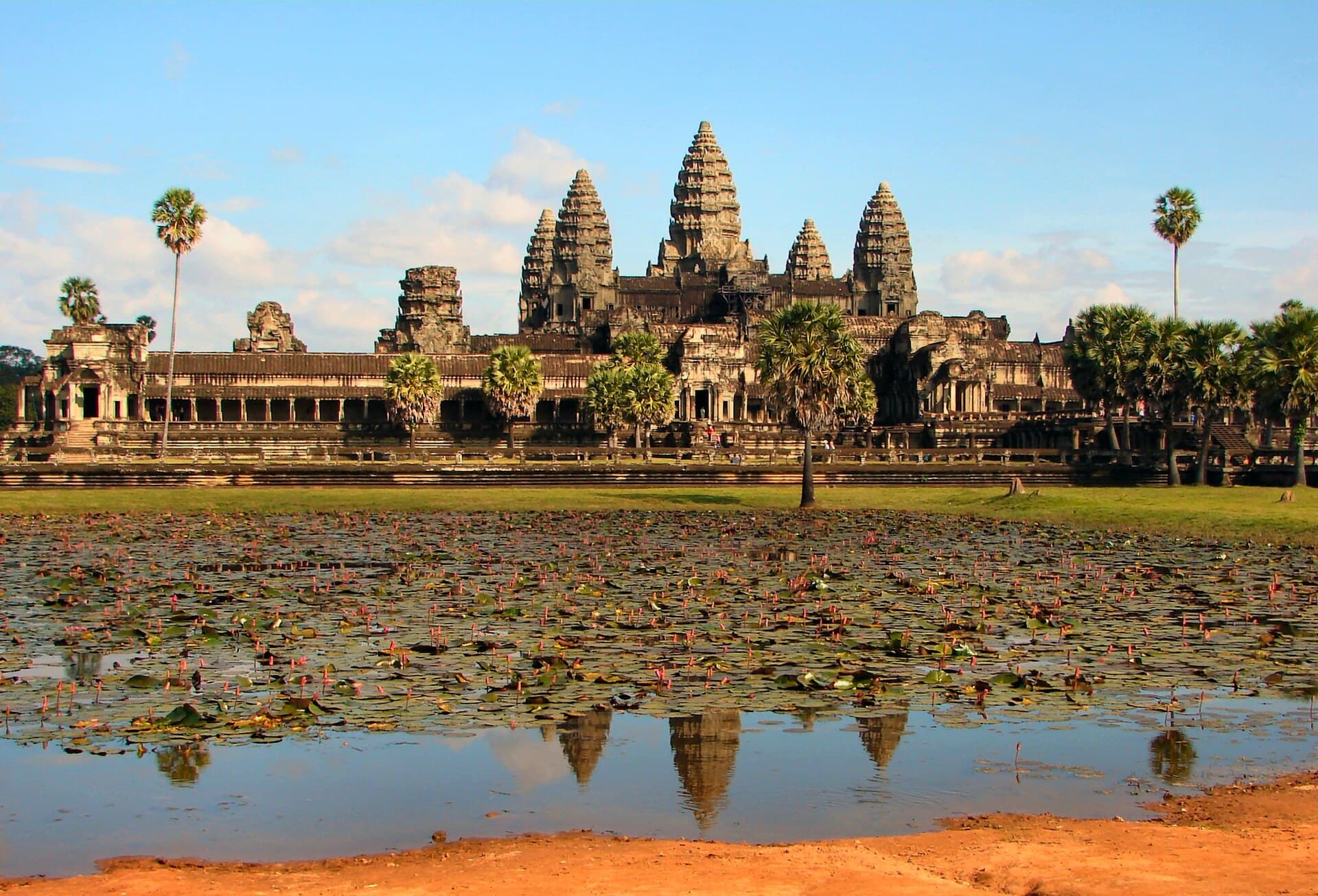
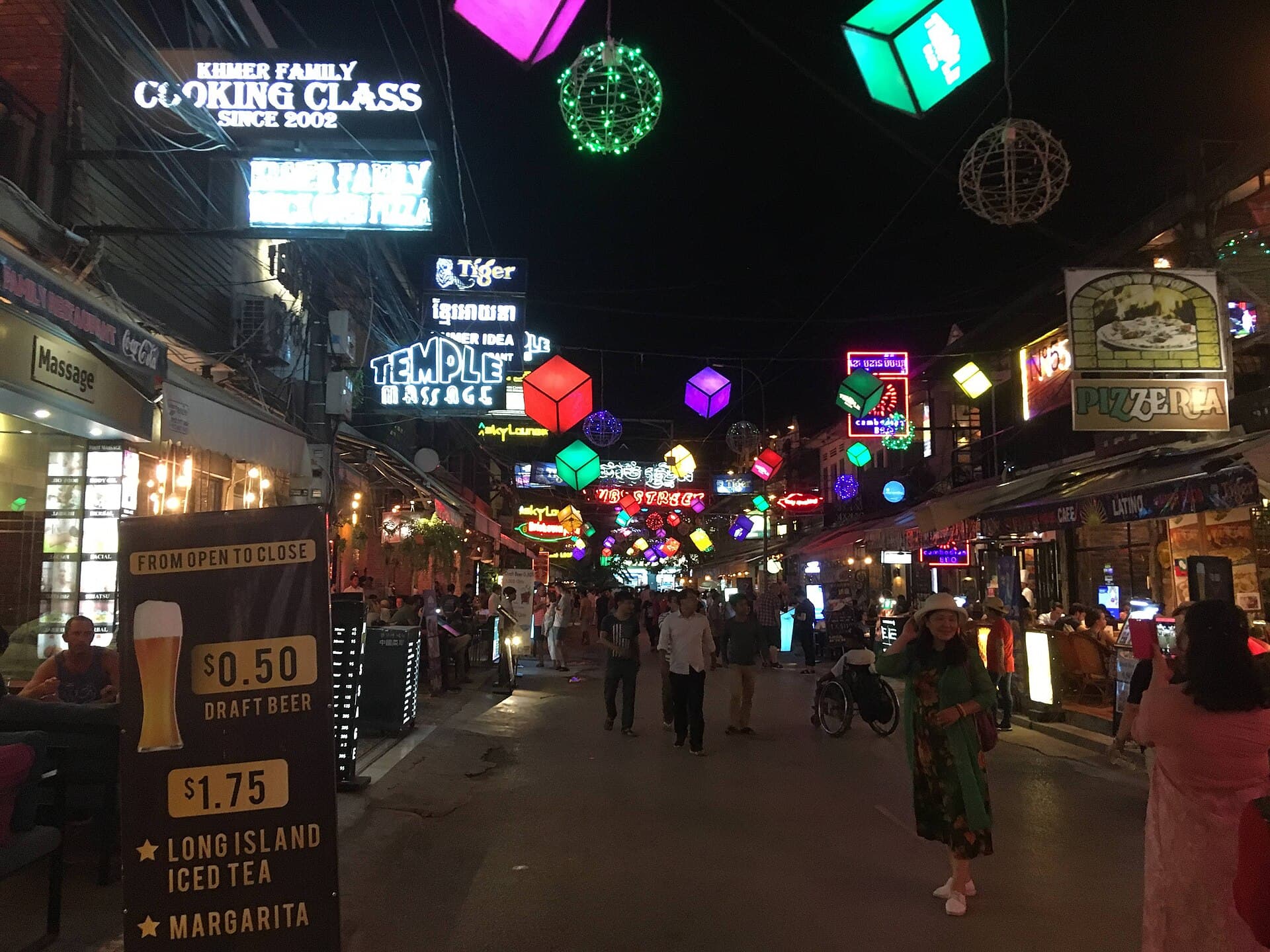
The headline draw remains Angkor Wat — the world's largest religious monument by area (162 hectares), built in the 12th century under Suryavarman II and UNESCO-listed in 1992. But the Angkor archaeological site covers 400 km² and counts more than a thousand temples, including the unmissable Bayon (enigmatic stone faces), Ta Prohm (overrun by roots, immortalised by Tomb Raider), Banteay Srei (Citadel of the Women, lace-like pink sandstone). Plan 3-4 days from the touristic base of Siem Reap — the country's second city, transformed into a dedicated tourism platform with its guesthouses, restaurants and famous Pub Street.
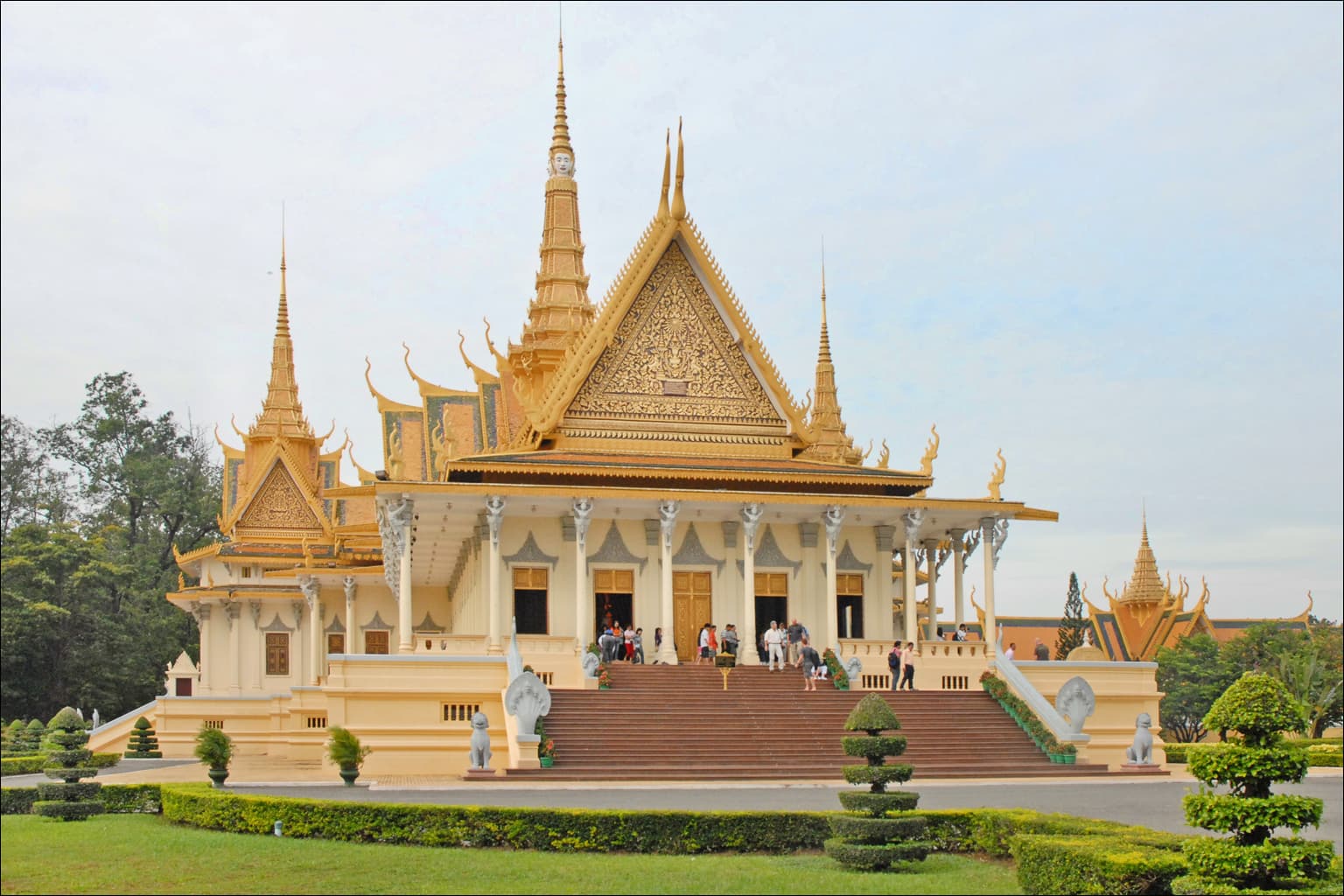
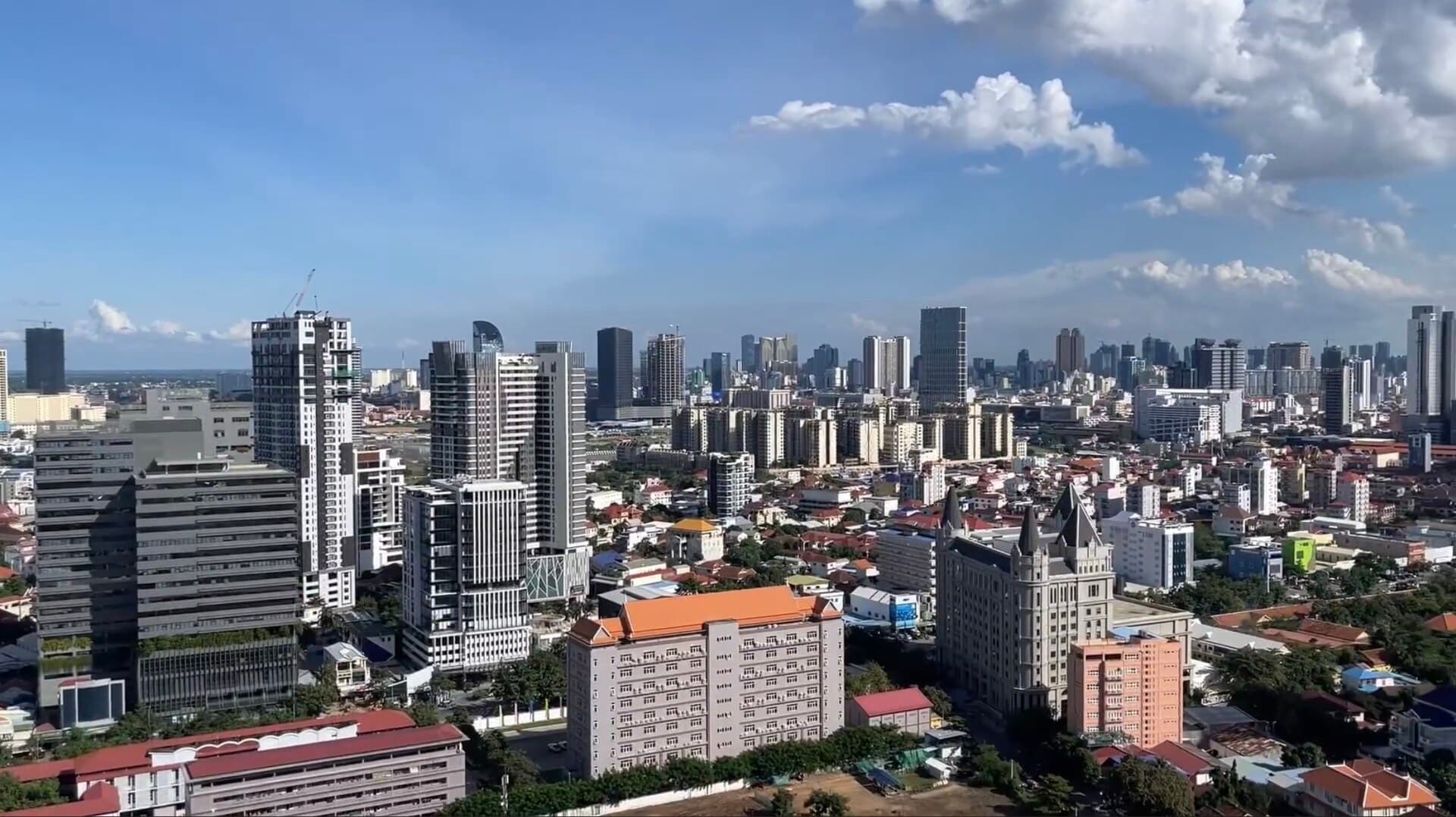
The capital Phnom Penh offers the country's historical and contemporary dimension. The Royal Palace and Silver Pagoda testify to the splendour of the Khmer monarchy, still in place today. The Tuol Sleng Genocide Museum (S-21, former school turned Khmer Rouge torture centre) and the Killing Fields of Choeung Ek (memorial on the execution site of 17,000 prisoners) are a difficult but essential stop to understand the country. The National Museum holds the world's finest collection of pre-Angkorian and Angkorian Khmer art.
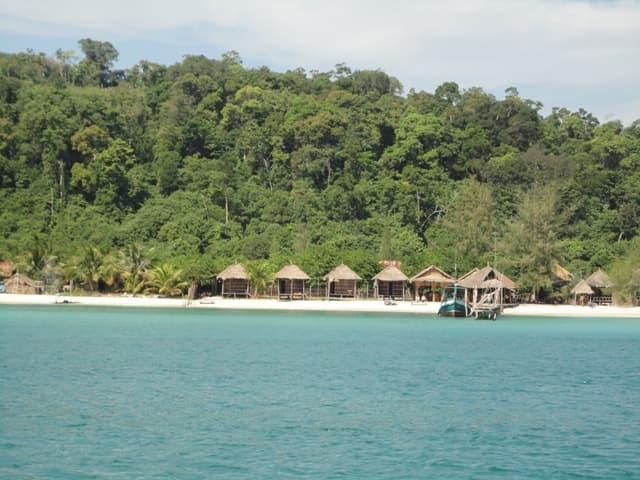
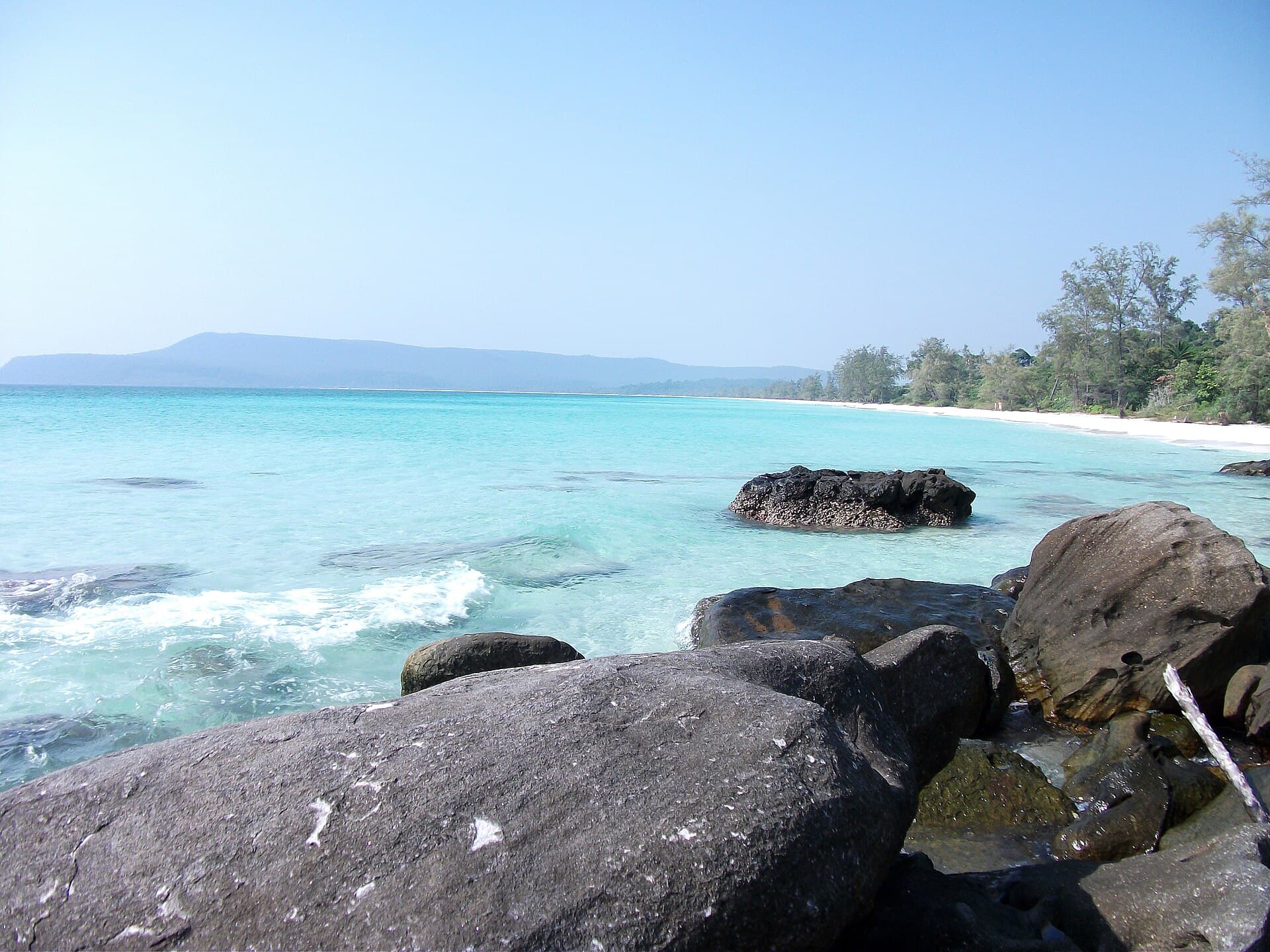
The south coast (Sihanoukville, Kep, Kampot, archipelago of Koh Rong and Koh Rong Samloem islands) offers the beach dimension — relatively preserved beaches, bioluminescent plankton on moonless nights on Koh Rong, world-renowned Kampot pepper, Rabbit Island off Kep and its mythical green-pepper crab. Sihanoukville itself has lost its charm with the massive arrival of Chinese casinos; the neighbouring islands remain the authentic option.
The francophonie is still present in educated and hospitality circles (legacy of the 1863-1953 protectorate), colonial signs survive in Phnom Penh (Hotel Royal, former Cercle Sportif), and Paris-style street names (Rue Pasteur, Boulevard Norodom) recall a past the country has fully embraced. It is one of Southeast Asia's most welcoming destinations for French-speaking travellers.
What we love
- ✅Angkor Wat and the Angkor archaeological site: 400 km² of Khmer temples, UNESCO, a spiritual experience unique in the world
- ✅Exceptional historical density: 600 years of Khmer Empire + French protectorate + Khmer Rouge genocide to grasp in 10-14 days
- ✅Very accessible budget: €50/day/person in comfort mode, €30/day in backpacker mode
- ✅Paradise south coast: Koh Rong (Koh Toch beach, 7 km of white sand) and Koh Rong Samloem islands still preserved
- ✅Warm welcome, residual francophonie, satisfactory tourist infrastructure around Siem Reap and Phnom Penh
What to know
- ❌No direct flight from Europe: mandatory connection (Bangkok, Doha, Singapore), 14-16h total travel
- ❌Sihanoukville disfigured by Chinese casinos since 2017 — accessing the south coast means the islands
- ❌Frequent tourist scams (tuk-tuks, fake orphanages, unfavourable exchange) — constant vigilance
- ❌Crushing heat from March to May (38°C, feels 42°C): Angkor visits difficult midday
- ❌Memory of the Khmer Rouge genocide ever-present: a necessary but emotionally challenging stop
Explore Cambodia
Our itineraries
Regions
Popular spots
Situation
Où se situe Cambodia ?
Ouvrir la carte en grand sur OpenStreetMap →Frequently asked questions
Do you need a visa for Cambodia?+
When is the best time to visit Cambodia?+
How much does a trip to Cambodia cost?+
How many days for Cambodia?+
What currency is used in Cambodia?+
Is Cambodia a safe destination?+
How to get to Cambodia from Europe?+
Do I need vaccinations to travel to Cambodia?+
Our verdict
Cambodia is an exceptional destination for those interested in history, spirituality and civilisations. The Angkor experience — sunrise from the north reflecting pool, exploration of bas-relief galleries narrating Hindu mythology, visits to Bayon, Ta Prohm and Banteay Srei over 3-4 days — ranks among the most memorable one can have in Asia. Phnom Penh adds the necessary memorial dimension (S-21, Killing Fields), while the south coast offers genuine beach relaxation on Koh Rong islands. Our advice: travel from November to February (cool dry season, 22-30°C), spend at least 10 days on a circuit Siem Reap (4 nights) + Phnom Penh (2 nights) + Koh Rong (3-4 nights), book your e-visa online on the official site rather than pirate aggregators, and remember that US dollars are as widespread as riels (bring USD in small denominations). Don't underestimate the March-May heat — prefer December-February even if high season requires booking 3-4 months ahead.

Expert on Cambodia · 1 contributions
 South-East Asia Desk — Mowando·Editor