Khmer culture is deeply shaped by Theravada Buddhism, the state religion practised by 97% of the population. Pagodas (wat) set the rhythm of every village — the saffron-robed monk collecting alms at dawn, full-moon processions, lotus flower and incense offerings are part of daily life. To grasp the Buddhist dimension of the Khmers is to begin to understand their resilience in the face of recent history.
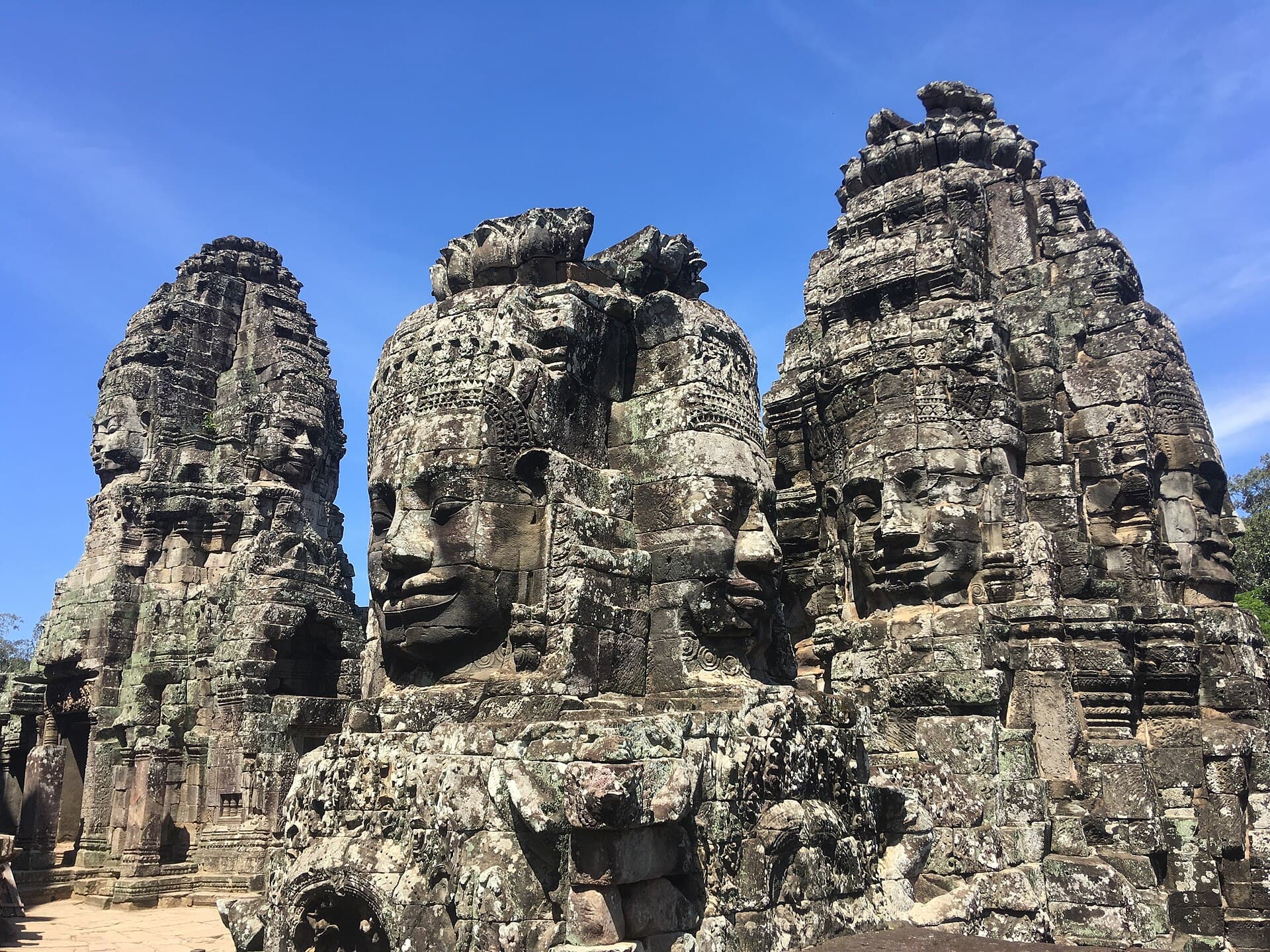
The Khmer Empire heritage (9th-15th centuries) is the country's identity bedrock. Capital Angkor, founded at the end of the 9th century by Jayavarman II, was one of humanity's largest pre-industrial cities (up to 1 million inhabitants at its 12th-century peak, ten times the population of Paris at the same time). The Angkorian kings — Suryavarman II (Angkor Wat), Jayavarman VII (Bayon, Ta Prohm, Banteay Kdei) — left a world-unique architectural heritage. The Cambodian flag features Angkor Wat at its centre — the only national flag in the world to depict an architectural monument.
The Khmer Rouge genocide (1975-1979) is the other major page of recent history. The extreme Maoist regime of Pol Pot and the Angkar (Organisation) emptied cities in days, abolished currency, closed schools and hospitals, executed or starved-and-disease-killed 1.7 million Cambodians (one quarter of the population) in less than 4 years. Intellectuals, civil servants, ethnic minorities (Cham Muslims, Vietnamese, Chinese), anyone wearing glasses (sign of education) were systematically eliminated. The S-21 torture centre in Phnom Penh (Tuol Sleng Museum) and the Choeung Ek Killing Fields are emotionally challenging but necessary stops to understand the country. An entire generation was decimated, traumas remain vivid, the international tribunal (Extraordinary Chambers) condemned the last leaders until 2018.
The francophonie is a legacy of the French protectorate (1863-1953). Francophone travellers will still regularly meet Cambodians speaking French — especially older educated generations, staff at historic hotels (Royal in Phnom Penh, Grand Hôtel d'Angkor in Siem Reap) and certain guides. Phnom Penh street names are sometimes French (Rue Pasteur, Boulevard Norodom — after the king), French pastries survive (baguettes, pains au chocolat), and certain everyday dishes testify to colonial influence.
The Apsara dance — classical Khmer dance immortalised in the bas-reliefs of Angkor — is the country's major artistic expression. Slow movements, codified hand and finger gestures (4,500 different positions), gold-embroidered costumes, tower-shaped headdresses: Apsaras (celestial nymphs) silently narrate the Ramayana and Hindo-Khmer epics. Shows in Siem Reap (Apsara Theatre, Smile of Angkor) cost USD 20-40 with traditional dinner.
Major festivals: Khmer New Year (13-15 April, Chaul Chnam Thmey, family celebrations and animated pagodas), Pchum Ben (September-October, ancestors festival, massive pagoda offerings), Bon Om Touk (Water Festival, November, pirogue races on the Tonle Sap and Phnom Penh river, up to 2 million people mobilised in the capital).
Read also
- Siem Reap and Angkor — The Angkor archaeological site (UNESCO), Bayon, Ta Prohm and the base-city of Siem Reap.
- Phnom Penh and the South — The capital, Royal Palace, S-21 and the Killing Fields — memory and present of Cambodia.
- Cambodian south coast — Kampot, Kep, Koh Rong and Koh Rong Samloem archipelago: paradise beaches.
- Angkor Wat — The world's largest religious monument, UNESCO 1992, jewel of the Khmer Empire.