- Visa
- Required
- Passport validity
- 6 months
- Safety level
- vigilance
- Recommended vaccines
- Hépatite A, Hépatite B, Typhoïde, Mise à jour DTP, Encéphalite japonaise (séjours ruraux prolongés)
Un visa de tourisme est obligatoire pour tous les ressortissants français et européens. Deux options principales s'offrent au voyageur — toutes deux à 30 USD pour 30 jours maximum, à régler obligatoirement en dollars américains en espèces (le riel cambodgien n'est pas accepté pour les frais consulaires).
L'option recommandée est l'e-visa : demande en ligne sur le site officiel evisa.gov.kh (attention aux sites pirates qui surfacturent jusqu'à 60-80 USD), 72h de traitement officiel (souvent plus rapide en pratique, 24-48h), formulaire en anglais, photo numérique format passeport, paiement par carte bancaire. Le visa est envoyé par e-mail au format PDF — à imprimer en deux exemplaires (un pour l'entrée, un pour la sortie). Valable pour les arrivées aux aéroports de Phnom Penh (PNH), Siem Reap (REP) et Sihanoukville (KOS), ainsi qu'aux principaux postes-frontières terrestres avec la Thaïlande, le Vietnam et le Laos.
L'alternative est le visa à l'arrivée, disponible uniquement aux trois aéroports internationaux (Phnom Penh, Siem Reap, Sihanoukville) et à certains postes-frontières terrestres. Documents à présenter : passeport valide 6 mois, 1 photo d'identité format passeport (en cas d'oubli, surtaxe de 2 USD), formulaire de demande rempli sur place, 30 USD en espèces (billets en bon état). File souvent longue à l'arrivée (30-60 min) — l'e-visa reste plus confortable.
Passeport obligatoirement valide 6 mois après la date d'entrée, avec au moins 2 pages vierges consécutives. Aucun vaccin obligatoire à l'entrée. Recommandés : Hépatite A, Hépatite B, Typhoïde, mise à jour DTP, encéphalite japonaise pour les séjours ruraux prolongés. La fièvre jaune n'est exigée que pour les voyageurs en provenance d'une zone endémique (transit > 12h dans un pays touché). Prolongation possible sur place à Phnom Penh (Département de l'Immigration) — 45 USD pour 30 jours supplémentaires, 80 USD pour 90 jours. Les dépassements de séjour sont sanctionnés à la sortie : 10 USD par jour de retard.
Cambodia is classed at standard vigilance level by foreign offices for the majority of tourist territory. This category reflects scam and petty-crime risks more than a major security concern. Standard tourist zones — Siem Reap, Phnom Penh (centre and Mekong banks), Kampot, Kep, Koh Rong islands — are generally safe for travellers.
The main risk for tourists remains opportunistic crime — pickpocketing in crowded markets, scooter snatch-and-grabs in Phnom Penh (bags and phones held in hand, doubled vigilance at night), tuk-tuk scams (inflated fares without prior agreement, detour to partner shops), fake orphanages soliciting visitors (an ethically very problematic practice — prefer serious NGOs, see Children in Families or ChildSafe), fake USD or KHR bills. Golden rule: negotiate all prices before the service (tuk-tuk, taxi, guide, massage), keep your passport in the hotel safe and carry a photocopy, don't wear conspicuous jewellery, don't take out your smartphone in Phnom Penh streets at night.
Residual anti-personnel mines are a Cambodian specificity. The country was one of the world's most heavily mined after the 1970-1999 conflicts (Khmer Rouge, Vietnamese intervention, civil war). Standard tourist zones have been entirely demined, but mines persist in some remote rural areas of the north-west (Battambang, Pailin, Banteay Meanchey, Preah Vihear provinces, along the Thai border). Strictly stay on marked and signed paths in rural areas, don't stray from tracks to photograph, follow Cambodian Mine Action Centre (CMAC) signage. Isolated temples (Banteay Chhmar, Preah Vihear) are safely accessible via main roads.
Road traffic is the main physical risk for travellers. Roads in poor condition, unpredictable driving (scooters and tuk-tuks cut in without warning, left-to-right crossings, motorcycles overloaded with 4-5 people), absent signage. Refuse motorcycles without helmets (wearing is mandatory but poorly observed), check seatbelts in cars, avoid driving a scooter in Phnom Penh (Siem Reap is more relaxed). In case of accident, local drivers may be held responsible even when not — your travel insurance must include legal assistance.
On the health front, medical services are limited outside Phnom Penh and Siem Reap. For emergencies, recommended international clinics: Royal Phnom Penh Hospital (Bangkok Hospital group), Royal Angkor International Hospital in Siem Reap. High costs (USD 50-200 per consultation, up to several thousand dollars for hospitalisation) — mandatory travel insurance with medical coverage and repatriation. Pathologies to watch: dengue (mosquitoes omnipresent year-round, peak in wet season, DEET 30-50% repellent mandatory), chikungunya, malaria in remote rural areas (discuss chemoprophylaxis with your doctor), traveler's diarrhea (careful eating: avoid ice cubes, raw salads, tap water — prefer sealed bottled water), intense sun exposure (SPF 50 cream, hat, sunglasses). Tap water is not potable — sealed bottled water only (USD 0.50 per litre, available everywhere). Emergency numbers: police 117, ambulance 119, fire 118.
Read also
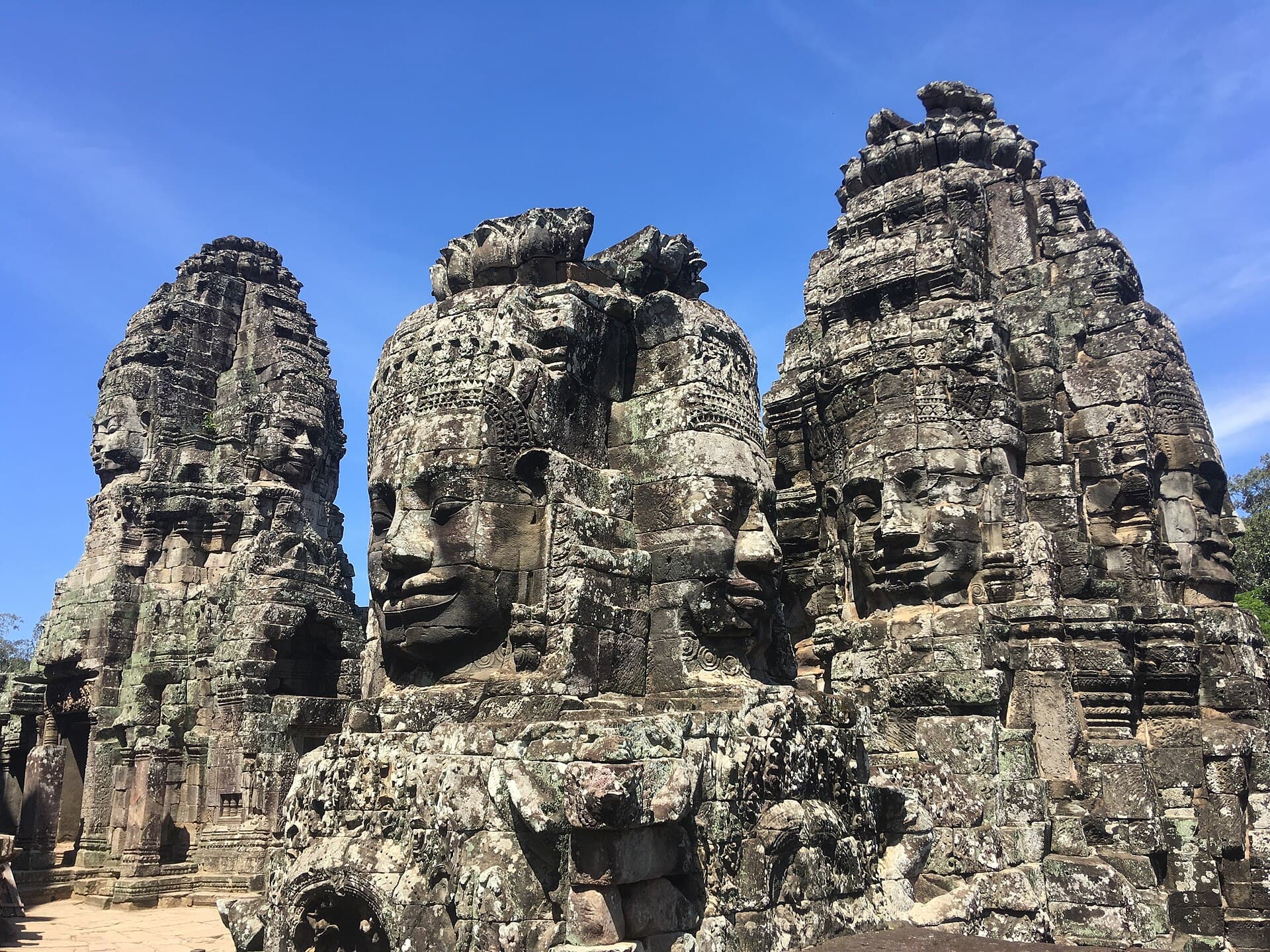
- Siem Reap and Angkor — The Angkor archaeological site (UNESCO), Bayon, Ta Prohm and the base-city of Siem Reap.
- Phnom Penh and the South — The capital, Royal Palace, S-21 and the Killing Fields — memory and present of Cambodia.
- Cambodian south coast — Kampot, Kep, Koh Rong and Koh Rong Samloem archipelago: paradise beaches.
- Angkor Wat — The world's largest religious monument, UNESCO 1992, jewel of the Khmer Empire.