
Mowando

Climate & seasons

When to visit Cambodia?

By La rédaction · Updated 6/9/2026

The Editors
The Editorsauteur principal✓ Verified

Expert on Cambodia · 1 contributions

The best periods

The best time to visit Cambodia is November to February (cool dry season).

Nov, Déc, Jan, Fév

Saison sèche fraîche — la meilleure période

  • Climat idéal : 22-30 °C, ciel dégagé, humidité faible (50-65 %)
  • Conditions parfaites pour Angkor (visites longues sans fournaise), Phnom Penh et la côte sud
  • Eaux calmes pour les îles Koh Rong et Koh Rong Samloem, visibilité maximale
  • Festivals importants : Water Festival (Bon Om Touk, novembre), Nouvel An khmer non encore arrivé
  • Haute saison touristique : Siem Reap saturée, hôtels à réserver 3-4 mois à l'avance pour décembre-février
  • Tarifs aériens et hébergements 30-40 % au-dessus de la basse saison
  • Affluence importante à Angkor Wat au lever du soleil (1 500-2 000 visiteurs simultanés)
Mar, Avr, Mai

Saison chaude — avant la mousson

  • Aucune pluie ou presque, ciel encore dégagé en mars
  • Nouvel An khmer (Chaul Chnam Thmey, 13-15 avril) : fêtes familiales, pagodes animées
  • Mer toujours chaude (29-30 °C) sur la côte sud, idéale pour la baignade
  • Chaleur extrême : 32-38 °C à Phnom Penh et Siem Reap, ressenti 40+ °C avec l'humidité
  • Visites d'Angkor éprouvantes en milieu de journée (prévoir levée 4h30 et retour à l'hôtel 10h)
  • Pollution atmosphérique en hausse, brûlis agricoles ponctuels
Juin, Jui, Aoû, Sep, Oct

Saison humide — mousson

  • Tarifs hébergements et excursions au plancher (-30 à -50 % vs haute saison)
  • Paysages éclatants : rizières d'un vert intense, douves d'Angkor pleines, jungle luxuriante
  • Tonlé Sap au plus haut : villages flottants spectaculaires, visite optimale en septembre-octobre
  • Foule très réduite, expérience d'Angkor presque solitaire en juillet-août
  • Pluies quotidiennes en fin d'après-midi (1-2h d'orage intense), parfois inondations à Phnom Penh
  • Routes secondaires impraticables dans certaines zones rurales (Mondulkiri, Ratanakiri)
  • Excursions en mer parfois annulées sur la côte sud (Sihanoukville, Kep, îles)
  • Humidité écrasante (85-95 %), photographie d'Angkor difficile avec le ciel gris

Climate by destination

The climate varies sharply from one region to another. See the month-by-month detail — temperatures, sea, crowds and flight prices — on each destination's 'when to go' page.

Frequently asked questions

Do you need a visa for Cambodia?+
Yes, a tourist visa is mandatory. The easiest solution is the e-visa (USD 30, valid 30 days) requested online on the official site evisa.gov.kh at least 72h before departure — beware of pirate sites that overcharge USD 60-80. Alternative: visa on arrival at Phnom Penh, Siem Reap and Sihanoukville airports (USD 30 cash only, 1 ID photo, queue 30-60 min). Passport must be valid 6 months beyond entry date with 2 consecutive blank pages.
When is the best time to visit Cambodia?+
The cool dry season, November to February, is ideal: tolerable temperatures (22-30°C), low humidity, clear skies. It's high season — book 3-4 months ahead for Siem Reap in December-February. Avoid March-May (crushing heat 35-38°C) and June-October (monsoon, daily late-afternoon rain). September-October remains interesting for Tonle Sap floating villages (peak water level) and lush green rice fields, with very few crowds at Angkor.
How much does a trip to Cambodia cost?+
Plan around €50/day/person for comfortable travel. A backpacker can get by on €25-35/day in guesthouses, local meals and bus transport. Angkor 3-day pass: USD 62. Paris-Phnom Penh or Siem Reap flight (with Bangkok or Doha layover): €800-1,400 return depending on season. The US dollar is universally accepted (often preferred to the riel for tourist transactions), bring bills in good condition and small denominations (1, 5, 10, 20 USD).
How many days for Cambodia?+
Minimum 8 days to combine Siem Reap-Angkor (4 nights, unmissable), Phnom Penh (2 nights, memory) and a quick beach transit. With 10 days, add 2-3 nights on Koh Rong or Koh Rong Samloem island. With 14 days, complement with Kampot-Kep (pepper, green-pepper crab) and Battambang (countryside, contemporary Khmer art). With 21 days, add Mondulkiri (elephants, Bunong people) or Banteay Chhmar (isolated temple).
What currency is used in Cambodia?+
The Cambodian riel (KHR) is the official currency (€1 ≈ 4,500 KHR), but the US dollar (USD) is universally accepted in tourism — prices are often displayed in USD, and change sometimes returned in riels for small denominations (under USD 1). Bring USD bills in good condition (damaged bills are refused) and in small denominations (1, 5, 10, 20 USD — 50 and 100 USD bills often don't pass in small shops). ATMs available in all tourist cities (USD 4-5 fee per withdrawal, USD 500 cap). Visa/Mastercard accepted in upscale hotels and restaurants.
Is Cambodia a safe destination?+
Yes in tourist zones (Siem Reap, Phnom Penh centre, south coast), with usual vigilance against scams (inflated tuk-tuk fares, fake orphanages, unfavourable exchange, fake bills) and pickpocketing or scooter snatch-and-grabs in Phnom Penh. The main risk remains chaotic road traffic. Residual anti-personnel mines (legacy of 1970-1999 conflicts) have been eradicated from tourist zones but remain in some remote rural areas of the north-west — strictly stay on marked paths in rural areas.
How to get to Cambodia from Europe?+
No direct flight from Paris to Cambodia. Best options: via Bangkok (Air France + Thai Airways codeshare, 11h+2h, fastest, 14h total), via Doha (Qatar Airways, direct Doha-Phnom Penh flight, 16h via Qatar), via Singapore (Singapore Airlines, 14-15h), via Dubai (Emirates). Fares €800-1,400 return depending on season. On arrival: Phnom Penh (PNH), Siem Reap (REP), or Sihanoukville (KOS) airports — choose Siem Reap if starting with Angkor to save an internal transit.
Do I need vaccinations to travel to Cambodia?+
No mandatory vaccinations on entry (except yellow fever for travellers from endemic zones). Recommended: Hepatitis A, Hepatitis B, Typhoid, up-to-date Tetanus-Diphtheria-Polio. Japanese encephalitis worth considering for prolonged rural stays. Consult a travel medicine specialist 4-6 weeks before departure. Malaria prevention recommended for remote rural areas (Mondulkiri, Ratanakiri, Thai border) — discuss chemoprophylaxis with your doctor.

Our verdict

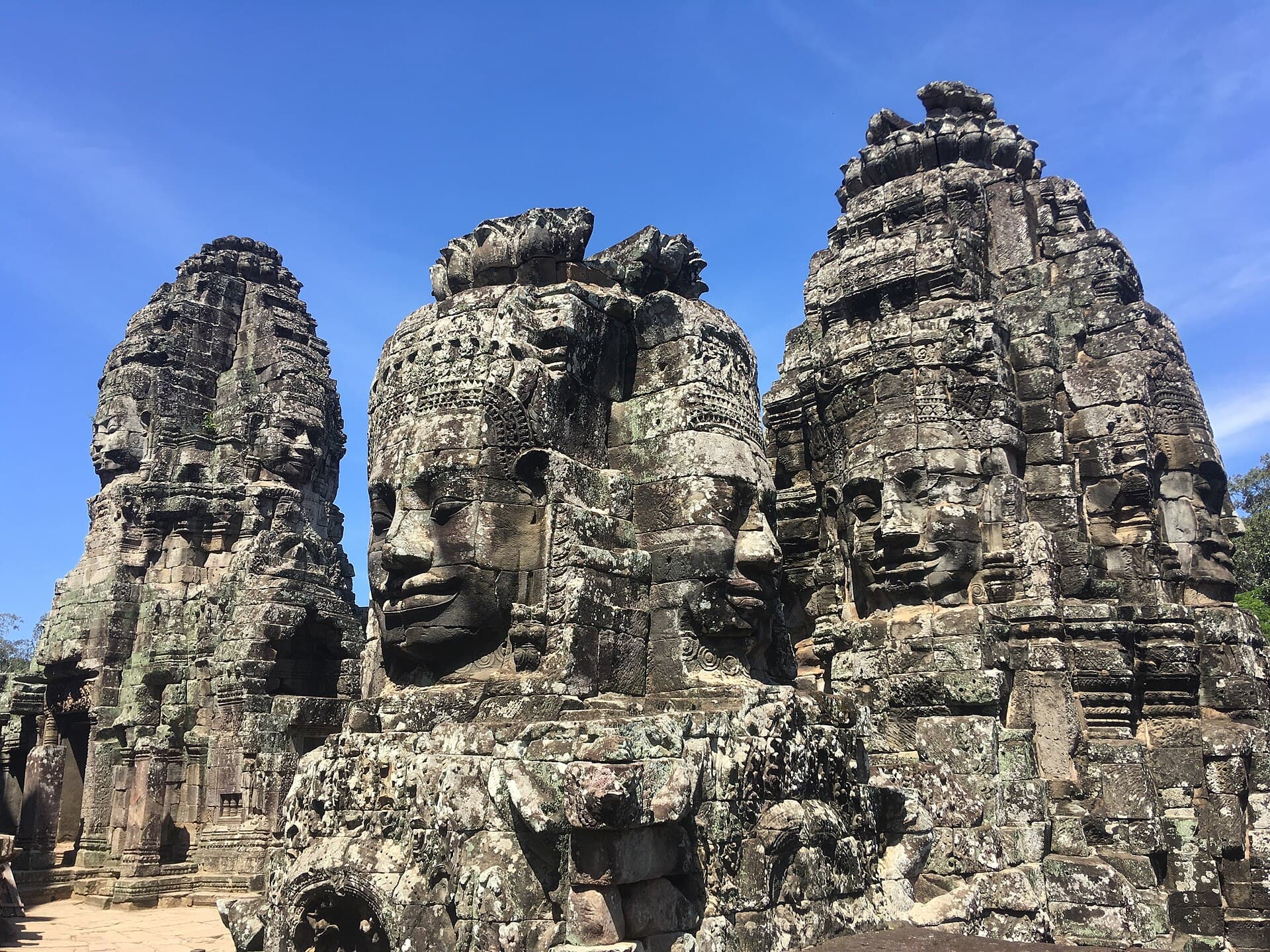
Cambodia is an exceptional destination for those interested in history, spirituality and civilisations. The Angkor experience — sunrise from the north reflecting pool, exploration of bas-relief galleries narrating Hindu mythology, visits to Bayon, Ta Prohm and Banteay Srei over 3-4 days — ranks among the most memorable one can have in Asia. Phnom Penh adds the necessary memorial dimension (S-21, Killing Fields), while the south coast offers genuine beach relaxation on Koh Rong islands. Our advice: travel from November to February (cool dry season, 22-30°C), spend at least 10 days on a circuit Siem Reap (4 nights) + Phnom Penh (2 nights) + Koh Rong (3-4 nights), book your e-visa online on the official site rather than pirate aggregators, and remember that US dollars are as widespread as riels (bring USD in small denominations). Don't underestimate the March-May heat — prefer December-February even if high season requires booking 3-4 months ahead.

Mowando Letter

Once a month: the right destinations for the right season + the best booking windows.

No spam. One-click unsubscribe. Your data is never shared.