Cambodian cuisine is one of Southeast Asia's most subtle — less spicy than Thai, less acidic than Vietnamese, it favours gentle flavours, fresh herbs (lemongrass, galangal, kaffir, Thai basil, Vietnamese coriander a.k.a. rau ram) and local curry pastes (kroeung, the foundation of most dishes). Long overshadowed by its more internationally-known neighbours, Khmer gastronomy fully deserves the detour and is one of the trip's best surprises.
The national dish is amok — a fish curry (often river catfish) steamed in a banana leaf, with coconut milk, yellow kroeung (lemongrass-galangal-turmeric-kaffir-garlic-shallot-mild chilli), palm sugar. Texture is melting, mousse-like, fragrance citrusy, flavour gentle and long on the palate. Try it in a good Khmer restaurant (USD 5-8) — it's the perfect introduction to the country's cuisine. Variants: chicken amok, river snail amok, tofu amok for vegetarians.
Lok lak — beef strips wok-tossed with Kampot sauce (crushed fresh green pepper, oyster sauce, soy sauce, lime), served on a bed of salad-tomato-red onion, with rice and a fried egg on top — is the everyday workhorse. Nom banh chok (pronounced « num ») is the fermented rice noodle soup with fish curry — traditional breakfast served by street vendors from woven baskets, accompanied by fresh herbs and bean sprouts to add yourself. Samlor korkor (vegetable-curry soup with pumpkin, eggplant, taro, dried fish and pounded toasted rice) is an ancestral, long-simmered soup.
Regional specialties: in Kampot, crab with green Kampot pepper (mythical, PGI — Protected Geographical Indication, Cambodian pepper rivals the world's best, taste it at Kep at Kimly or the crab market). In Battambang, crispy spiders (fried tarantulas, specialty of Skuon, a snack for the curious — crab-chicken texture). In Siem Reap, fish amok and Khmer barbecues (try Marum from the TREE collective for responsible Khmer fine dining, or Cuisine Wat Damnak for high gastronomy, 1-star Asia's 50 Best). On the south coast, fresh seafood (grilled squid, tamarind shrimps).
Khmer street food is organised around markets (Phsar Thmei in Phnom Penh, Old Market in Siem Reap) and street vendors. Marinated beef skewers (sach ko jakak, USD 0.50), noodle soups (kuy teav, USD 1-2), banh chev (stuffed crispy crepes, Cambodian version of Vietnamese banh xeo), green papaya salads (bok l'hong, milder than Thai som tam). Desserts: cha-houy teuk (coconut jelly), num ansom chek (sticky rice cake with banana, cooked in a leaf), sangkya l'peou (pumpkin coconut cream), mango sticky rice (common across Southeast Asia).
Drinks: Angkor beer (5% vol, light blonde, omnipresent, USD 0.50-1 at the market), Cambodia beer (local competitor), sugar palm juice (fresh palm sugar juice, USD 0.50 per glass), Cambodian coffee (rich, dark, often served with sweetened condensed milk, French-Vietnamese heritage). Samai Rum (artisan distillery in Phnom Penh) offers tasting and good cocktails. Avoid sra sor (local rice alcohol) outside controlled contexts.
Read also
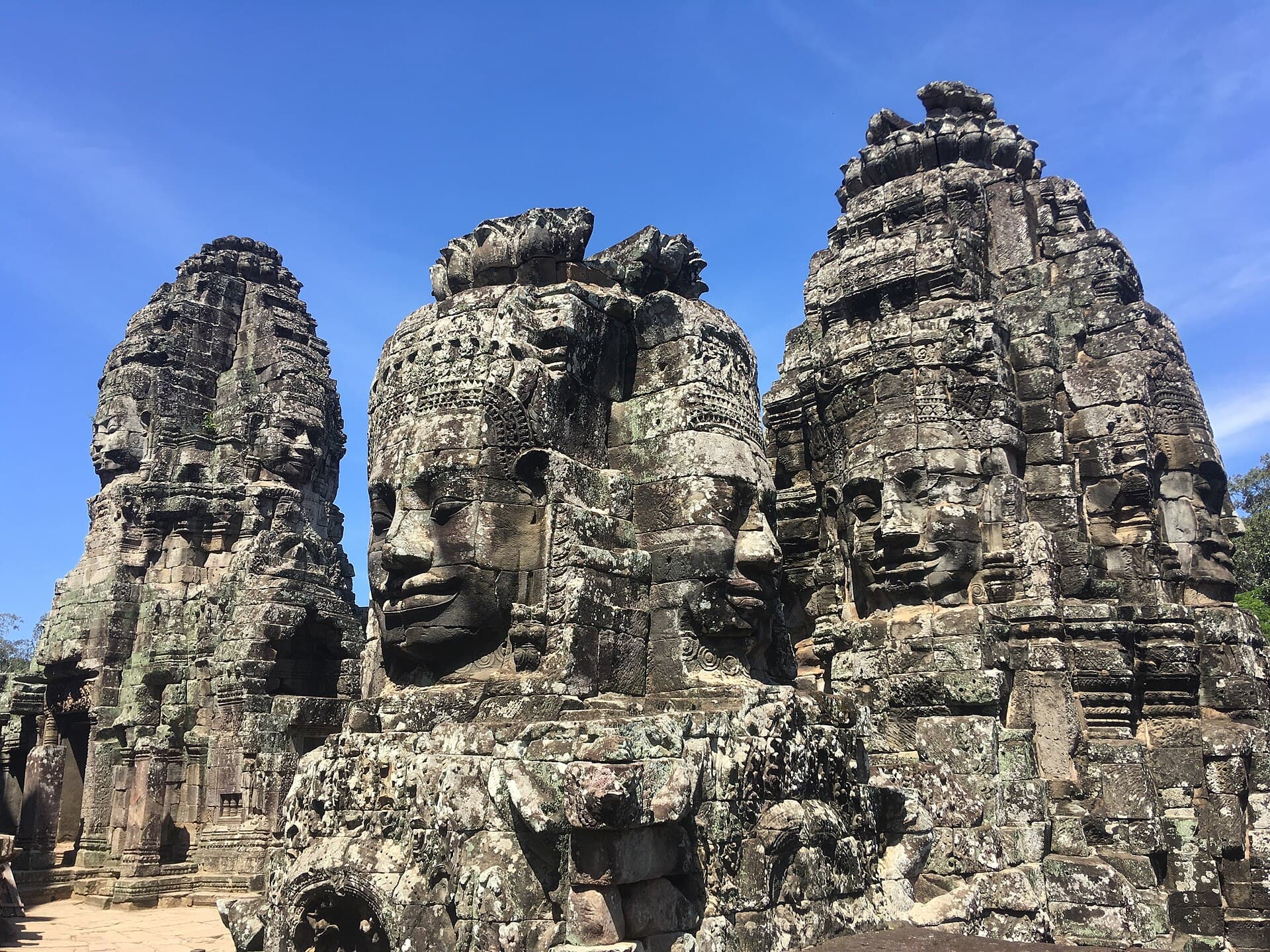
- Siem Reap and Angkor — The Angkor archaeological site (UNESCO), Bayon, Ta Prohm and the base-city of Siem Reap.
- Phnom Penh and the South — The capital, Royal Palace, S-21 and the Killing Fields — memory and present of Cambodia.
- Cambodian south coast — Kampot, Kep, Koh Rong and Koh Rong Samloem archipelago: paradise beaches.
- Angkor Wat — The world's largest religious monument, UNESCO 1992, jewel of the Khmer Empire.