Mowando

Region

Phnom Penh region

Cambodia's capital between royal splendour (Royal Palace, Silver Pagoda) and the moving memory of the Khmer Rouge genocide (S-21, Killing Fields) — an essential memorial stop on the banks of the Mekong.

4.40

The Phnom Penh and the South region covers the capital of Cambodia and the adjacent south-eastern provinces (Kandal, Takeo) up to the south coast limits. It is the historical and contemporary dimension of the Cambodian journey — that of the painful memory of the Khmer Rouge genocide (1975-1979), the residual splendour of the Khmer monarchy, the effervescence of a city in transformation, and the francophonie inherited from the French protectorate.

Phnom Penh (1.5 million inhabitants) extends at the confluence of three rivers: the Mekong, the Tonle Sap and the Bassac. This strategic position made its fortune in the colonial era (the French installed their administrative protectorate there in 1865) and gives it a particular charm today — the riverside (3 km of landscaped quays along the Tonle Sap) is the tourist backbone of the city, with restaurants, bars, boutique hotels and excursion boat docks.

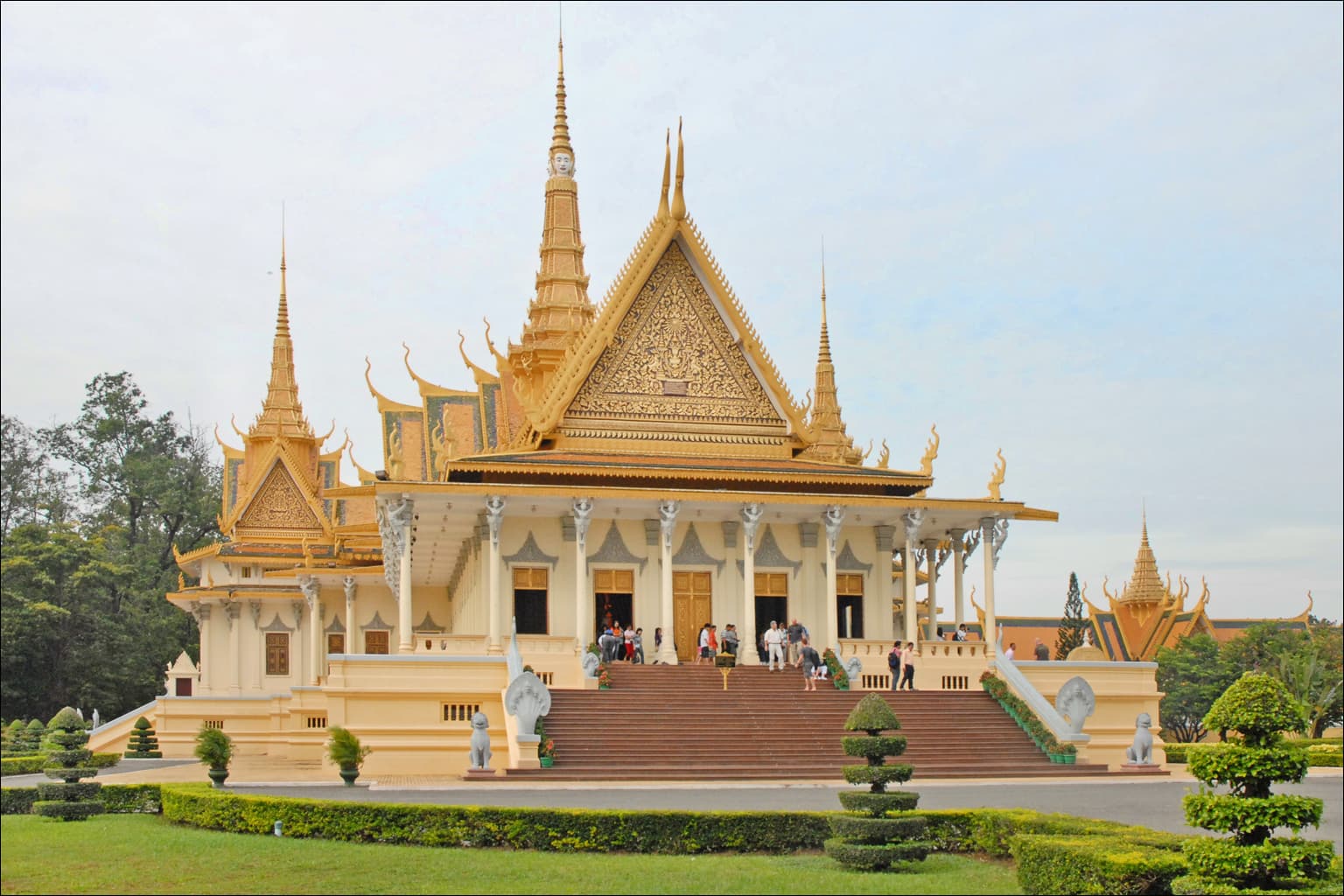
The essential visits concentrate on the west bank. The Royal Palace (USD 10 entry, still the official residence of King Norodom Sihamoni) and the Silver Pagoda (Wat Preah Keo Morokat, with its floor paved with 5,329 silver tiles of 1 kg each, housing an emerald Buddha and a life-size 90 kg solid gold Buddha statue set with 9,584 diamonds) are the unmissable royal stop. The National Museum of Cambodia (USD 10), red Khmer-style building built by the French in 1920, houses the world's finest collection of pre-Angkorian and Angkorian Khmer art — essential visit before or after Angkor to give meaning to the temples.

The memorial dimension is the unmissable but emotionally challenging stop. The Tuol Sleng Genocide Museum (S-21, school transformed into a torture centre by the Khmer Rouge in 1975 — of 18,000 detained prisoners, 12 survived, USD 10 entry with multilingual audioguide including French) and the Choeung Ek Killing Fields (memorial on the execution site of 17,000 S-21 prisoners, glass stupa containing 8,000 skulls, 15 km south of Phnom Penh, USD 6 with audioguide) are necessary stops to understand the country's recent history. Plan a half-day for each site, and don't chain them on the same day (emotional load too heavy).

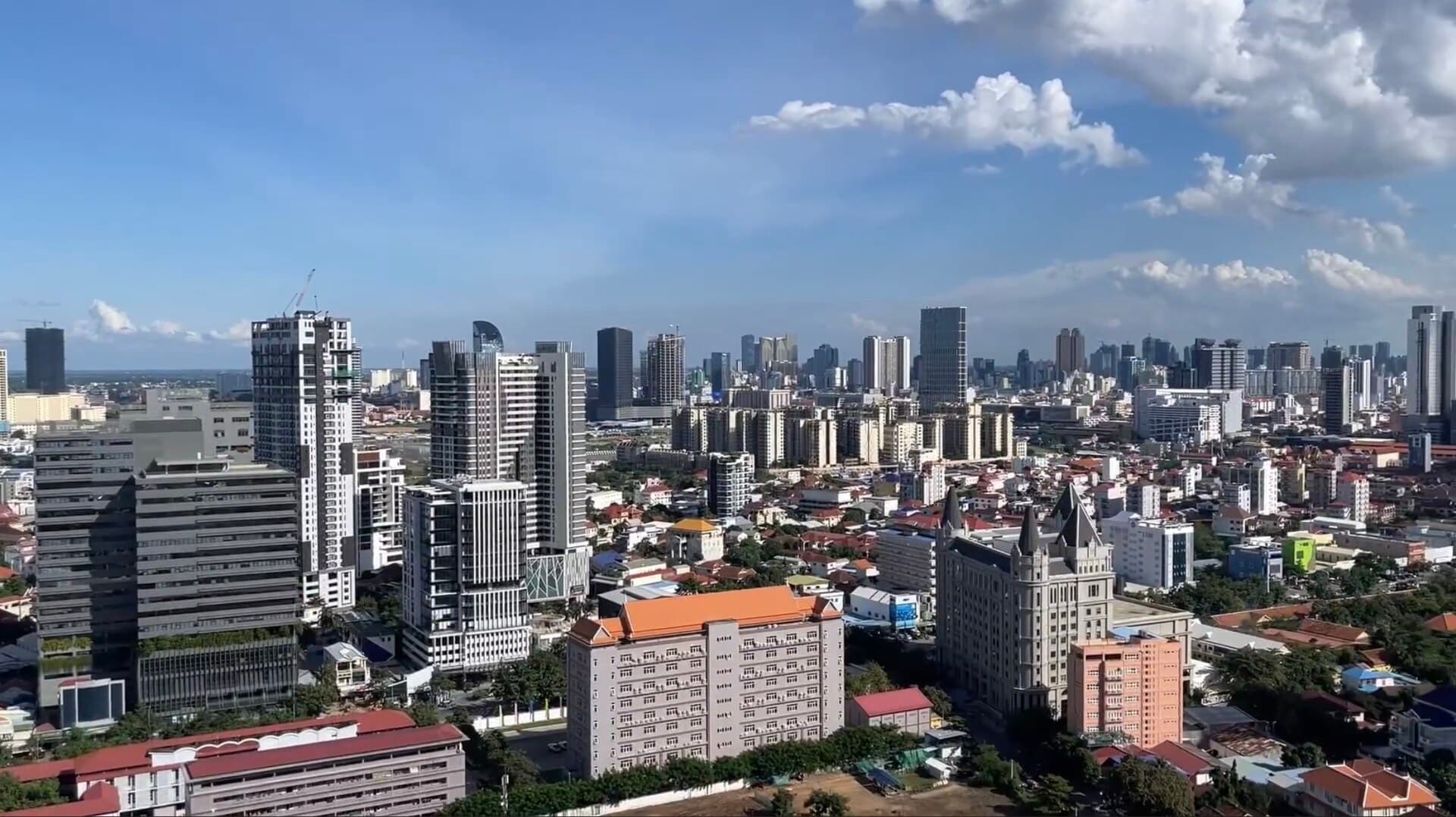
Phnom Penh's contemporary life is lively. The central market (Phsar Thmei), built by the French in 1937 in Art Deco style with a 26 m high central dome — one of Asia's most beautiful covered markets. The Russian market (Phsar Tuol Tom Poung) for souvenirs, silks and antiques. The BKK1 neighbourhood (Boeung Keng Kang 1) for international gastronomy and trendy cafés. Wat Phnom (27 m hill, historical high point of the city and origin of its name — "hill of Penh", an old woman who supposedly founded the first sanctuary in 1373) for a panoramic view.

Explore Phnom Penh region

Spots in the region
Situation

Où se situe Phnom Penh region ?

Ouvrir la carte en grand sur OpenStreetMap →

Frequently asked questions

Combien de jours pour visiter Phnom Penh ?+
Minimum 2 nuits pour couvrir l'essentiel : Jour 1 — Palais Royal + Pagode d'Argent + Musée national (matin), riverside et croisière au coucher de soleil (après-midi-soir). Jour 2 — S-21 Tuol Sleng (matin, demi-journée intense avec audioguide), pause déjeuner, Killing Fields de Choeung Ek (après-midi, 15 km au sud). 3 nuits ajoutent les marchés (Phsar Thmei, marché russe), Wat Phnom, quartier BKK1, vie nocturne. En 1 nuit, vous ne ferez que survoler — fortement déconseillé.
Comment se rendre à Phnom Penh ?+
L'aéroport international de Phnom Penh (PNH) est à 10 km du centre (15-25 USD en taxi officiel, 8-12 USD en Grab, 30 min). Vols directs depuis Doha (Qatar Airways, 8h30), Bangkok (Thai Airways, Bangkok Airways, AirAsia, 1h, 80-120 USD A/R), Singapour (Singapore Airlines, Jetstar, 2h), Hanoi/Ho Chi Minh (Vietnam Airlines), Hong Kong, Kuala Lumpur, Séoul, Tokyo. Pas de vol direct depuis l'Europe : escale obligatoire (Bangkok, Doha, Singapour) — 14-17h de trajet total depuis Paris. Depuis Siem Reap : bus Giant Ibis ou Mekong Express (6h, 12-15 USD) ou vol intérieur Cambodia Angkor Air (45 min, 60-90 USD A/R). Depuis Ho Chi Minh-Ville (Vietnam) : bus international Giant Ibis (6h, 18 USD) via le poste-frontière de Bavet/Moc Bai.
Faut-il visiter S-21 et les Killing Fields ?+
Oui, impérativement, mais pas le même jour. Ces deux sites mémoriels sont l'étape essentielle pour comprendre le génocide khmer rouge (1975-1979, 1,7 million de morts soit un quart de la population cambodgienne). S-21 Tuol Sleng (ancien lycée transformé en centre de torture par Pol Pot, 18 000 prisonniers détenus dont 12 survivants) se visite en 2-3h avec l'audioguide multilingue (français disponible, 3 USD en supplément, hautement recommandé) — entrée 10 USD. Choeung Ek Killing Fields (15 km au sud, mémorial sur le site d'exécution, stupa contenant 8 000 crânes) en 2h avec audioguide (3 USD en supplément, témoignage poignant de survivants). Charge émotionnelle très lourde — espacez les deux visites (S-21 le matin, Choeung Ek le lendemain, ou inversement). Inadapté aux enfants de moins de 12-14 ans.
Le Mékong et ses croisières valent-ils le coup ?+
Oui, la croisière au coucher de soleil sur le Mékong et le Tonle Sap depuis le riverside de Phnom Penh est l'une des belles expériences de la ville. Comptez 15-25 USD pour 1h30 sur un bateau traditionnel khmer (départ vers 17h, retour vers 18h30), souvent avec boissons incluses. Plusieurs opérateurs aux quais (Sisowath Quay) : Tara Riverboat, Kanika Boat. Les croisières fluviales longue distance (Phnom Penh-Siem Reap en 5-7 jours via le Tonle Sap, ou Phnom Penh-Ho Chi Minh-Ville en 4-5 jours via le Mékong vietnamien) sont une expérience exceptionnelle, opérées par Heritage Line, Aqua Mekong, Pandaw — 1 500-3 500 USD/personne tout compris. Recommandées pour les voyageurs disposant de temps (10-14 jours minimum) et de budget.
Où loger à Phnom Penh ?+
Riverside (Sisowath Quay et alentours, 1er arrondissement) : zone touristique principale, hôtels boutique 50-150 USD/nuit (Plantation Urban Resort, Pavilion, FCC Phnom Penh — emblématique). BKK1 (Boeung Keng Kang 1) : quartier branché expat, restaurants et cafés haut de gamme, hôtels boutique 40-100 USD/nuit (Patio Hotel, The Quay Hotel). Russian Market (Phsar Tuol Tom Poung) : plus authentique, prix bas, guesthouses 15-40 USD/nuit. Daun Penh (centre administratif et historique) : ambiance plus calme, proche du Palais Royal. Évitez Toul Kork (peu touristique) et la zone aéroport (loin de tout). En 5 étoiles : Raffles Hotel Le Royal (250-450 USD/nuit, historique 1929), Rosewood Phnom Penh (350-700 USD, gratte-ciel moderne avec vue), Sofitel Phnom Penh Phokeethra (200-400 USD).
Le sud de Phnom Penh (Takeo, Kandal) vaut-il une visite ?+
Pour les voyageurs hors des sentiers battus uniquement. La province de Takeo (40-80 km au sud de Phnom Penh) abrite quelques temples pré-angkorien intéressants : Phnom Da (VIIIe siècle, le plus ancien site khmer connu), Angkor Borei (capitale du royaume de Funan, premier État khmer du IVe au VIIe siècle, musée local). La province de Kandal entoure Phnom Penh et offre les marchés flottants traditionnels du Mékong (Phsar Chrouy Changvar accessible en demi-journée, 5-10 USD le tuk-tuk). Oudong (40 km au nord, ancienne capitale royale du XVIIe au XIXe siècle, stupas royaux sur une colline) est une excursion demi-journée intéressante. Pour la majorité des voyageurs en 10-14 jours, ces visites restent secondaires face à Angkor et la côte sud.

Our verdict

Phnom Penh is an essential but often neglected stop on the Cambodian trip. Many travellers stop barely 1 night to head to Angkor or the sea — it's a mistake. The capital deserves at least 2 nights to understand the memorial dimension (S-21 half-day + Killing Fields half-day, spaced over 2 days so as not to saturate), to visit the Royal Palace and the National Museum (which gives full meaning to the Angkor temples), and to experience the effervescence of a city in transformation. Travel from November to February for the climate, stay at riverside (Tonle Sap quays, boutique hotels USD 50-100/night) or in BKK1 (gastronomy, nightlife, USD 40-80/night), plan USD 30-50 of private tuk-tuk per visiting day, and don't reduce Phnom Penh to a transit. This is where you'll truly understand contemporary Cambodia.

Mowando Letter

Once a month: the right destinations for the right season + the best booking windows.

No spam. One-click unsubscribe. Your data is never shared.