Mowando

ville

Phnom Penh

The Cambodian capital between royal splendour (Royal Palace, Silver Pagoda), the painful memory of the Khmer Rouge genocide (S-21, Killing Fields) and contemporary effervescence on the Mekong quays.

4.40Phnom Penh et le Sud

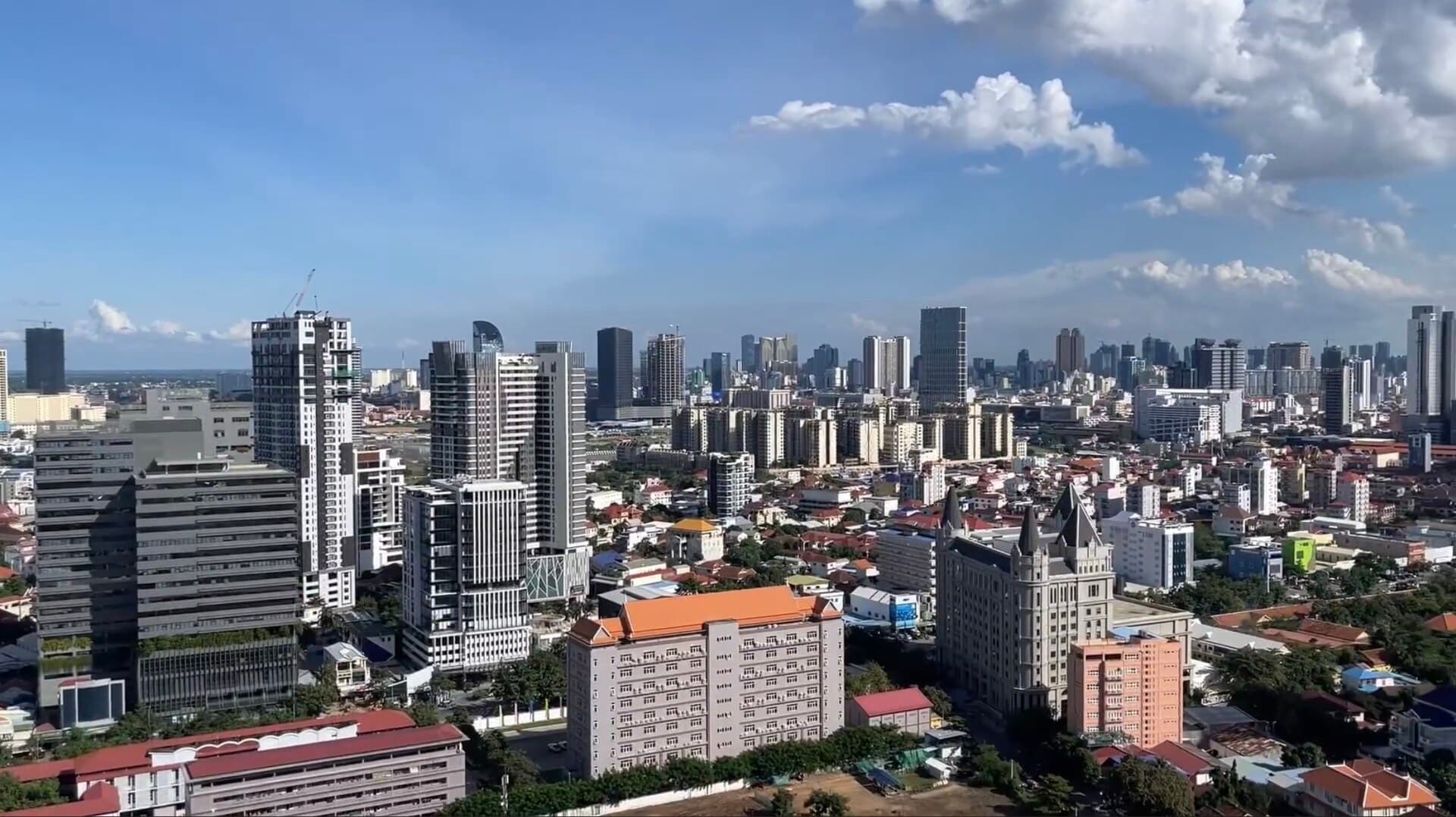
Phnom Penh (1.5 million inhabitants, agglomeration of 2.3 million) is the capital of Cambodia and its political, economic and cultural heart. The city extends at the strategic confluence of three rivers — the Mekong, the Tonle Sap River (which changes flow direction twice a year, a unique hydraulic phenomenon worldwide) and the Bassac.

The history is dense. The name means "hill (Phnom) of Penh" — the widow Penh supposedly founded a first Buddhist sanctuary on Wat Phnom hill in 1373 after finding four Buddha statues in a tree trunk floated by the flooding Mekong. Modern capital of Cambodia in 1866 under French pressure who installed their protectorate (1863-1953), Phnom Penh was nicknamed "the Pearl of Asia" — wide boulevards, stucco colonial villas, iconic hotels (Royal Hotel, becoming Raffles in 1995).

On 17 April 1975, the Khmer Rouge entered Phnom Penh and evacuated the city in 72 hours. For nearly 4 years, Phnom Penh was a ghost city. At the Vietnamese liberation in January 1979, the population gradually returned. The scar remains vivid — visible at the Tuol Sleng Museum (S-21) and the Choeung Ek Killing Fields, essential memorial stops.

Today, the city is in full transformation. Chinese skyscrapers pushing up quickly, monstrous traffic jams, emerging middle classes, a sophisticating culinary scene, a booming international cocktail scene.

The unmissable visits concentrate on the west bank. The Royal Palace (USD 10 combined entry with Silver Pagoda) — still the official residence of King Norodom Sihamoni. The Silver Pagoda houses a floor paved with 5,329 silver tiles, an emerald Buddha and a life-size 90 kg solid gold Buddha statue set with 9,584 diamonds. The National Museum of Cambodia (USD 10) — red Khmer-style building built by the French in 1920, housing the world's finest collection of pre-Angkorian and Angkorian Khmer art.

The memorial dimension: the Tuol Sleng Genocide Museum (S-21, USD 10 with multilingual audioguide including French at USD 3 extra) and the Choeung Ek Killing Fields (15 km south, USD 6 with audioguide). Don't chain the two on the same day.

The riverside (Sisowath Quay, 3 km of landscaped quays) is the tourist backbone — restaurants, bars, boutique hotels, sunset cruise boats. The markets: Phsar Thmei (Art Deco Central Market built by the French in 1937), Phsar Tuol Tom Poung (Russian market). The BKK1 neighbourhood for international gastronomy.

What we love

  • Essential memorial stop: S-21 Tuol Sleng and Killing Fields to understand the Khmer Rouge genocide
  • Royal Palace and Silver Pagoda: Khmer royal architecture, solid gold Buddha set with 9,584 diamonds
  • National Museum: world's finest collection of pre-Angkorian and Angkorian Khmer art
  • Landscaped Mekong/Tonle Sap riverside: 3 km of quays, restaurants, boutique hotels, sunset cruises
  • French Art Deco markets (Phsar Thmei 1937), booming culinary scene, sophisticated nightlife in BKK1

What to know

  • Very heavy emotional load of memorial sites (S-21, Killing Fields)
  • Chaotic traffic and high air pollution
  • Scooter snatch-and-grabs frequent (bags, phones held in hand)
  • Urban flooding in September-October — paralysed travel
  • No reliable public tourist transport — dependence on tuk-tuks and Grab

Situation

Où se situe Phnom Penh ?

Ouvrir la carte en grand sur OpenStreetMap →

Frequently asked questions

Combien de jours passer à Phnom Penh ?+
Minimum 2 nuits pour l'essentiel : Jour 1 Palais Royal + Pagode d'Argent + Musée national (matin), riverside et croisière au coucher de soleil (après-midi-soir). Jour 2 S-21 Tuol Sleng (matin, audioguide francophone 2-3h), pause déjeuner, Killing Fields de Choeung Ek (après-midi, 1h30-2h). En 3 nuits, ajoutez les marchés (Phsar Thmei et marché russe), Wat Phnom, BKK1, vie nocturne. En 1 nuit, vous ne ferez que survoler — fortement déconseillé, car c'est une étape mémorielle essentielle.
Comment visiter S-21 et les Killing Fields ?+
Ces deux sites mémoriels sont indispensables mais ne doivent pas être enchaînés le même jour (charge émotionnelle trop lourde). S-21 Tuol Sleng (Street 113, en centre-sud de Phnom Penh, quartier de Tuol Svay Prey) : ouvert 8h-17h, entrée 10 USD avec audioguide multilingue dont français à 3 USD en supplément (hautement recommandé, témoignages poignants de survivants), durée moyenne 2-3h. Accès en tuk-tuk 3-5 USD depuis le centre. Killing Fields de Choeung Ek (15 km au sud de Phnom Penh) : ouvert 8h-17h30, entrée 6 USD avec audioguide à 3 USD, durée 1h30-2h, accès en tuk-tuk 12-18 USD A/R avec attente. Programmez l'un le matin et l'autre le lendemain matin (ou éventuellement S-21 le matin et Killing Fields le lendemain après-midi). Inadapté aux enfants de moins de 12-14 ans (contenu d'une violence extrême). Tenue respectueuse requise (épaules et genoux couverts).
Comment se rendre à Phnom Penh ?+
L'aéroport international de Phnom Penh (PNH) est à 10 km du centre (15-25 USD en taxi officiel, 8-12 USD en Grab, 30 min). Vols directs depuis : Doha (Qatar Airways, 8h30, vol direct le plus pratique depuis l'Europe), Bangkok (Thai Airways, Bangkok Airways, AirAsia, 1h, 80-120 USD A/R), Singapour (Singapore Airlines, Jetstar Asia, 2h), Hanoi/Ho Chi Minh (Vietnam Airlines), Hong Kong, Kuala Lumpur, Séoul, Tokyo. Pas de vol direct depuis Paris. Itinéraire le plus rapide depuis la France : Air France Paris-Bangkok (11h) + Thai Airways Bangkok-Phnom Penh (1h) en code-share, 14h total, 800-1 200 € A/R. Depuis Siem Reap : bus Giant Ibis (6h, 12-15 USD) ou vol Cambodia Angkor Air (45 min, 60-90 USD A/R). Depuis Ho Chi Minh-Ville (Vietnam) : bus international Giant Ibis (6h, 18-25 USD) via le poste-frontière de Bavet/Moc Bai (visa vietnamien à anticiper).
Où loger à Phnom Penh ?+
Quatre zones principales. Riverside (Sisowath Quay et environs, 1er arrondissement) : zone touristique principale, hôtels boutique 50-150 USD/nuit (Plantation Urban Resort, Pavilion, FCC Phnom Penh emblématique, La Rose Boutique). BKK1 (Boeung Keng Kang 1) : quartier branché expat, restaurants et cafés haut de gamme, hôtels boutique 40-100 USD/nuit (Patio Hotel, The Quay Hotel, The Plantation). Russian Market (Phsar Tuol Tom Poung) : plus authentique, prix bas, guesthouses 15-40 USD/nuit. Daun Penh (centre administratif et historique) : ambiance plus calme, proche du Palais Royal. Adresses 5 étoiles emblématiques : Raffles Hotel Le Royal (250-450 USD/nuit, ouvert en 1929, historique mythique fréquenté par Jackie Kennedy en 1967), Rosewood Phnom Penh (350-700 USD, gratte-ciel moderne 188 m Vattanac Capital Tower avec vue panoramique), Sofitel Phnom Penh Phokeethra (200-400 USD). Évitez Toul Kork (peu touristique) et la zone aéroport (loin de tout).
Le Mékong et ses croisières valent-ils le coup ?+
Oui, la croisière au coucher de soleil sur le Mékong et le Tonle Sap depuis le riverside de Phnom Penh est l'une des belles expériences de la ville. Comptez 15-25 USD pour 1h30 sur un bateau traditionnel khmer (départ vers 17h, retour vers 18h30), souvent avec boissons incluses. Plusieurs opérateurs aux quais (Sisowath Quay) : Tara Riverboat, Kanika Boat, Mekong Princess. Idéal pour photographer la silhouette du Palais Royal au crépuscule depuis l'eau, observer la vie fluviale (sampans, pirogues de pêcheurs, embarquement de marchandises). Les croisières fluviales longue distance (Phnom Penh-Siem Reap en 5-7 jours via le Tonle Sap, ou Phnom Penh-Ho Chi Minh-Ville en 4-5 jours via le Mékong vietnamien) sont une expérience exceptionnelle, opérées par Heritage Line, Aqua Mekong, Pandaw — 1 500-3 500 USD/personne tout compris.
Où bien manger à Phnom Penh ?+
Haute gastronomie khmère : Malis (chef Luu Meng, le pionnier de la haute cuisine khmère moderne, 40-60 USD/personne, plusieurs salles dont une emblématique avenue Norodom), Mok Mony (gastronomie khmère contemporaine, 30-50 USD), Khéma Pasteur (français/khmer, brunch dominical réputé). Cuisine khmère traditionnelle : Romdeng (collectif Friends-International, formation de jeunes des rues, 12-20 USD), Friends the Restaurant (même groupe ONG, tapas khmères, 12-20 USD), Sovanna (BBQ khmer authentique, 5-12 USD). BKK1 (gastronomie internationale) : Le Boutier (français bistronomique, 25-45 USD), La Pagode (français), Open Wine (vins natures), Embassy (chefs internationaux), Topaz (français gastronomique, l'un des plus anciens). Marchés et street food : Phsar Thmei (marché central), Russian Market (Phsar Tuol Tom Poung), banh mi vietnamiens dans les ruelles du centre (1-2 USD). Réservation 1-2 semaines à l'avance pour Malis, Mok Mony, Topaz en haute saison.

Our verdict

Phnom Penh is the essential memorial stop of the Cambodian trip, too often neglected. The capital deserves at least 2 full nights to honour its historical and contemporary richness. Our advice: Day 1 — Royal Palace + Silver Pagoda + National Museum (morning), riverside and sunset cruise (afternoon-evening). Day 2 — S-21 Tuol Sleng (morning, 2-3h with French audioguide, heavy emotional load), light lunch break, Choeung Ek Killing Fields (afternoon, 1h30-2h, moving testimonies). With 3 nights, add day 3 for markets, Wat Phnom and BKK1. Stay at the riverside (Sisowath Quay, USD 50-150/night) or in BKK1 (USD 40-100/night). Travel from November to February for the climate, avoid September-October (urban flooding). Always combine with Siem Reap (4 nights) and ideally the south coast (3-4 nights) for a complete 10-14 day Cambodian trip.

Nearby
The Editors
The Editorsauteur principal✓ Verified

"Janvier : meilleur mois absolu, climat parfait, peu de pluie, idéal pour visites."

Expert on Phnom Penh · 1 contributions

Mowando Letter

Once a month: the right destinations for the right season + the best booking windows.

No spam. One-click unsubscribe. Your data is never shared.