ville
Saint-Denis
The Réunion capital — the largest French city overseas — concentrates one of the most beautiful Creole heritages in the world in its varangue-lined streets and colonial gardens.
Saint-Denis is the largest French overseas city (150,000 inhabitants intra-muros, nearly 200,000 with its suburbs), administrative and cultural capital of Réunion since 1738. Founded by the Compagnie des Indes in 1669, it developed at the mouth of the Rivière Saint-Denis, in a coastal depression encircled by the Montagne (massif culminating at 1,100 m to the north-west). Its architectural heritage — one of the richest in the Creole zone of the Indian Ocean — makes it one of the most endearing urban destinations of French tourism.
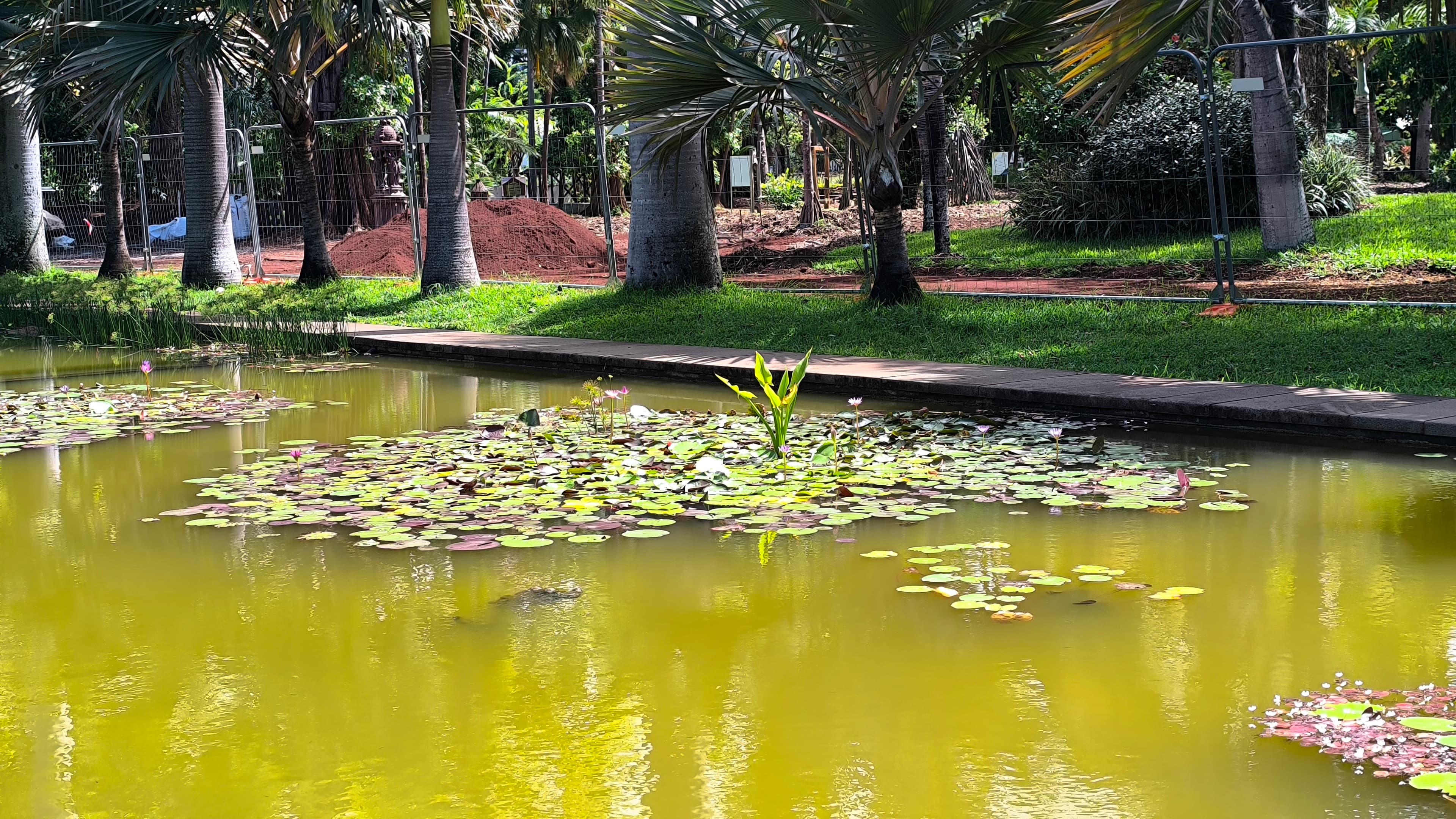
The historic centre is explored on foot. The parallel streets (rue de Paris, rue Pasteur, rue Jean Chatel, rue Juliette Dodu) are lined with colonial houses from the 18th and 19th centuries: wooden façades, varangues (peripheral galleries), lambrequins (decorative carved wooden friezes), shingle roofs. Several are listed historical monuments: Villa Carrère (prefecture), Villa Déramond-Barre (birthplace of Raymond Barre, museum), Hôtel de la Préfecture, old houses of notables. The Jardin de l'État (1773), one of the oldest botanical gardens in France, houses the Natural History Museum which preserves the famous collection of extinct endemic birds of the Indian Ocean (dodo, solitaire).
The religious diversity of Saint-Denis is another major cultural asset. Saint-Denis Cathedral (neoclassical), Noor-e-Islam Mosque (1905, one of the oldest mosques in France), the Tamil temples of the Chaudron district, the Chinese pagoda testify to the peaceful coexistence of Catholic, Muslim, Hindu and Buddhist religions — one of the great prides of Réunion society.
The markets are the other signature of the city. The Petit Marché (Rue du Maréchal Leclerc, Tuesday-Saturday morning) is the great market for fruits, vegetables, spices and flowers. The Chaudron market (Wednesday and Saturday morning) is more popular and authentic, frequented by Dionysians. The Barachois street market (Sunday morning) is held by the sea, on the esplanade that runs along the ocean — the opportunity for walks, brunches and Creole takeaway dishes in a relaxed atmosphere.
What we love
- ✅Exceptional Creole heritage: one of the most beautiful French overseas colonial architectural ensembles
- ✅Peaceful religious diversity: cathedral, mosque, Tamil temples, Chinese pagoda
- ✅Authentic markets (Petit Marché, Chaudron, Barachois): spices, fruits, samosas, chilli bonbons
- ✅Jardin de l'État (1773) and Natural History Museum: museum of extinct species of the Indian Ocean
- ✅Logistical entry point of the island (Roland-Garros airport 12 km), everything is easy
What to know
- ❌No beach in the city (Saint-Denis coast is rocky and beaten)
- ❌Stifling heat in austral summer, can be painful in midday
- ❌Traffic and parking complicated in city centre during peak hours
- ❌Modest nightlife compared to other capitals — the atmosphere is more family
Situation
Où se situe Saint-Denis ?
Ouvrir la carte en grand sur OpenStreetMap →Frequently asked questions
How long do you need to visit Saint-Denis?+
What are the essentials of Saint-Denis?+
Where to sleep in Saint-Denis?+
Where to eat in Saint-Denis?+
Can the Noor-e-Islam Mosque be visited?+
How to get from Roland-Garros airport to Saint-Denis?+
Our verdict
Saint-Denis is the essential heritage and cultural stop of a stay in Réunion. The largest French overseas city is a living museum of Creole architecture, a crucible of religious diversity and a gastronomic playground. Plan a full day on site — ideally at the beginning or end of stay, from the airport or before the return flight — to walk through the streets of the historic centre on foot, visit the Jardin de l'État and the Museum, cross the Chaudron market, lunch on a cari or fresh samosas, and end with a sunset on the Barachois esplanade. You will leave with a much finer understanding of contemporary Réunion society — and with some spices, vanillas and arranged rums in the suitcase.
Nearby

"Été austral chaud-humide, cyclones possibles."
Expert on Saint-Denis · 1 contributions
 Africa & Americas Desk — Mowando·Editor