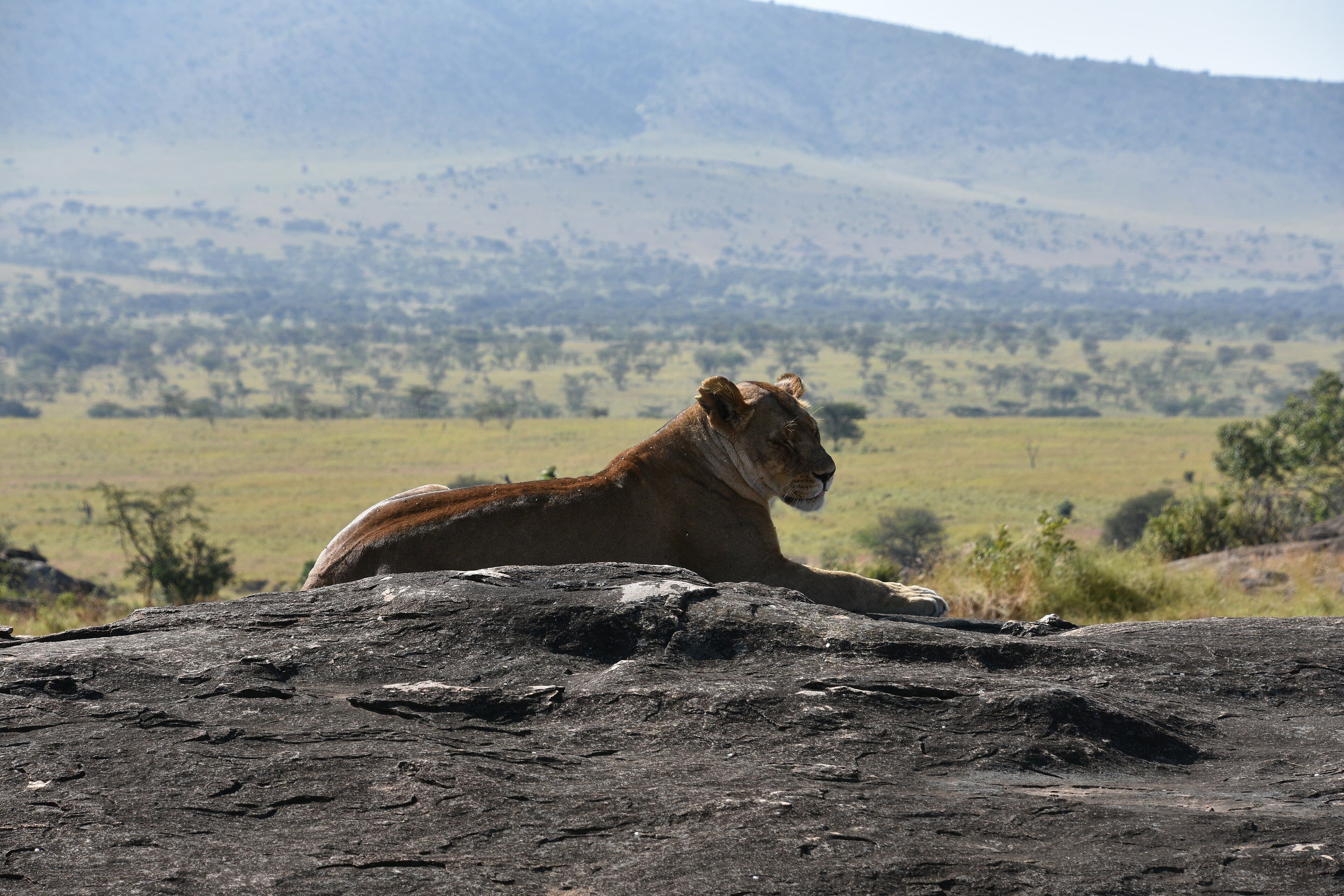
The Northern Circuit is best experienced during the two dry seasons, each offering a different experience.
The long dry season (June to October) is the apex of northern safari. Rains stop, grass shortens, animals gather around permanent water points, and the Great Migration reaches the northern Serengeti — between late July and October, the herds attempt the spectacular Mara River crossings where crocodiles and lions await. It's the most iconic moment of the year but also the most expensive and crowded. Book 6 to 9 months ahead, especially for the mobile camps of the north (Serengeti Mara Camp, Asilia Olakira Camp, Lemala Mara Tented Camp).
The short dry season (January-February) coincides with the calving season in the southern Serengeti (Ndutu region and Salei plains). In 3 to 4 weeks, around 500,000 young wildebeest are born — a concentration that triggers exceptional predator activity: lions in family groups, cheetahs in spectacular hunts, opportunistic hyenas. It's a remarkable photographic window, less crowded than July-August, with intermediate rates.
The long rains (mid-March to mid-May) are absolute low season. Central and northern Serengeti becomes partially impassable, several lodges close, but Tarangire, Manyara and Ngorongoro remain accessible. Rates drop 40 to 60%, parks are green and nearly deserted — an interesting option for tight budgets and seasoned photographers. The short rains (November to mid-December) are less disabling, with brief afternoon showers and parks still easily accessible.
The most consensus window for a first safari combines late August to mid-October: Great Migration in the north, dry and temperate climate, characteristic late-dry-season landscapes.
Read also
- The Serengeti — 14,750 km² of savannah, theatre of the Great Migration and kingdom of lions, cheetahs and leopards.
- The Ngorongoro Crater — 19 km in diameter, the densest concentration of megafauna in the world inside a closed caldera.
- Tarangire and its baobabs — The largest elephant population in northern Tanzania (2,500 individuals) among giant baobabs.
- Tanzania — Full country guide: entry rules, budget, regions to discover and the best time to visit.