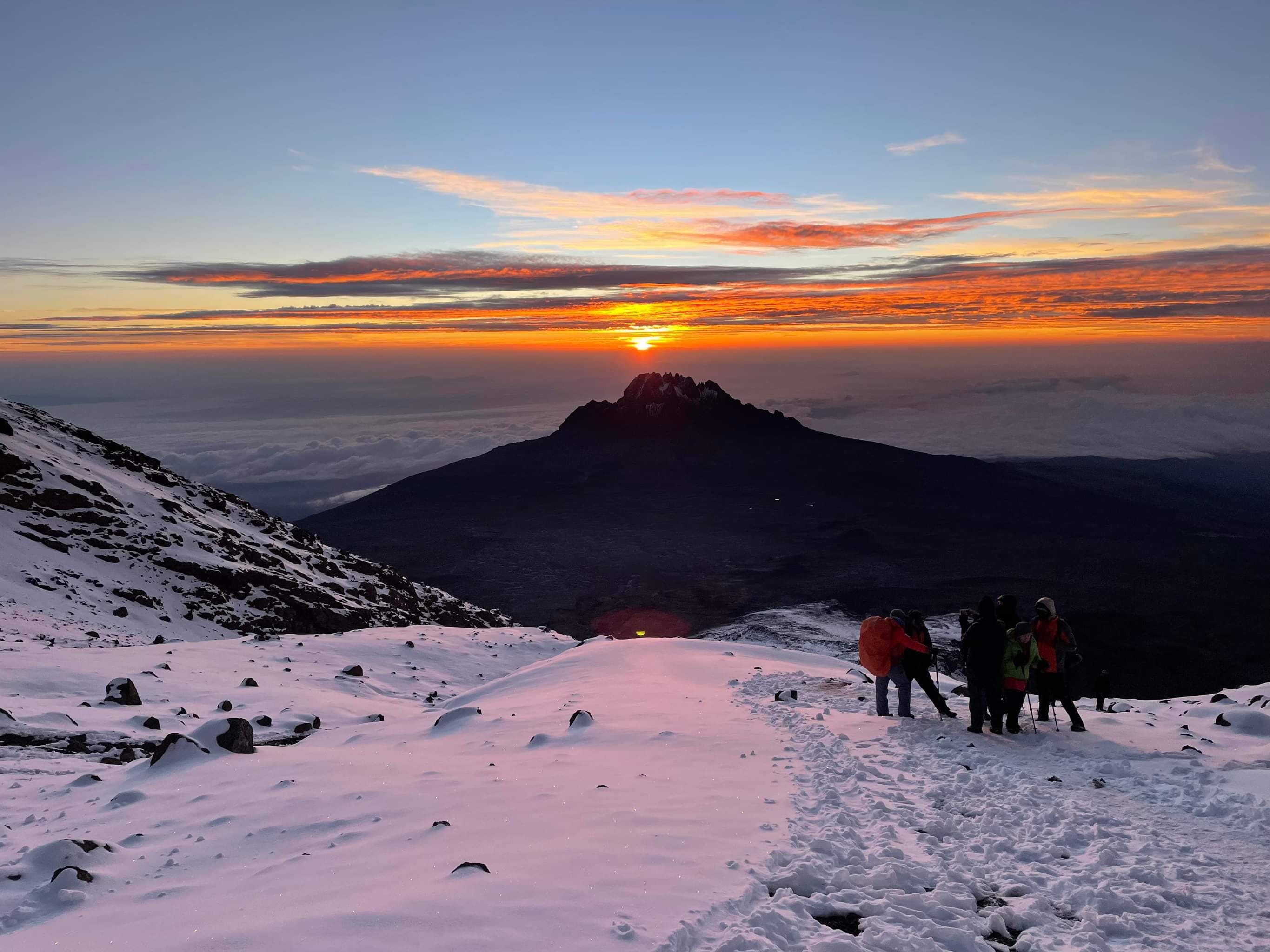
The Kilimanjaro climb is mainly done during the two dry seasons.
The long dry season (July to October) is the main window. The sky is clear, precipitation is rare, trails are dry and stable, summit visibility is maximal. Temperatures are moderate at low altitude (12-22 °C daytime, 5-12 °C at night in the forest zone at 2,000-3,000 m), but become extreme above 4,500 m (-5 to +5 °C daytime, -15 to -20 °C at night at Barafu camp at 4,600 m). The summit (5,895 m) is reached at sunrise after 6-8 hours of night walking in glacial cold — the toughest experience of the whole trek.
It's also the peak season: Machame and Marangu routes can be crowded in August, operator rates are at their highest (2,500-3,500 USD for Lemosho 8 days), and altitude camps (especially Barafu) saturate quickly. To escape the crowds, favour Lemosho or the Northern Circuit, less frequented.
The short dry season (January-February) is the excellent alternative. Conditions are similar to July-August (clear sky, stable trails), with slightly more chill at the summit and fewer people. Light at sunrise is exceptional and photos from Uhuru Peak in the southern winter are among the most iconic. Intermediate rates (10-15% cheaper).
The long rains (mid-March to May) are not recommended: the forest zone (1,800-3,000 m) receives up to 200 mm of precipitation per month, trails become muddy and slippery, summit visibility is often reduced by clouds, and the success rate plummets. Only attempt the climb in the rainy season with prior altitude experience and a very serious operator. The short rains (November to mid-December) are less disabling, with brief afternoon showers and broadly workable conditions.
Read also
- Mount Kilimanjaro — 5,895 m altitude, detailed climb of the 6 main routes and technical advice.
- Northern Circuit: Serengeti and Ngorongoro — The great safari circuit to combine naturally with a Kilimanjaro climb.
- Tanzania — Full country guide: entry requirements, budget, regions and best time to visit.
- Zanzibar: turquoise beaches and Stone Town — The ideal archipelago to decompress after the summit climb.