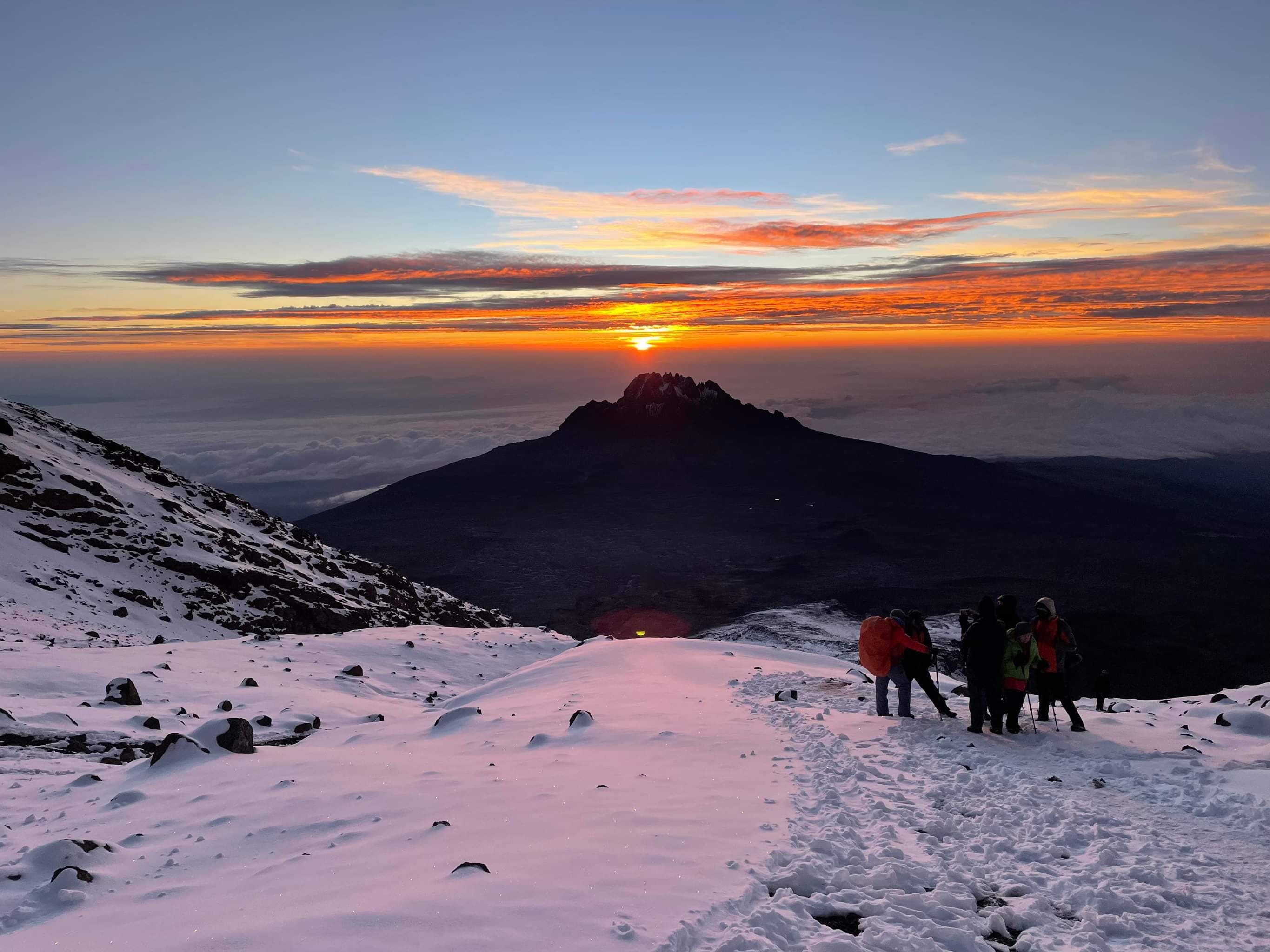
The Kilimanjaro region is above all that of a mountain — a dormant volcano peaking at 5,895 metres that alone dominates the Maasai plain of north-eastern Tanzania. This geological singularity (the world's tallest free-standing summit, meaning not part of a chain) gives the massif unmatched visual majesty: it's visible from the Serengeti 250 km away, and its snow-capped silhouette cuts across the burnt savannahs of East Africa.
The Kilimanjaro climb is one of the great expeditions accessible to the average trekker. More than 30,000 people attempt to climb Uhuru Peak, the highest point, each year. The overall success rate is around 65%, but can reach 85% with a long route (Lemosho 8 days) and a serious operator. Tanzanian logistics is mature: guides are state-certified, porters unionised via the Kilimanjaro Porters Assistance Project (KPAP), and the six official routes are marked and maintained.
The town of Moshi, perched at 1,000 metres altitude at the southern foot of the massif, is the base for all treks. 50 km from Kilimanjaro International Airport (JRO), it's a service town without major tourist appeal but with a dense offering of accommodation, equipment shops and trek operators.
Read also
- Mount Kilimanjaro — 5,895 m altitude, detailed climb of the 6 main routes and technical advice.
- Northern Circuit: Serengeti and Ngorongoro — The great safari circuit to combine naturally with a Kilimanjaro climb.
- Tanzania — Full country guide: entry requirements, budget, regions and best time to visit.
- Zanzibar: turquoise beaches and Stone Town — The ideal archipelago to decompress after the summit climb.