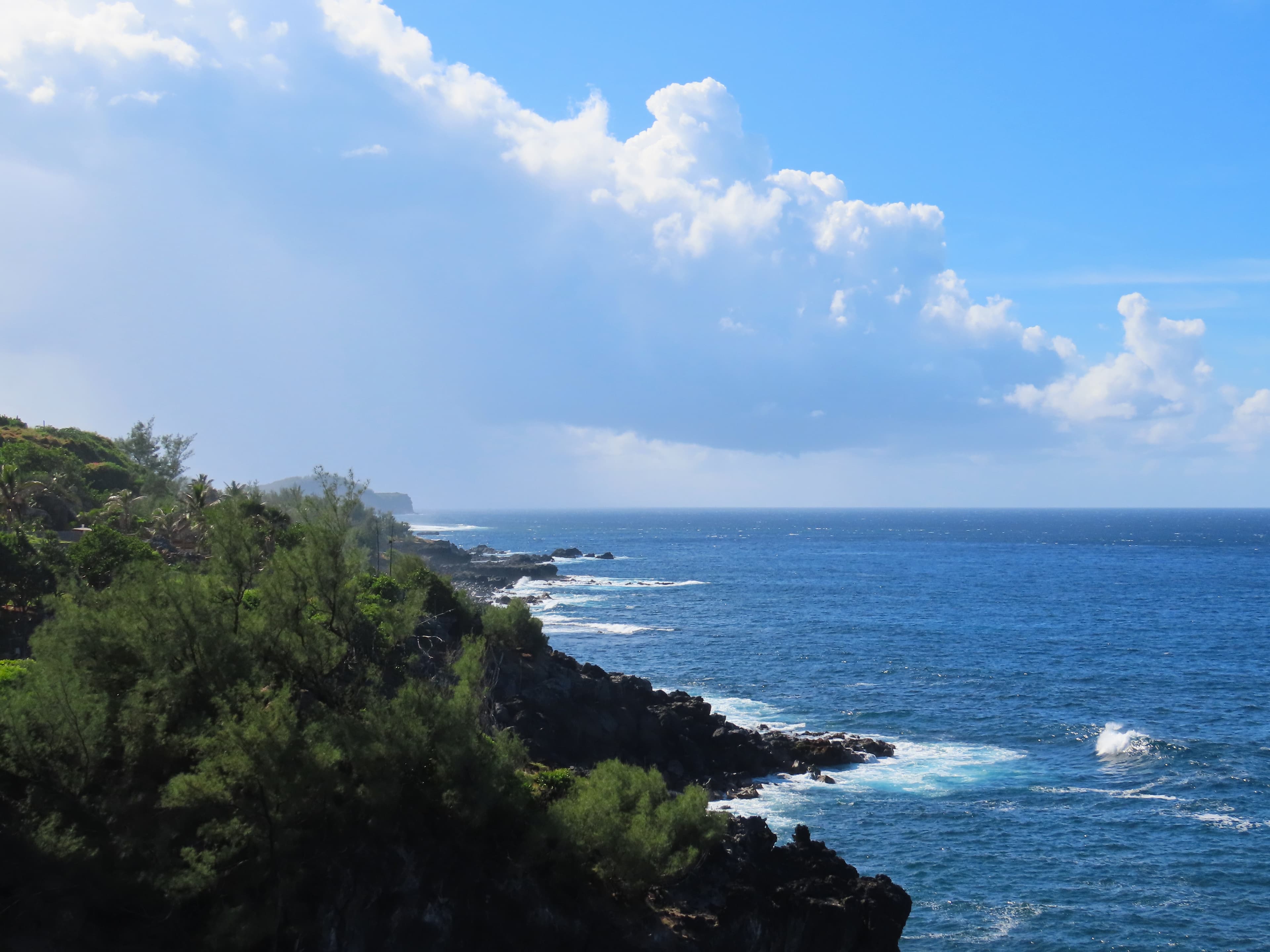
Réunion's Wild South is the region that reveals the volcanic nature of the island at its highest degree of intensity. This is where Piton de la Fournaise lives — one of the most active volcanoes in the world, with an eruption every nine months on average since 1640. Its eruptions, generally effusive (fluid lava flows, little explosive), regularly repaint the south-east coast landscapes where you still cross today flows from 1977, 1986, 2007, 2018 and 2022 — an open-air geological journey crossed by car.
The region extends from south of Saint-Pierre to Sainte-Rose, encompassing the high plateaus of the Plaine des Cafres and the Plaine des Sables (lunar landscape at 2,360 m), the lava flow coast between Saint-Philippe and Sainte-Rose, and the authentic Creole villages (Saint-Joseph, Saint-Philippe, Sainte-Rose, Petite-Île). The preserved character of this region — few hotels, no large resorts, no postcard beaches — makes it particularly endearing for travellers seeking authenticity.
Plan 2 to 3 days on site as part of a 10-14 day stay in Réunion. The first day for the volcano (very early departure from Bourg-Murat or Plaine des Cafres), the second for the south-east coast and lava flows, the third optional for the Saint-Philippe vanilla plantations and Creole villages.
Read also
- Piton de la Fournaise — One of the world's most active volcanoes: Pas de Bellecombe, Plaine des Sables, hike at the Dolomieu crater.
- The Cirques of Réunion — Mafate, Cilaos and Salazie: the other volcanic side of the island, UNESCO-listed.
- The West Coast — Saint-Gilles, L'Hermitage and the turquoise lagoon: the ideal beach complementarity.
- Réunion — Complete guide of the intense island: formalities, budget, climate, regions to discover.