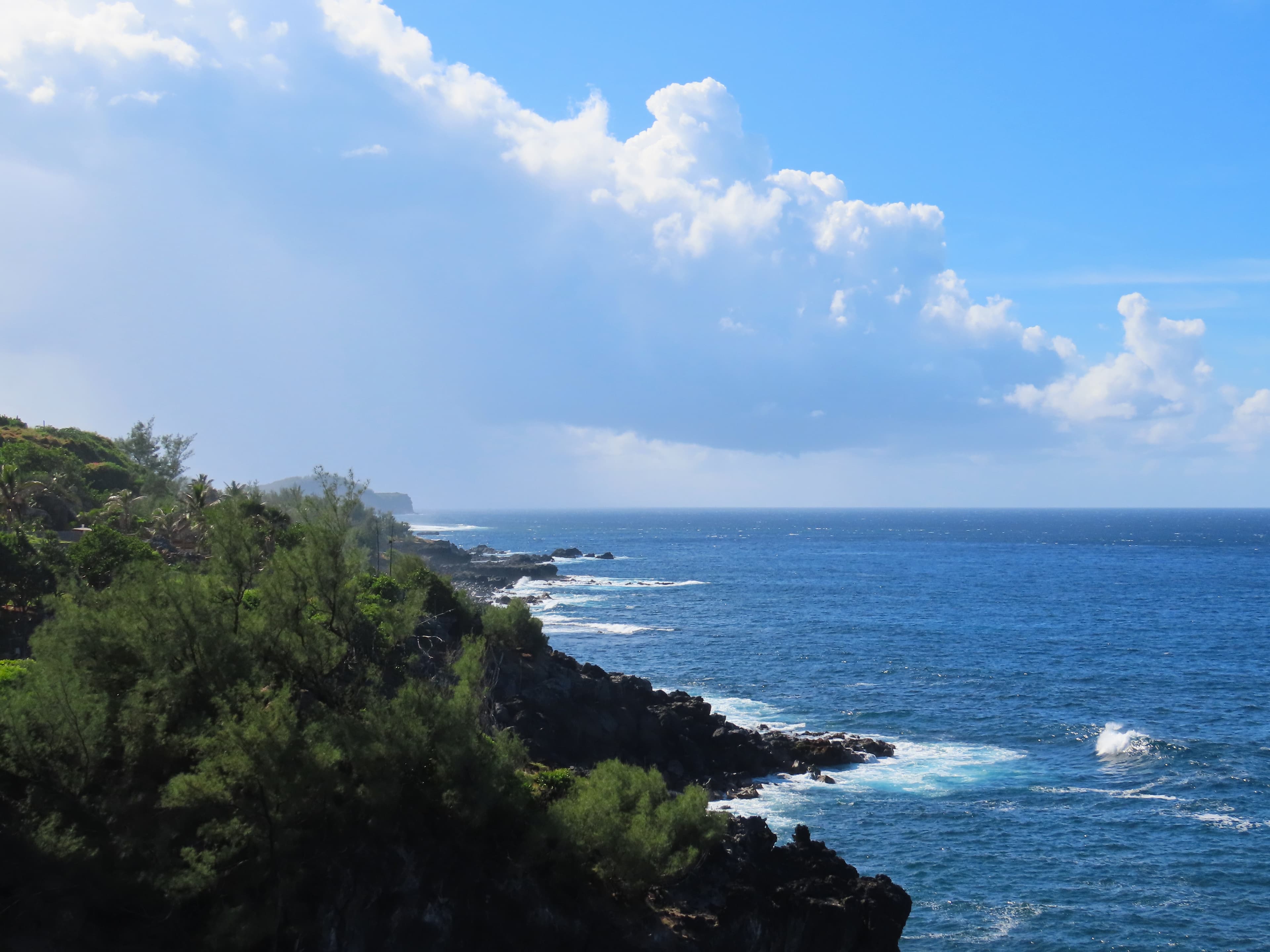
The Wild South absolutely requires a car. The road network is correct but distances and elevations are significant.
From Saint-Pierre, southern gateway city, count 30 min to reach Saint-Joseph (south coast), 1h for Saint-Philippe, 1h30 for Sainte-Rose. The RN2 (National Road 2) runs along the entire south-east coast passing through the lava flows — one of the most beautiful roads on the island. For the Highlands, the RN3 climbs from Saint-Benoît or Saint-Pierre to Plaine des Palmistes and Plaine des Cafres in 45 min to 1h depending on the starting point.
For the volcano, from Bourg-Murat (Plaine des Cafres), the volcano forest road (24 km) to Pas de Bellecombe takes 1h. Paved road to Plaine des Sables, then 5 km of track in good condition (but watch out for fog and potholes). Leave early — between 5am and 6am — to beat the fog that sets in around 10-11am. Bring fleece, windbreaker, water (2 L/person minimum), hiking shoes, headlamp, helmet preferable if you descend into the Enclos.
The helicopter is a spectacular option to fly over the volcano: €250-400/person for 30-45 min of flight from Saint-Pierre (Hélilagon, Corail Hélicoptères). Particularly impressive in case of ongoing eruption, when ground access is closed.
Read also
- Piton de la Fournaise — One of the world's most active volcanoes: Pas de Bellecombe, Plaine des Sables, hike at the Dolomieu crater.
- The Cirques of Réunion — Mafate, Cilaos and Salazie: the other volcanic side of the island, UNESCO-listed.
- The West Coast — Saint-Gilles, L'Hermitage and the turquoise lagoon: the ideal beach complementarity.
- Réunion — Complete guide of the intense island: formalities, budget, climate, regions to discover.