
Mowando

Climate & seasons

When to visit Piton Fournaise?

By La rédaction · Updated 6/10/2026

The Editors
The Editorsauteur principal✓ Verified

"Été austral chaud-humide, cyclones possibles."

Expert on Piton Fournaise · 1 contributions

The best periods

The best time to visit Piton Fournaise is May to November (accessible trails, clear sky).

Mai, Juin, Jui, Aoû, Sep, Oct, Nov

Hiver austral — saison reine du volcan

  • Sentiers ouverts dans 95 % des cas (sauf éruption en cours)
  • Ciel dégagé tôt le matin (avant que le brouillard ne remonte des plaines vers 11h)
  • Visibilité optimale sur l'Enclos Fouqué et le sommet du Piton des Neiges au loin
  • Températures fraîches mais agréables en journée (5-15 °C au Pas de Bellecombe)
  • Très grosse affluence en juillet-août (parking saturé dès 7-8h du matin)
  • Vent froid au sommet, équipement chaud impératif même en saison sèche
  • Brouillard quasi systématique en après-midi — départ tôt indispensable
Déc, Jan, Fév, Mar, Avr

Été austral — saison cyclonique défavorable

  • Végétation luxuriante sur les pentes de la Plaine des Cafres
  • Cascades en plein débit (Cascade Niagara, Cascade du Bras Mahavel)
  • Sentiers du volcan régulièrement fermés pour conditions météo dégradées
  • Brouillard quasi permanent sur la Plaine des Sables et le Pas de Bellecombe
  • Risque cyclonique élevé (15 nov - 15 avril), route forestière parfois coupée
  • Visibilité nulle depuis la plupart des belvédères en après-midi

Month-by-month climate

Temperatures, rainfall and sunshine in Piton Fournaise across the 12 months.

JanFévMarAvrMaiJuinJuiAoûSepOctNovDéc
Min8°7°8°7°4°2°1°1°2°3°4°6°
Max13°12°12°11°9°7°7°7°8°10°11°12°
Mer
Pluie735mm765mm505mm577mm202mm261mm199mm191mm125mm177mm225mm336mm
Soleil/j8.7h9.7h8.9h8h9.4h9h9.4h9.9h10.6h10.3h10.2h10.6h

Tourist crowds

Monthly attendance levels (0 = empty, 100 = saturated).

Jan
70
Fév
65
Mar
55
Avr
55
Mai
75
Jui
85
Jui
90
Aoû
90
Sep
80
Oct
70
Nov
65
Déc
75

Frequently asked questions

How to get to Piton de la Fournaise?+
Access is via the volcano forest road from Bourg-Murat (Plaine des Cafres, 1,600 m). Count 1h from Bourg-Murat, 1h45 from Saint-Pierre, 2h30 from Saint-Denis. The road crosses the Plaine des Cafres, then the Plaine des Sables (lunar landscape, partially unpaved road but accessible to normal cars), and arrives at the Pas de Bellecombe (2,311 m), starting point of hikes. Free parking (but saturated in high season from 7-8am).
How long does the crater hike take?+
The full Dolomieu crater loop from Pas de Bellecombe lasts 5 to 6 hours round trip (12 km, 600 m elevation descent then ascent). Descent by steep switchback trail into the Enclos Fouqué (1h30), traverse of the black scoria field towards Formica Leo (1h), ascent of the Dolomieu crater and full tour (1h30), return by the same itinerary (2h). Marked trail without major technical difficulty but physical. For those who do not want to do the full loop, the Formica Leo walk (descent to the small cone then ascent, 2-3h round trip, 200 m elevation) is the shorter option.
What to do if Piton de la Fournaise is erupting?+
An ongoing eruption is a chance and a rare spectacle. The vapour plume visible from tens of kilometres away, sometimes lava flows visible at night from certain belvederes. The crater approach trails are then closed to the public for safety, but observation belvederes are arranged. The Piton de Bert trail (from Nez de Bœuf, 1h30 round trip) often offers the best views over the Enclos in case of eruption. Follow the Prefecture and OVPF recommendations (Piton de la Fournaise Volcanological Observatory, fournaise.info). Eruptions typically last from a few days to a few weeks.
How to know if the trails are open?+
Check mandatorily the trail status the day before your hike on two sources. The site fournaise.info of the OVPF (Piton de la Fournaise Volcanological Observatory) gives the volcano activity status in real time, eruption alerts and recommendations. The ONF site (National Forestry Office) and the Maison de la Montagne in Saint-Denis provide municipal and prefectoral closure orders. In case of doubt, call directly 0262 27 06 30 (volcano gîte).
What equipment for the hike?+
Middle-mountain hiking equipment: high-top hiking shoes with cleated sole (volcanic lava is very abrasive), windbreaker and warm fleece (cold wind at the summit even in dry season, temperatures below 0°C before dawn), hat and gloves, long trousers (protection against scoria), 2 L/person water minimum (no water source in the Enclos), energy bars or picnic, headlamp (departures before sunrise), SPF 50+ sunscreen (intense reverberation on black ground), hat, sunglasses. Helmet preferable if you descend into the Enclos in full eruption. Minimal first aid kit.
Can you fly over Piton de la Fournaise by helicopter?+
Yes, and it is spectacular — particularly in case of ongoing eruption. Several providers from Saint-Pierre or Saint-Gilles: Hélilagon, Corail Hélicoptères, Réunion Hélicoptères. Panoramic flights 30-45 minutes: €250-400/person, overflight of the summit, the Dolomieu crater, the Plaine des Sables and recent flows towards the Grand Brûlé. In case of eruption, possibility of overflight of active lava flows (under safety conditions). Reservation 1-2 days in advance, possible cancellation in case of bad weather.
What is the best time for the volcano?+
The austral winter, from May to November, without hesitation. Volcano trails accessible in 95% of cases, optimal visibility in early morning from Pas de Bellecombe (before fog rises from the plains around 11am), dry Highland roads, cool but pleasant temperatures (5-15°C at Pas de Bellecombe during the day, 0 to -5°C before dawn). Avoid January-March: real cyclone risk (Plaine des Sables can be inaccessible for several days in a row), almost permanent fog from morning, muddy and slippery trails, possible torrential rains.

Our verdict

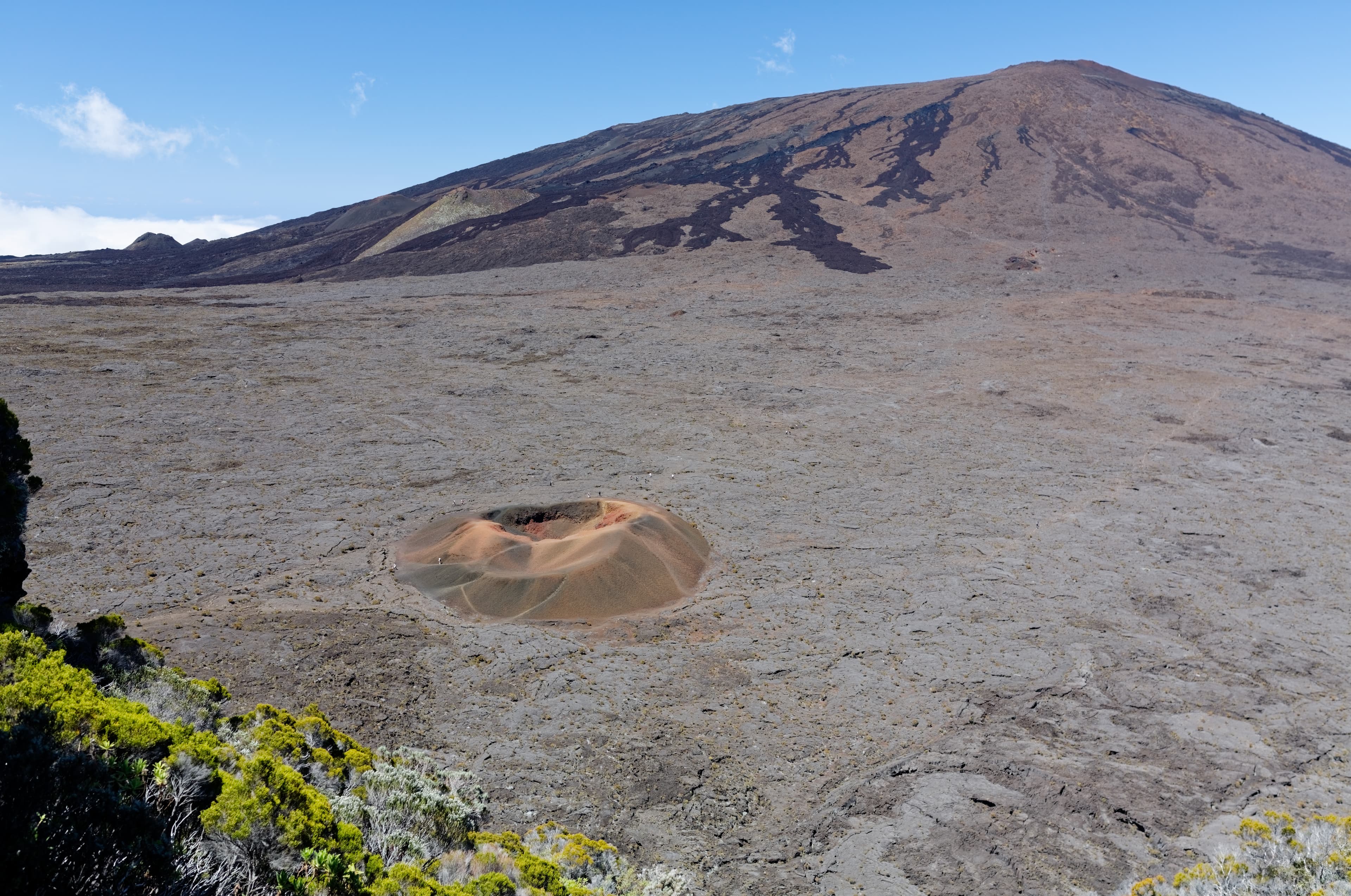
The Piton de la Fournaise is Réunion's signature geological experience. It is one of the world's most active volcanoes, and it is an immense chance to be able to walk there on foot — on the hardened lava flows, through the black scoria field, to the edge of the Dolomieu crater. The landscape of the Plaine des Sables, at 2,360 metres altitude, is so Martian that science fiction film scenes have been shot there. Dedicate a full day to the excursion: very early departure from your accommodation (Plaine des Cafres or south coast), 1h of forest road to Pas de Bellecombe, 5-6h of hike to the Dolomieu crater, descent before fog sets in. Come imperatively between May and November, check the trail status on fournaise.info the day before, and equip yourself warmly.

Similar destinations
Mowando Letter

Once a month: the right destinations for the right season + the best booking windows.

No spam. One-click unsubscribe. Your data is never shared.