ville
Saint-Pierre
The Pompeii of the Caribbean: Saint-Pierre, former economic capital of the French Antilles, was annihilated on 8 May 1902 in minutes by a pyroclastic flow from Mount Pelée — 30,000 dead in minutes.
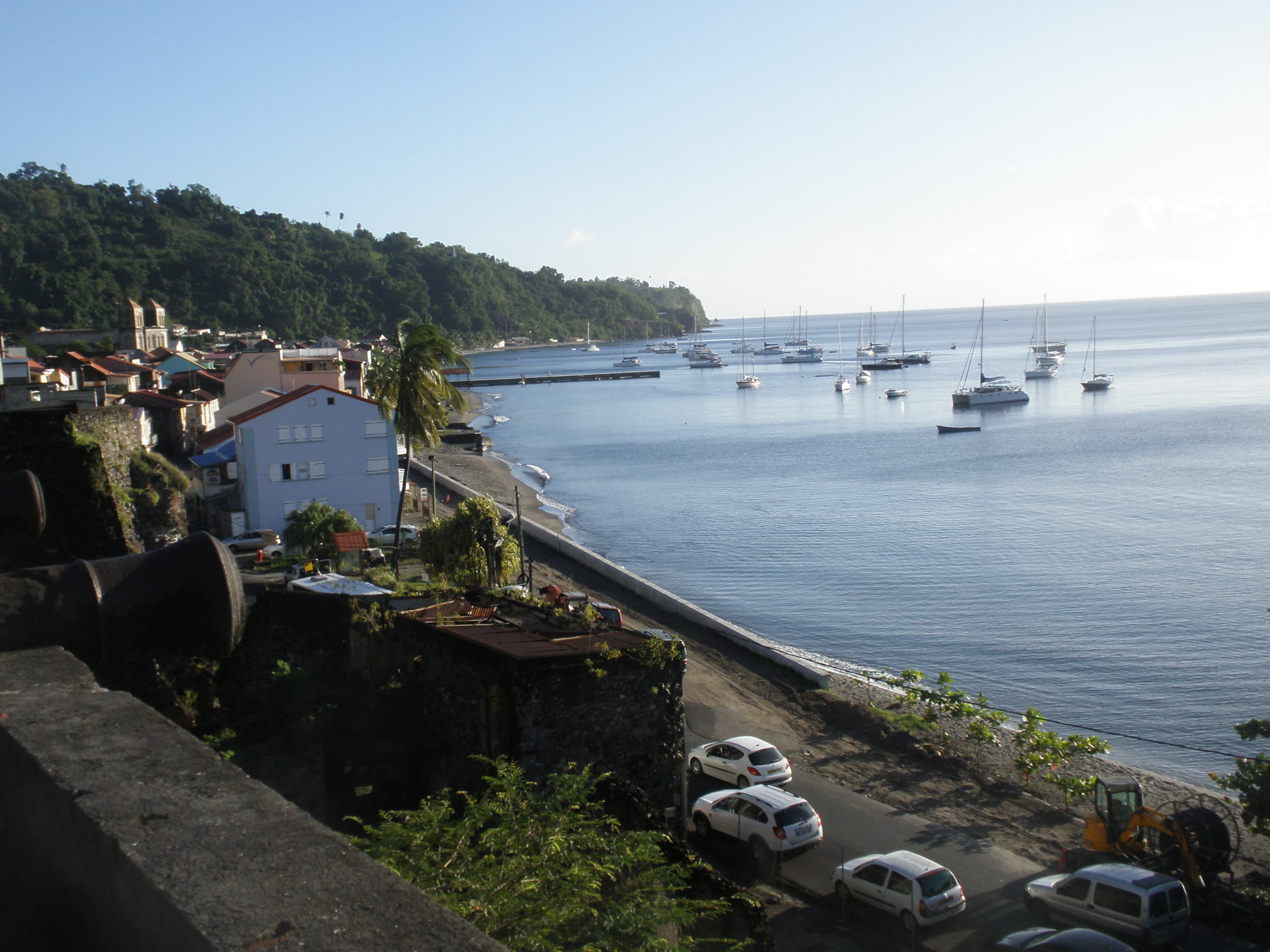
Saint-Pierre is probably the most powerful and moving memorial place of the Caribbean — a site whose dramatic history attracts travellers sensitive to the depth of the Antillean narrative far beyond the mythical beaches of the south. In the 19th century, Saint-Pierre was nicknamed the 'Paris of the Antilles': economic and cultural capital of Martinique with its 30,000 inhabitants, its active commercial port (first of the French Antilles), its Italian-style 800-seat theatre built in 1786, its banks, its printing houses, its dozens of café-concerts, its pastries inspired by the French capital.
On 8 May 1902 at 7:52am, in minutes, everything was annihilated. The Mount Pelée (1,397 m), active volcano dominating the city from the north, released a pyroclastic flow — cloud of burning gases and incandescent ash (temperature estimated at 1,000°C) descending the slopes at 670 km/h. The city was destroyed, the port in flames, and 30,000 inhabitants killed in minutes. Only two people survived: Louis-Auguste Cyparis, prisoner in the stone cell of the Military Quarter, and Léon Compère-Léandre, shoemaker in a cool cellar at the time of the catastrophe. The Pelée eruption remains to this day the third deadliest volcanic catastrophe in human history.
Today, Saint-Pierre is a village of 4,000 inhabitants set between the preserved ruins of the former city (opera theatre, Cyparis cell, former warehouses, prison) and the Caribbean Sea from which one can glimpse the wrecks of the twelve ships sunk by the eruption (major diving sites, at 15-30 m depth). The Frank Perret Museum (Earth Sciences Discovery Centre, €7), named after the American volcanologist who settled in Saint-Pierre in the 1930s, presents the eruption and its aftermath with remarkable pedagogy.
A few steps from Saint-Pierre, the Depaz distillery (former Pécoul habitation rebuilt after the eruption, exceptional panorama over the bay and Pelée, free visit with tasting) is one of the most beautiful AOC rum distilleries of the island. The Aileron trail (departure Le Morne-Rouge, 5h round trip) is the classic access route to the summit of Mount Pelée.
What we love
- ✅Major memorial place: ruins of the 1902 eruption, one of the most moving historical sites of the Caribbean
- ✅Frank Perret Museum: remarkable presentation of the eruption with melted objects and testimonies
- ✅Mount Pelée hike (Aileron trail): emblematic experience of the Martinican stay
- ✅Depaz distillery: one of the most beautiful habitations of the island with exceptional panorama
- ✅Diving on the 12 wrecks of 1902: major sites with rich pelagic fauna
What to know
- ❌Very limited hotel offer: 2-3 hotels in village, predominance of B&Bs
- ❌Humid microclimate around Pelée: rain risk even in carême on the heights
- ❌Volcanic black sand beaches less photogenic for the Caribbean postcard
- ❌Nightlife almost non-existent (very quiet village in the evening)
- ❌Greater distance from the airport than the South (1h from airport to Saint-Pierre)
Situation
Où se situe Saint-Pierre ?
Ouvrir la carte en grand sur OpenStreetMap →Frequently asked questions
What must you absolutely see in Saint-Pierre?+
How to get to Saint-Pierre from Fort-de-France?+
How does the Mount Pelée hike work?+
How many days do you need in Saint-Pierre?+
Can you dive on the 1902 wrecks at Saint-Pierre?+
Is the Depaz distillery worth the visit?+
Our verdict
Saint-Pierre is probably the most striking stage of a Martinican stay on the emotional and cultural level. The visit of the ruins, Frank Perret Museum and Depaz distillery constitutes a day of rare intensity — a deep Antillean narrative that transforms the perception of the island. If you are in good physical condition, schedule the Mount Pelée hike via the Aileron trail (5h round trip, departure before 7am to avoid altitude clouds). Ideally stay in a B&B in Saint-Pierre or Le Carbet (€90-150/night) for authentic immersion. Plan 2-3 days on Saint-Pierre and its surroundings, in combination with an excursion to Grand-Rivière (deep north) and the JM distillery in Macouba. Visit preferably in March-April for the best compromise of weather and crowds.
Nearby

"Pic touristique haute saison sèche."
Expert on Saint-Pierre · 1 contributions
 Africa & Americas Desk — Mowando·Editor