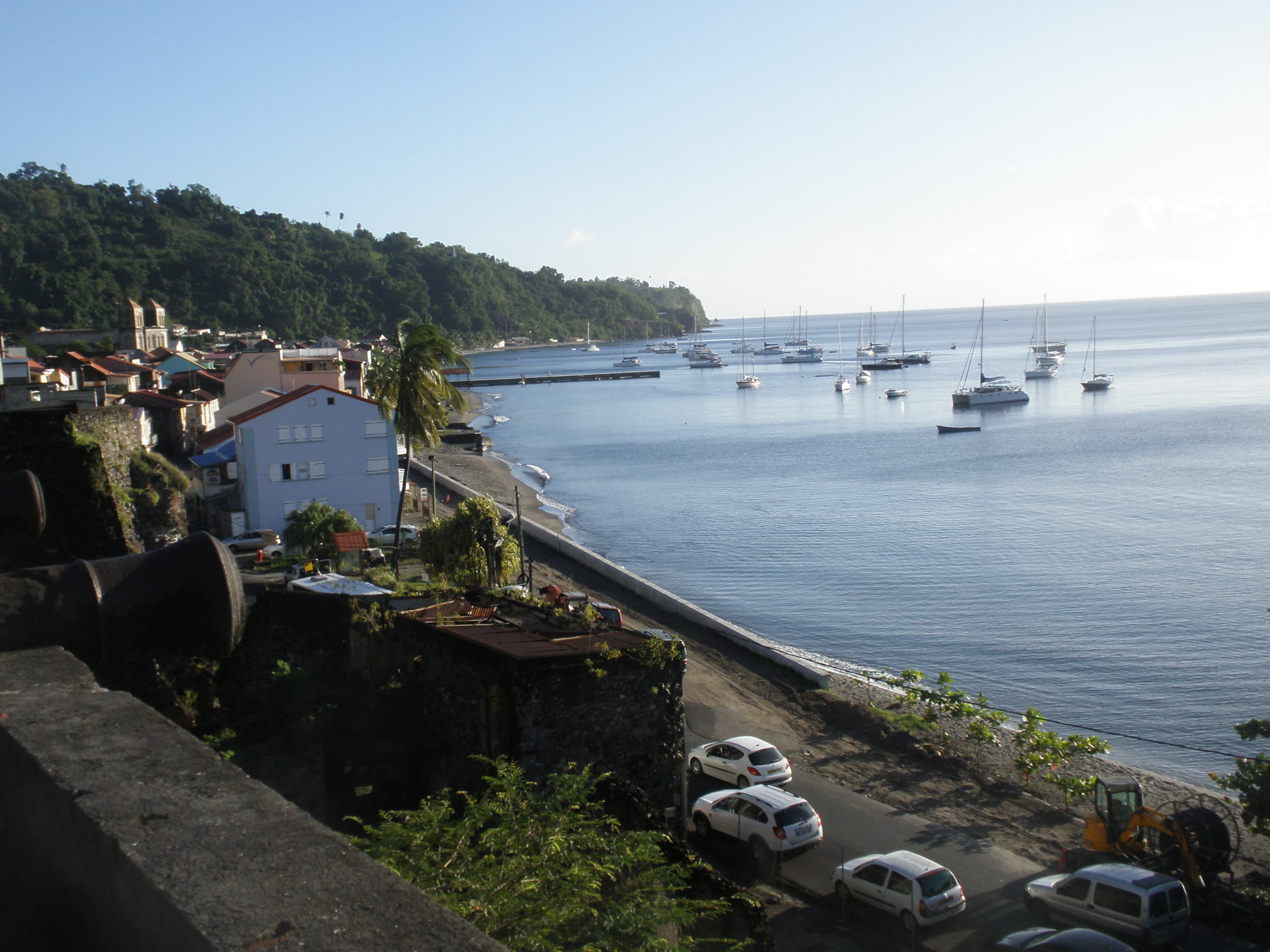
Saint-Pierre offers an exceptional concentration of experiences easily justifying 2 to 3 days of stay.
Visit of the ruins (free, accessible 24/7): open-air route retracing the former city destroyed in 1902. Essential sites: opera theatre, Cyparis cell (stone cell where the prisoner Louis-Auguste Cyparis miraculously survived the eruption), reconstructed cathedral, former port warehouses, prison. Plan 2 hours for a complete route.
Frank Perret Museum (Earth Sciences Discovery Centre, €7 adult, 1h30 visit): remarkable presentation of the 1902 eruption and its consequences.
Depaz distillery (3 km south of Saint-Pierre, free visit with tasting, 1h30): former Pécoul habitation rebuilt after the eruption.
Mount Pelée hike (Aileron trail, 5h round trip, 800 m elevation, intermediate to difficult level): the emblematic experience of the Martinican stay.
Diving on the 1902 wrecks: 12 ships sunk by the eruption rest at 15-30 m depth in the bay. Diving centres in Saint-Pierre: Plongée Passion Caraïbes, Bleu Marine. Minimum Open Water level, €45-60 the exploration.
Morne des Cadets viewpoint (Fonds-Saint-Denis, 30 min east via the N3): one of the most beautiful panoramas over the south face of Mount Pelée.
Black sand beaches: Mouillage beach in Saint-Pierre, Carbet beach (8 km south), Anse Couleuvre (Le Prêcheur, 25 min, spectacular wild beach accessible by 20 min trail).
Northern distilleries to complete with: Neisson (Le Carbet, 8 km south, free visit) and JM (Macouba, 1h via the N3, paid visit €6, famous for its exceptional aged rums).
Read also
- North Martinique — The historical and natural soul of the island: Saint-Pierre, Pelée, deep north.
- Martinique — Complete guide of the Island of Flowers.
- Fort-de-France — The Creole capital 1h south, heir of Saint-Pierre after 1902.
- South Martinique — The mythical beaches and seaside resort 1h30 away.
- Central Martinique — Fort-de-France and the wild Caravelle peninsula.