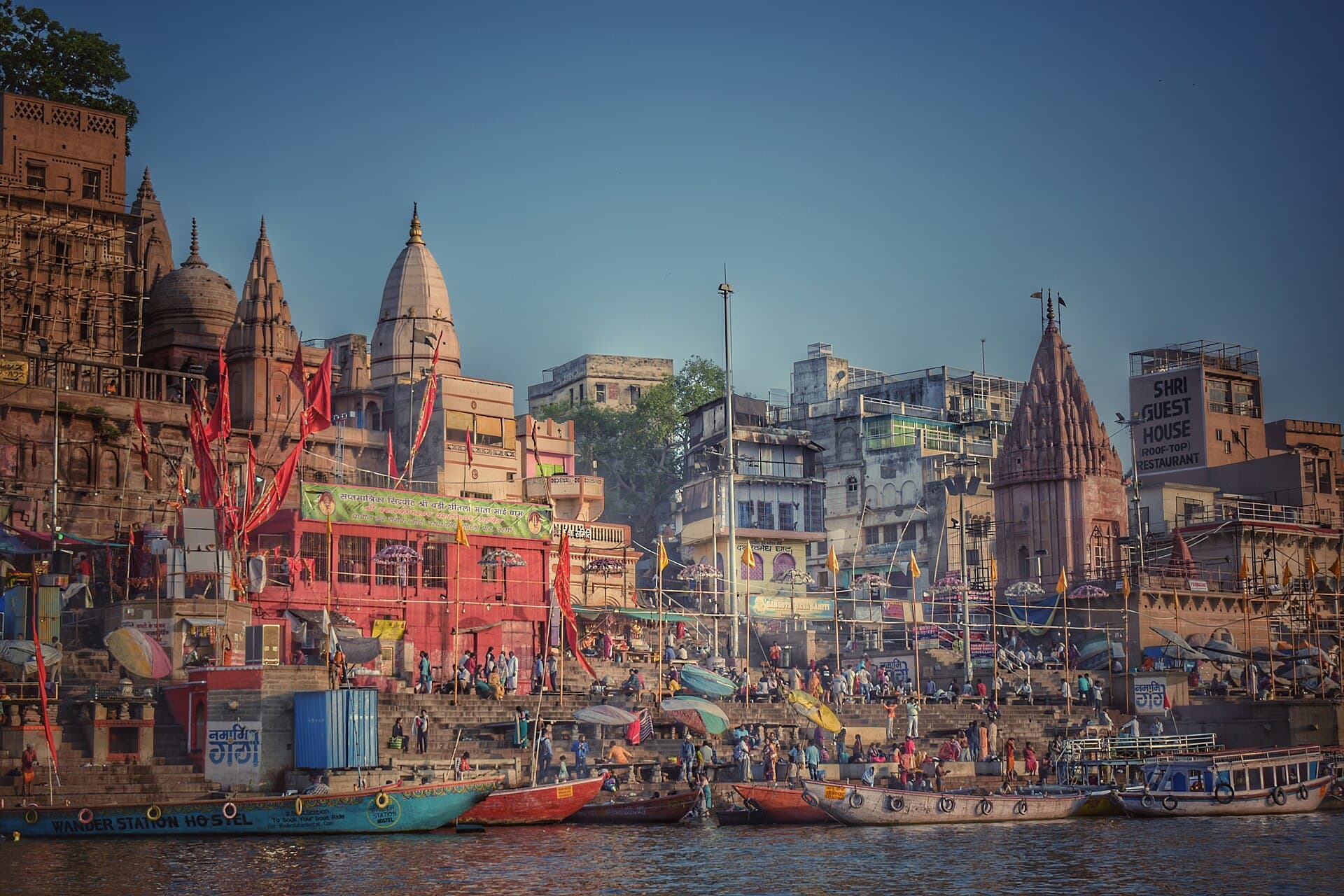
Varanasi is best visited from November to March during the cool dry season. Temperatures are bearable (15-28 °C by day, 8-15 °C at night), low humidity, real thermal comfort for sunrise boat rides (5:30-7:30 am) and evening Aarti ceremonies (6:30-7:30 pm). It's high tourist and pilgrim season — ghat-front hotels book 2-3 months ahead for December-February.
Two specific pitfalls to anticipate. Frequent morning mist on the Ganges in December-January — reduced sunrise visibility, veiled photographs, more mystical but less spectacular atmosphere. If you want a clear sunrise, target November or February-March.
The festivals enrich the trip. Dev Deepawali (15 days after Diwali, in November) is Varanasi's great festival — the 88 ghats over 4 km are illuminated by millions of oil lamps (diyas) at dusk. Maha Shivaratri (March) is Shiva's festival.
The hot season (April-June) is exhausting — 38-44 °C. The monsoon (July-October) transforms Varanasi spectacularly but is hard to practice — the Ganges floods dramatically, partially or totally submerging lower ghats.
Read also
- Varanasi (Benares) — the sacred city — Ganges ghats, Aarti ceremony, cremations at Manikarnika, India's most intense experience.
- India — complete country guide — Everything to know: mandatory e-Visa, currency, regions, best time to visit.
- Delhi & Rajasthan — Golden Triangle and Maharaja palaces: combine with Varanasi for a complete northern trip.
- Kerala & South — The gentle alternative: backwaters, plantations, beaches — perfect antithesis to Varanasi.