Region
Benares & UP
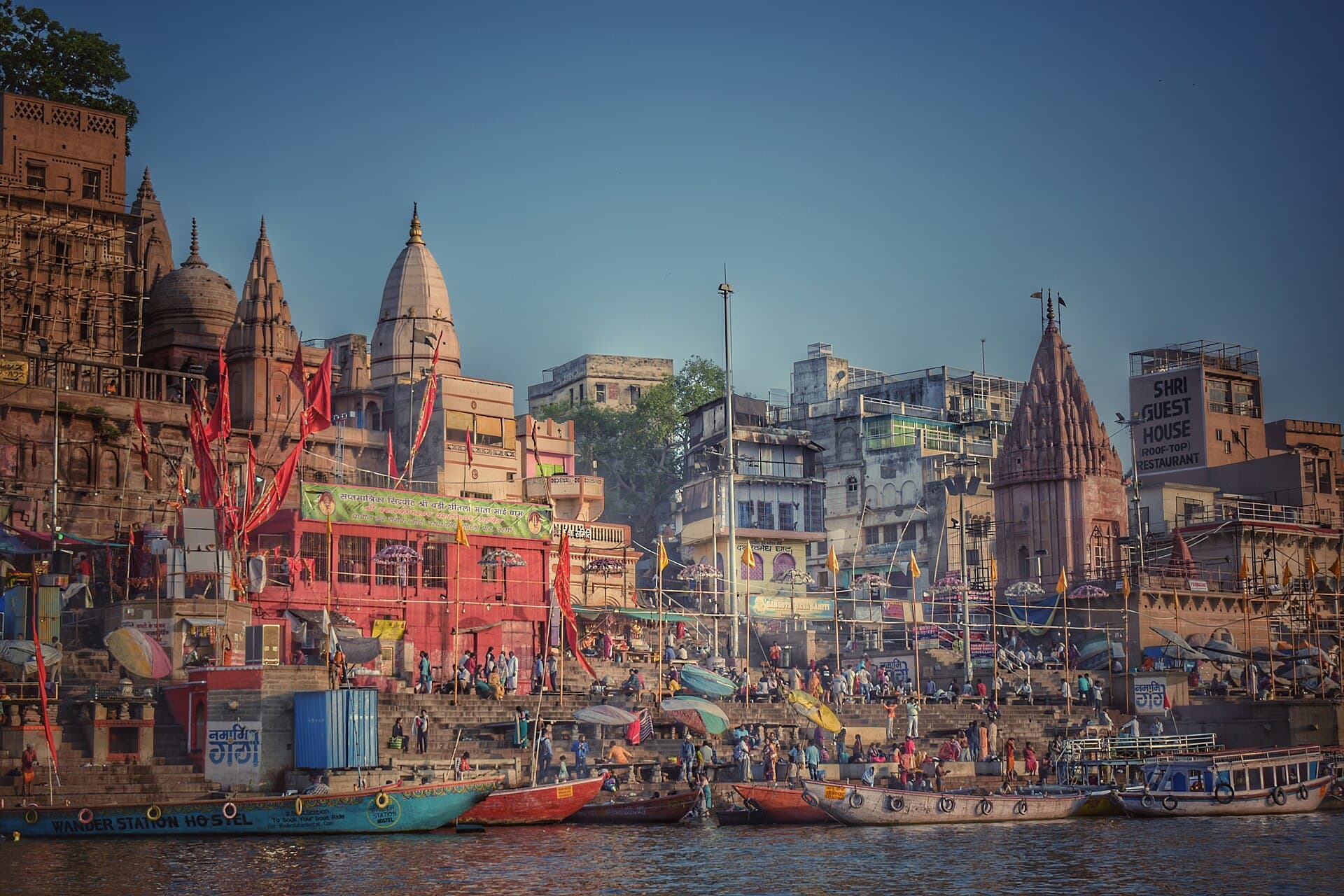
Varanasi (Benares): Hinduism's most sacred city, founded according to tradition 5,000 years ago by Shiva — 88 ghats on the Ganges, spectacular Aarti ceremonies, ritual cremations, India's most intense experience.
The Benares & Uttar Pradesh region covers eastern Uttar Pradesh (India's most populous state: 240 million inhabitants, more than Brazil), crossed by the Ganges — Hinduism's most important sacred river, sourced in the Himalayas (Gangotri glacier at 4,100 m) and crossing 2,525 km to reach Bengal and the Bay of Bengal. Here, on the banks of the Ganges, lies Varanasi (Benares, Kashi) — Hinduism's most sacred city, one of the world's oldest continuously inhabited cities (5,000 years according to tradition, 3,000 years archaeologically attested), India's spiritual capital, where every Hindu dreams of dying to reach moksha (liberation from the cycle of reincarnations).
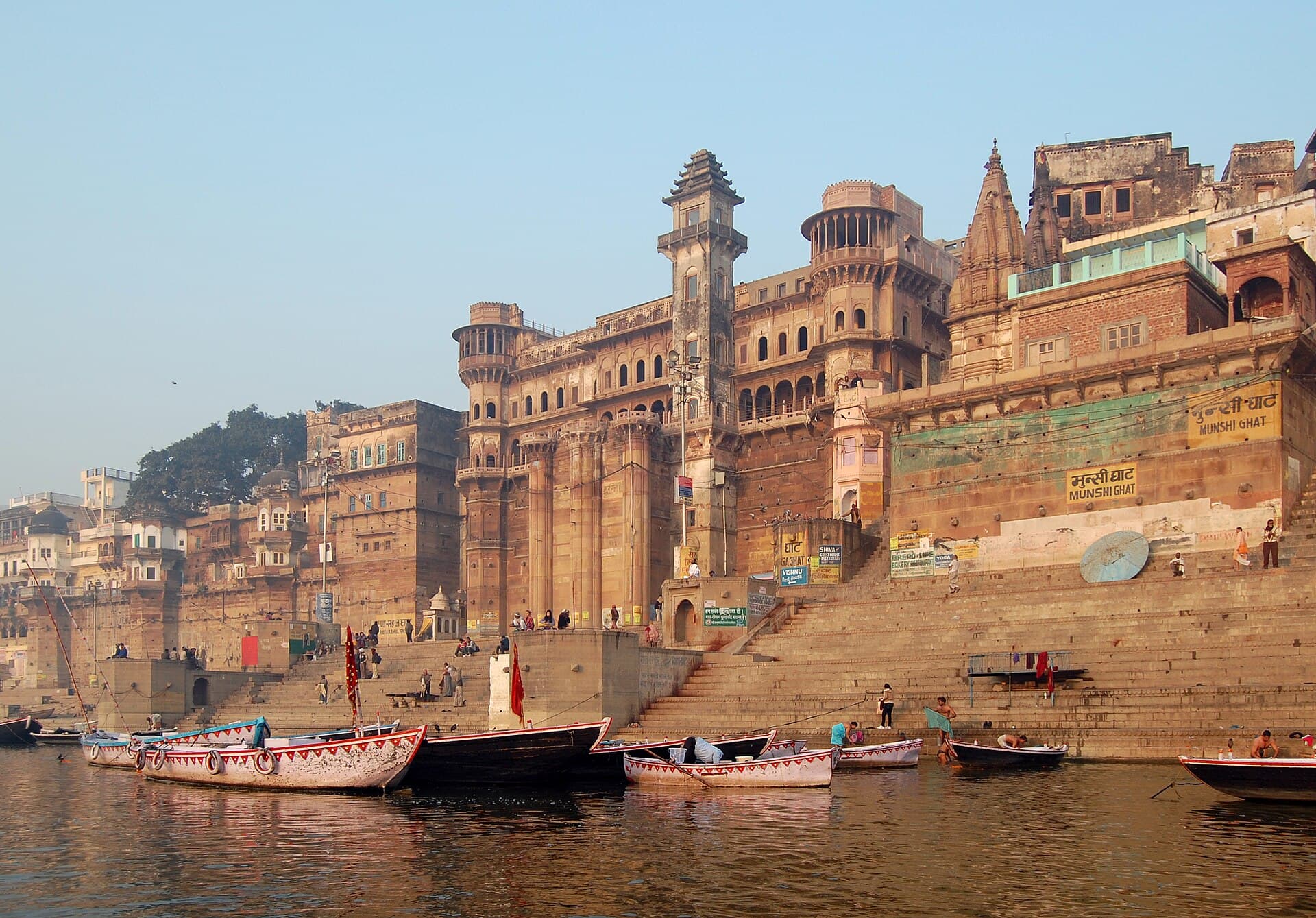
Varanasi (1.5 million inhabitants) concentrates the essential tourist offering. The city stretches along the western bank of the Ganges (the sacred bank), with its 88 ghats (stairs descending to the river) cascading over 4 km in crescent. The most emblematic: Dashashwamedh Ghat (the most central and busiest, site of spectacular evening Aarti ceremony), Manikarnika Ghat (the great cremation ghat, where bodies of Hindus who came to die at Benares have burned day and night for millennia), Harishchandra Ghat (second cremation ghat), Assi Ghat (southern end, starting point of morning boat rides). Above the ghats, the old quarter with its labyrinthine alleys preserves over 2,000 temples (most important being Kashi Vishwanath Temple).
Signature experiences: sunrise boat ride (5:30-7:30 am) from Assi or Dashashwamedh — silently gliding along the ghats, observing pilgrims in ritual bath, morning ceremonies, bodies burning at Manikarnika — one of humanity's most intense experiences. The Ganga Aarti evening ceremony (6:30-7:30 pm) at Dashashwamedh: 7 synchronised priests perform an elaborate fire-incense-conch ceremony in honour of Mother Ganges — hypnotic spectacle.
Sarnath (10 km north of Varanasi) is one of the 4 great Buddhist sites worldwide — here in the Deer Park (Mrigadava) the Buddha gave his first sermon around 528 BCE.
Explore Benares & UP
Spots in the region
Situation
Où se situe Benares & UP ?
Ouvrir la carte en grand sur OpenStreetMap →Frequently asked questions
How many nights for Varanasi?+
How to reach Varanasi from Delhi?+
Should I attend cremations at Manikarnika Ghat?+
Is Varanasi safe for solo women?+
Is Sarnath really worth the detour from Varanasi?+
Can you bathe in the Ganges at Varanasi?+
Our verdict
Benares & Uttar Pradesh is for travellers India's most intense and marking experience — the one you never forget. Varanasi isn't a tourist destination in the classic sense: it's an immersive dive into living Hindu spirituality, into the life-and-death cycle exposed in the open, into a uniquely human and religious concentration. Our advice: never reduce Varanasi to 1 night — at least 2 nights, ideally 3-4 nights to absorb the city. Optimal itinerary: D1 midday arrival, ghats walk, evening Aarti at Dashashwamedh; D2 sunrise boat ride (5:30-7:30 am — the absolute experience), ghat-front breakfast, nap, Sarnath afternoon, evening Aarti; D3 old quarter (alleys, temples, market, street food), sunset boat. Combine with Golden Triangle: Delhi-Varanasi flight 1h25 (IndiGo, SpiceJet, €60-120). Period: November-March. Recommended ghat-front hotels: Brijrama Palace (Darbhanga Ghat, palace converted, €250-450/night), Taj Ganges (upper city, 5-star comfort, €200-350/night), Suryauday Haveli (Shivala Ghat, boutique, €150-250/night). Bring anti-diarrhoeal medicines, water exclusively in sealed bottles, mask for crowded alleys.