ville
Pointe-à-Pitre
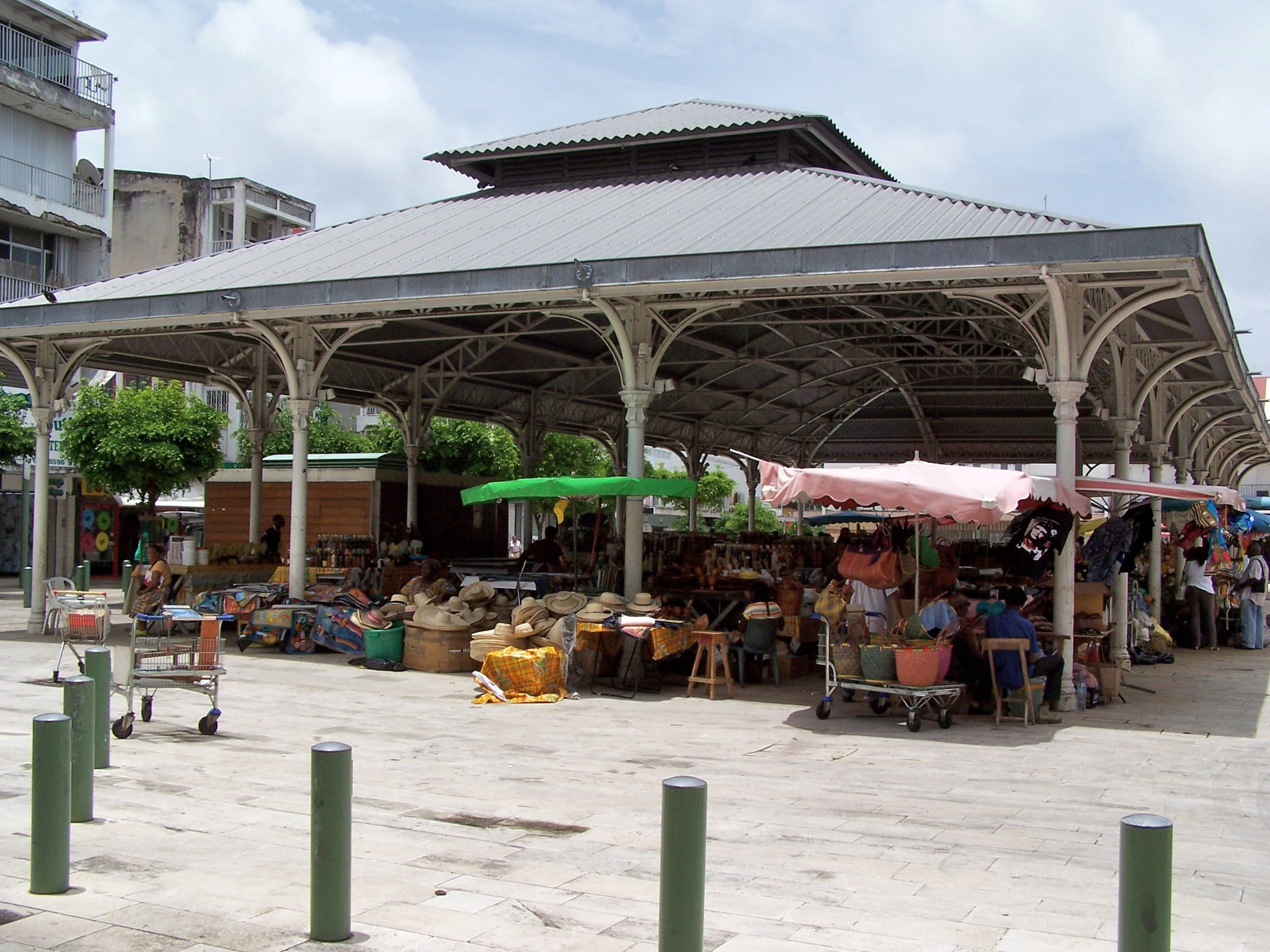
The gateway and economic heart of Guadeloupe: the Saint-Antoine market at sunrise, the ACTe Memorial (one of the world's largest museums on the memory of slavery) and the urban Creole soul.
Pointe-à-Pitre is the economic and cultural capital of Guadeloupe — although the administrative prefecture is Basse-Terre town. Located at the crossroads of Grande-Terre and Basse-Terre, on the Petit Cul-de-Sac Marin estuary, the city has around 15,000 intra-muros inhabitants (130,000 with the Abymes and Baie-Mahault metropolitan area) and concentrates the archipelago's commercial, port and cultural activity. It's also the unmissable arrival point for almost all travellers: the Pôle Caraïbes international airport (PTP) is 5 km to the north, in the Abymes commune.
Pointe-à-Pitre's identity is inseparable from its colonial past and slavery. Founded in 1654 as a French trading post, the city developed in the 18th century as one of the main slave ports of the Antilles, receiving thousands of African slaves bound for sugar plantations. This painful history is today acknowledged and presented at the ACTe Memorial (opened in 2015 on the former Darboussier sugar refinery site), one of the world's most important museums dedicated to the memory of slavery and the slave trade — an essential stop to understand contemporary Guadeloupean identity.
The centre of Pointe-à-Pitre concentrates its riches on a few square kilometres around Place de la Victoire (historic heart shaded by sandbox trees and flamboyants) and the Darse (lively waterfront). The Saint-Antoine market (open every day except Sunday afternoon) is the absolute unmissable — explosion of colours, spices, exotic fruits and vendors in traditional madras. The shopping streets (Frébault, Nozières, Schoelcher) are animated on weekdays. The Bas-de-la-Source quarter hides small rum and souvenir shops. At night, some neighbourhoods (Chanzy, Bergevin) should be avoided for solo walks — classic big-city vigilance applies.
What we love
- ✅Saint-Antoine Market: one of the most beautiful markets in the Caribbean, authentic Creole atmosphere at sunrise
- ✅ACTe Memorial (2015): world-reference museum on the memory of slavery and the slave trade
- ✅Preserved colonial and Creole architecture around Place de la Victoire and Frébault street
- ✅Saint-Pierre-and-Saint-Paul Cathedral (19th c.) with its metal pillars by Gustave Eiffel
- ✅Gateway to the archipelago: Pôle Caraïbes airport 5 km away, maritime station for Marie-Galante and Les Saintes
What to know
- ❌City centre congested on weekdays at rush hour (7:30-9, 16:30-18)
- ❌Neighbourhoods to avoid at night (Chanzy, Bergevin) — classic big-city vigilance required
- ❌Limited and expensive hotel offer intra-muros (prefer Gosier or Le Bas-du-Fort)
- ❌No beach in the city — you have to go out to Le Gosier to swim
Situation
Où se situe Pointe-à-Pitre ?
Ouvrir la carte en grand sur OpenStreetMap →Frequently asked questions
How much time should I spend in Pointe-à-Pitre?+
When to visit the Saint-Antoine market?+
What is the ACTe Memorial and should I visit it?+
Is Pointe-à-Pitre dangerous?+
Where to stay if I want to be near Pointe-à-Pitre?+
Our verdict
Pointe-à-Pitre is the unmissable gateway to Guadeloupe and the cultural heart of the archipelago. A full day is enough for the essentials (morning Saint-Antoine market, ACTe Memorial, lunch on the Darse, stroll around Place de la Victoire), but two days allow you to deepen with the Saint-Pierre-and-Saint-Paul Cathedral (Eiffel pillars), the Schoelcher House (memory of abolition) and the working-class Creole neighbourhoods. Prefer Sainte-Anne or Gosier for sleeping, and come to Pointe-à-Pitre on a day excursion — you'll thus enjoy the urban animation without enduring the stifling heat of summer nights in the city centre.
Nearby

"Janvier est l'apogée de la saison sèche : alizés frais, ciel dégagé, ambiance carnavalesque qui commence à monter. Mois idéal pour visiter Pointe-à-Pitre et son marché Saint-Antoine."
Expert on Pointe-à-Pitre · 1 contributions
 Africa & Americas Desk — Mowando·Editor