Mowando

Region

Grande-Terre

The eastern wing of the butterfly island: a flat limestone plateau, some of the archipelago's finest Caribbean beaches, its turquoise lagoons and its economic and cultural heart around Pointe-à-Pitre and the ACTe Memorial.

4.70

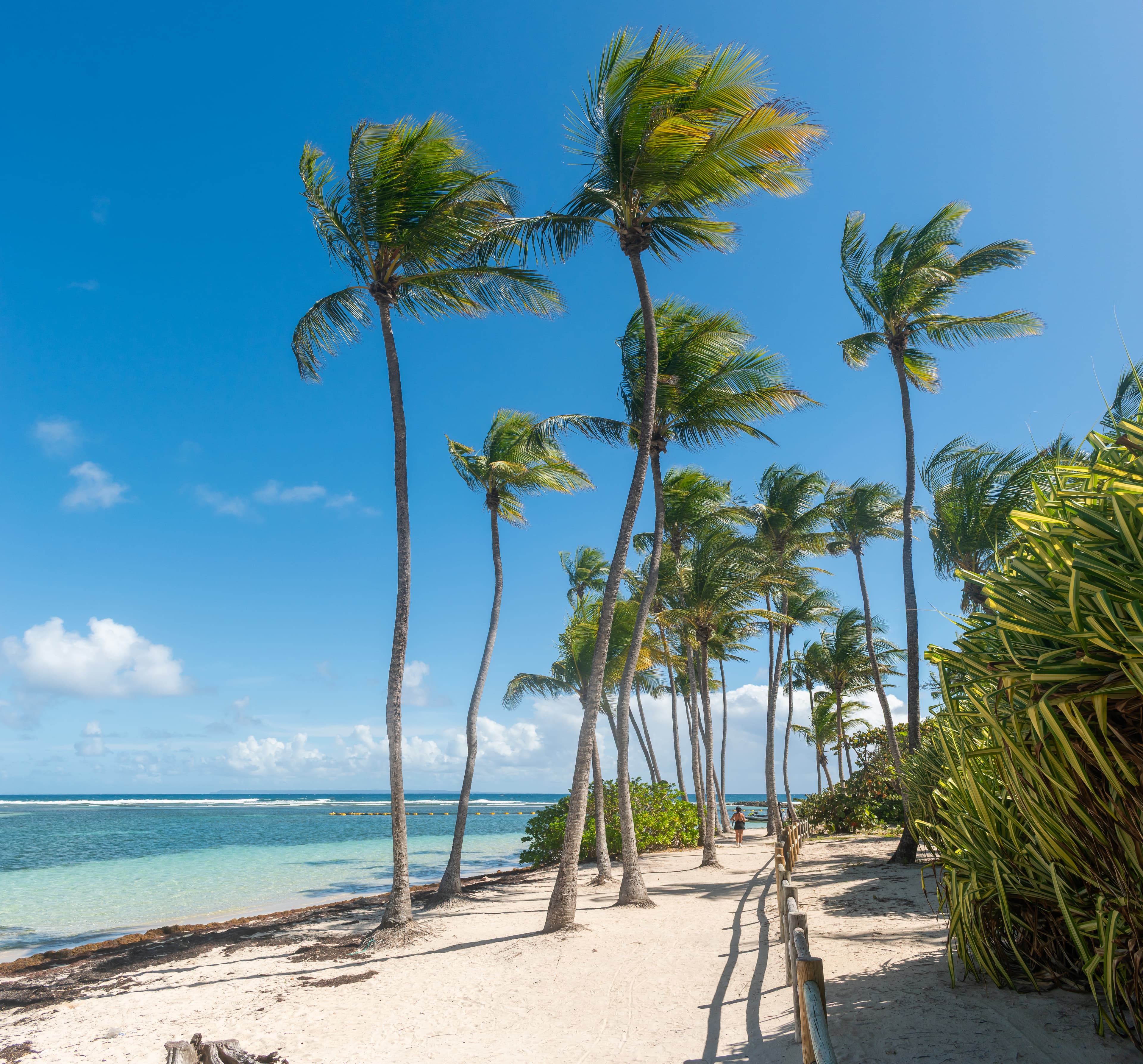
Grande-Terre is the flat, seaside half of Guadeloupe — the eastern wing of the butterfly island, geologically opposite to Basse-Terre. While its twin sister is volcanic and jungle, Grande-Terre is a limestone plateau with a maximum altitude of 130 metres (the Grands Fonds), shaped by erosion into rounded mornes and fertile plains once devoted to sugar cane. This sedimentary geology gives it its exceptional beaches — white or golden sand, shallow lagoons protected by coral reefs, the turquoise waters characteristic of the Caribbean — that make the archipelago's seaside reputation.

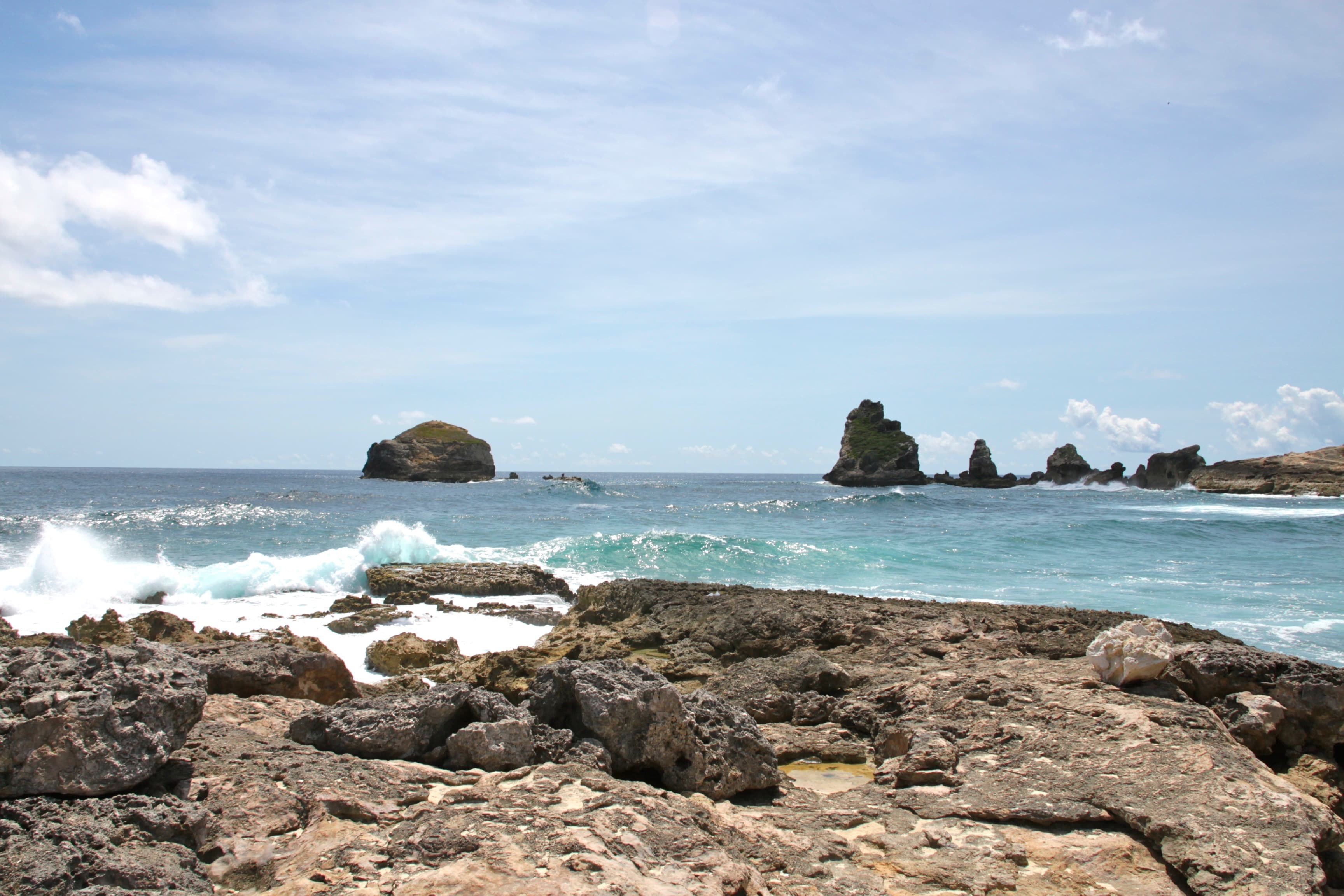
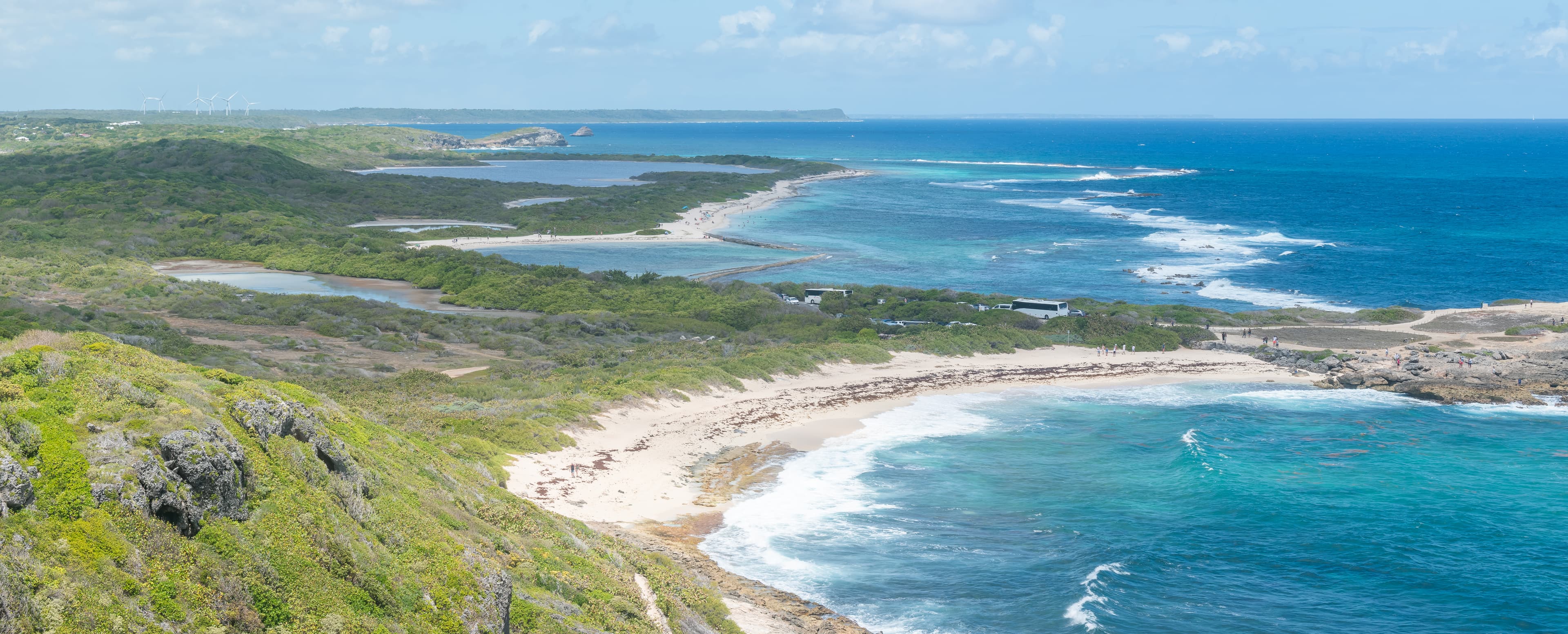
The diversity of the coastline is remarkable on this 590 km² territory. The south coast (the 'Riviera Sud') from Gosier to Saint-François concentrates the most beautiful family beaches: Caravelle Beach in Sainte-Anne (historic Club Med, perfect lagoon), Bois Jolan (protected wild beach), Sainte-Anne village beach, Saint-François beaches and the Porte d'Enfer lagoon (not to be confused with the one in Anse-Bertrand to the north). The eastern pointPointe des Châteaux — is one of the archipelago's most spectacular natural sites: cliffs battered by the Atlantic, monumental cross at the summit, panoramic view toward La Désirade, Marie-Galante and Petite-Terre. The north coast, wilder and less frequented, unrolls the cliffs of Pointe de la Grande Vigie, Anse Laborde beach and the mysterious Trou de Madame Coco.

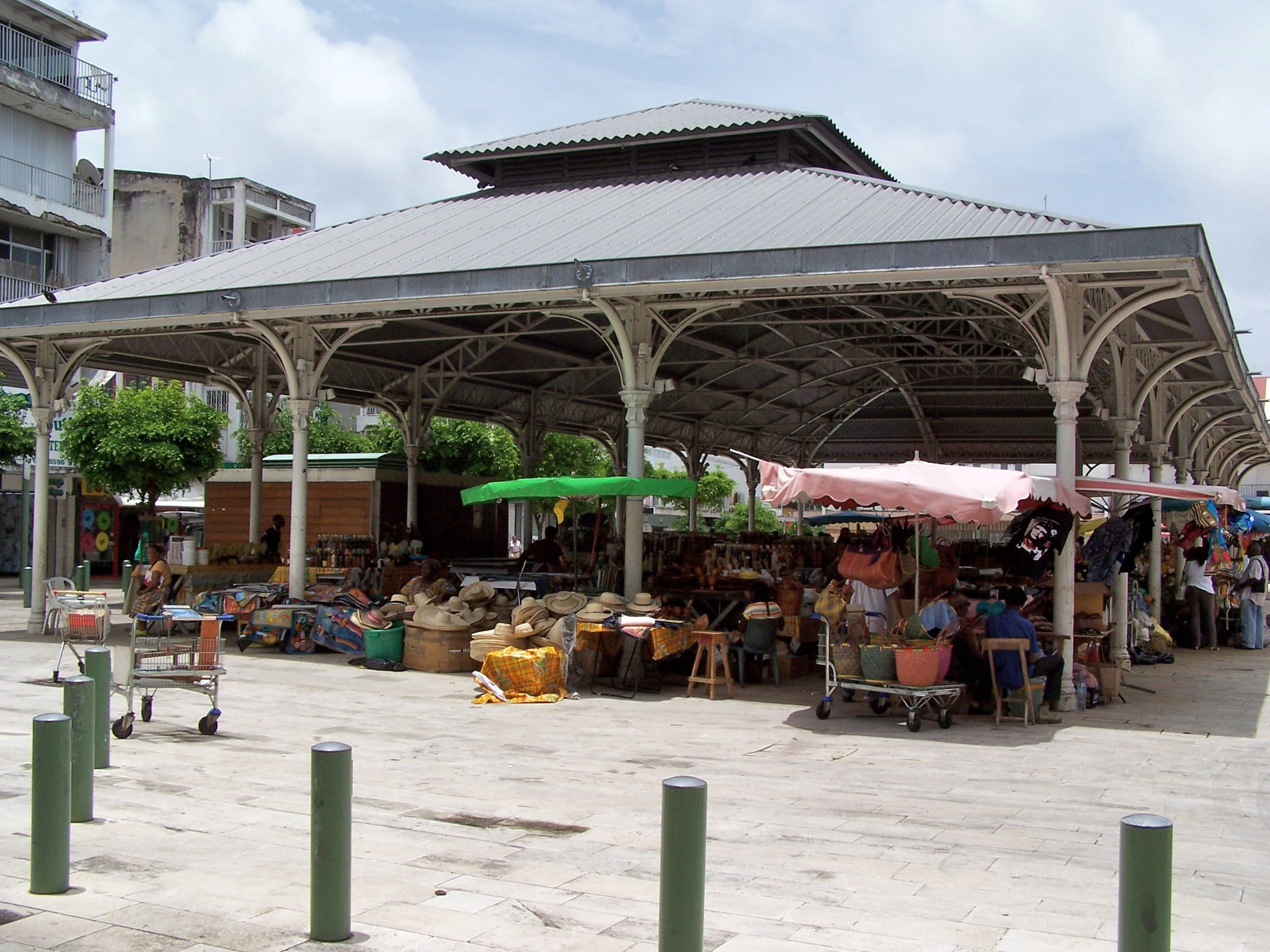
The main towns — Pointe-à-Pitre (economic and cultural capital, Saint-Antoine market, ACTe Memorial), Le Gosier (residential and seaside suburb, casino, restaurants), Sainte-Anne (family seaside heart, Club Med, traditional market), Saint-François (upscale resort, marina, golf, departure for Désirade and Petite-Terre excursions), Le Moule (Atlantic coast, surfing, Damoiseau distillery) and Anse-Bertrand (far north, wild and authentic) — form a string where tourist rhythm and daily Creole life closely intermingle.

Explore Grande-Terre

Spots in the region
Situation

Où se situe Grande-Terre ?

Ouvrir la carte en grand sur OpenStreetMap →

Frequently asked questions

How many days do you need to visit Grande-Terre?+
Minimum 5 to 7 days for a balanced visit: 1 day in Pointe-à-Pitre (morning Saint-Antoine market, ACTe Memorial, lunch on the Darse), 2 to 3 days on the south coast (Caravelle and Bois Jolan beaches, Sainte-Anne village, Saint-François marina), 1 day at Pointe des Châteaux and wild beaches (Anse à la Gourde, Anse Tarare), 1 day for the north coast (Le Moule, Damoiseau distillery, Pointe de la Grande Vigie, Anse Laborde beach). With 10 days, add a sea excursion to Petite-Terre from Saint-François (catamaran €90-120/person, full day).
Which is the most beautiful beach in Grande-Terre?+
Hard to pick a single favourite — each has its atmosphere. Caravelle Beach (Sainte-Anne): the most iconic, perfect lagoon, white sand, full infrastructure (Club Med, restaurants), ideal for families. Bois Jolan (Sainte-Anne): wild and preserved, golden sand, shallow water, perfect for children. Anse à la Gourde (Saint-François): long golden beach, quieter, turquoise water. Porte d'Enfer Beach (Anse-Bertrand, north): protected lagoon between two cliffs, calm water, little frequented. Anse Tarare (Pointe des Châteaux): wild and naturist, access by small path. For the most Instagrammed: Caravelle. For the most authentic: Bois Jolan or Porte d'Enfer.
What to do in Pointe-à-Pitre?+
The economic capital deserves a full day. Start early at the Saint-Antoine market (before 9 am, maximum animation) — a kaleidoscope of spices, exotic fruits, flowers, vendors in traditional madras. Continue to Place de la Victoire and the historic quarter (colonial and Creole architecture, merchants' square). 10 minutes' walk away, the ACTe Memorial (opened in 2015 on a former sugar refinery site) is one of the world's most important museums dedicated to the memory of slavery and the slave trade — an essential stop (€15 entry, 2-3h visit). Lunch on the Darse (waterfront) then stroll through the Bas-de-la-Source quarter for rum and souvenir shops. Avoid solo evening walks in certain neighbourhoods (Chanzy, Bergevin).
Is Pointe des Châteaux worth the detour?+
Absolutely — it's one of the most spectacular natural sites in Guadeloupe. 10 km east of Saint-François, the far eastern point of Grande-Terre forms a rocky cape battered by the Atlantic, topped with a monumental granite cross. From there, 360° panoramic view over La Désirade, Petite-Terre, Marie-Galante and the south coast. Allow 30 minutes' walk from the car park (easy trail, but windy). Avoid the hottest hours (10 am-3 pm) — no shade, blinding light. Nearby, several wild coves deserve a detour: Anse Tarare (naturist), Anse à la Gourde (long beach), Anse Bertrand. Combine with lunch in Saint-François on your return.
Where to stay in Grande-Terre?+
Three distinct zones according to your style. Sainte-Anne (family seaside centre, moderate animation, traditional market, Caravelle beach): ideal for families and first visits, wide choice of guesthouses (€60-100/night) and hotels (€120-200). Saint-François (upscale resort, marina, golf, gourmet restaurants): for couples and comfort lovers, boutique hotels (€150-300/night), pool residences (€100-200). Le Gosier (Pointe-à-Pitre suburb, urban and seaside): convenient for combining city and beach, but less charming than Sainte-Anne. Avoid Pointe-à-Pitre intra-muros for a tourist stay. The north (Anse-Bertrand, Port-Louis) offers more authentic and quiet guesthouses, but further from main sites.
What sports activities in Grande-Terre?+
Grande-Terre is paradise for water sports. Surfing: Le Moule (l'Autre Bord beach) and Anse-Bertrand offer good Atlantic waves, schools available. Kitesurfing: Saint-François, Anse-Bertrand, Pointe des Châteaux beach — constant trade winds, several certified schools (beginner course €60-100). Golf: Saint-François International Golf (Robert Trent Jones, 18 holes, seafront) is one of the finest in the Caribbean. Diving: less developed than in Basse-Terre (Cousteau Reserve), but a few centres in Sainte-Anne and Saint-François for trips to the coral reef. Catamaran excursion to Petite-Terre from Saint-François: full day (€90-120/person, lunch included), snorkelling in a nature reserve with turtles, rays and tropical fish — unmissable.
What is the Petite-Terre Nature Reserve?+
Petite-Terre is an archipelago of two small uninhabited islets (Terre-de-Haut and Terre-de-Bas), 10 km south-east of Pointe des Châteaux, classed as a national nature reserve since 1998. This sanctuary shelters the largest population of Lesser Antillean iguanas (protected species), sea turtles, crystalline white sand banks ideal for snorkelling, and a historic 1840 lighthouse on Terre-de-Bas. Accessible only by catamaran from Saint-François (3-4 operators, €90-120/person, full day with on-board Creole lunch). Access on land is strictly regulated to protect the ecosystem. It's the most iconic day excursion from Grande-Terre — book 2-3 days in advance.

Our verdict

Grande-Terre is the seaside and cultural wing of Guadeloupe — the ideal destination for travellers seeking the quintessence of Caribbean beach (white sand, turquoise lagoon, coconut palms) without giving up cultural depth. The diversity of beaches (from family-friendly Caravelle to wild Pointe des Châteaux), the historical richness of Pointe-à-Pitre and the ease of access from the airport make it the natural base for a first stay. Devote at least 5 to 7 days, alternating Sainte-Anne (family), Saint-François (smart) and at least one day in Pointe-à-Pitre (Saint-Antoine market, ACTe Memorial). For a first trip to Guadeloupe, mandatorily combine Grande-Terre with Basse-Terre and an excursion to Les Saintes or Marie-Galante.

Mowando Letter

Once a month: the right destinations for the right season + the best booking windows.

No spam. One-click unsubscribe. Your data is never shared.