Polynesian culture is one of the richest and most alive in the South Pacific. Descended from a great maritime migration from Southeast Asia more than 2,000 years ago, the ma'ohi people colonised the vast Polynesian triangle (Hawaii to the north, Easter Island to the east, New Zealand to the south) aboard double-hulled sailing canoes, navigating by stars and current reading — a technical feat that remains one of the most remarkable in human history.
The Tahitian language (reo Tahiti) is officially co-official with French in French Polynesia. Learn a few words: ia ora na (hello), mauruuru (thank you), nana (goodbye), maeva (welcome). Tahitian is still widely spoken in families, particularly on islands beyond Tahiti, and bilingual schooling is expanding.
Tahitian dance (ori tahiti) is the most spectacular visual expression of Polynesian culture. The hip-shaking ori, accompanied by the to'ere percussion, is inscribed on the intangible cultural heritage list. The Heiva i Tahiti festival (July) in Papeete is the year's biggest cultural celebration: three weeks of dance, song and traditional sports competitions (javelin throw, fruit-carrier race, va'a outrigger canoe racing).
Polynesian tattooing (tatau) is an ancestral art enjoying a powerful revival. Each motif (frigate birds, lizards, stars, waves) carries a precise meaning linked to the wearer's identity. Polynesian tattooists are among the world's most respected, and many visitors leave with a symbolic tattoo done during their stay.
The spiritual heritage is marked by the marae — open-air stone temples where pre-colonial religious ceremonies took place. The Taputapuātea marae on Raiatea, UNESCO-listed in 2017, is the most important: the religious and political centre of all central Polynesia, where chiefs from neighbouring islands came by canoe for sacred ceremonies. The Marquesas preserve some of the region's most impressive monumental tikis (anthropomorphic stone statues).
The French cultural heritage is also clearly present: colonial architecture in Papeete (Notre-Dame de Papeete cathedral), the graves of Paul Gauguin (died on Hiva Oa in 1903) and Jacques Brel (died on Hiva Oa in 1978), gastronomic influences (baguettes, imported cheeses, French wines). This duality — ancestral Polynesia and contemporary France — is what gives the destination its particular richness.
Read also
- Society Islands — The main archipelago: Tahiti the capital, dramatic Moorea, sublime Bora Bora.
- Tuamotus: the diving atolls — 77 scattered coral atolls — Rangiroa and Fakarava are among the world's finest dive sites.
- Marquesas: the wild archipelago — Remote mountainous islands, the graves of Gauguin and Brel on Hiva Oa, monumental tikis.
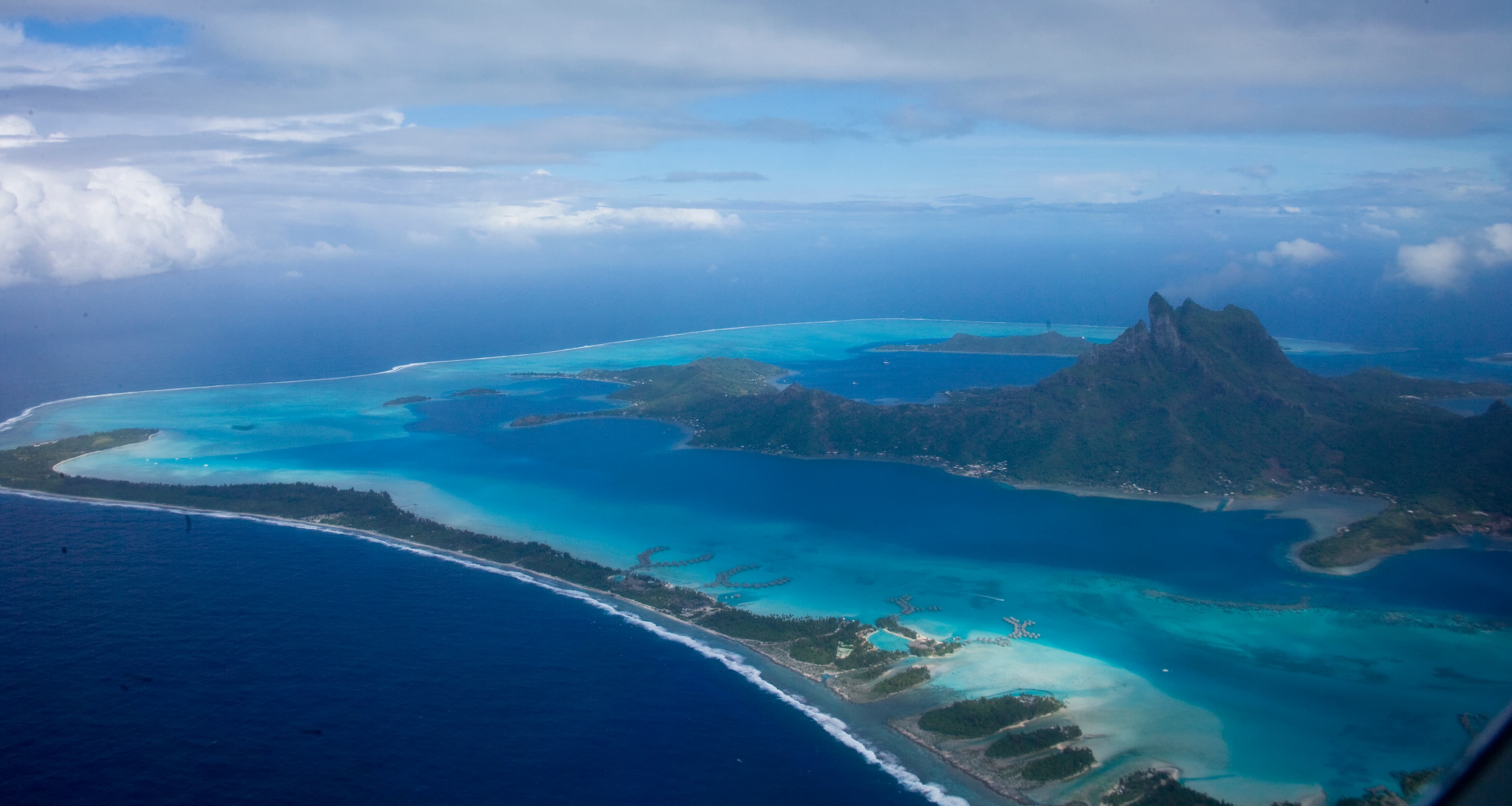
- Bora Bora, the pearl of the Pacific — Mont Otemanu, the turquoise lagoon and the overwater bungalows: the world's honeymoon icon.
- Moorea, the dramatic island — 30 minutes by ferry from Tahiti — Mont Rotui hikes and humpback whales from July to October.