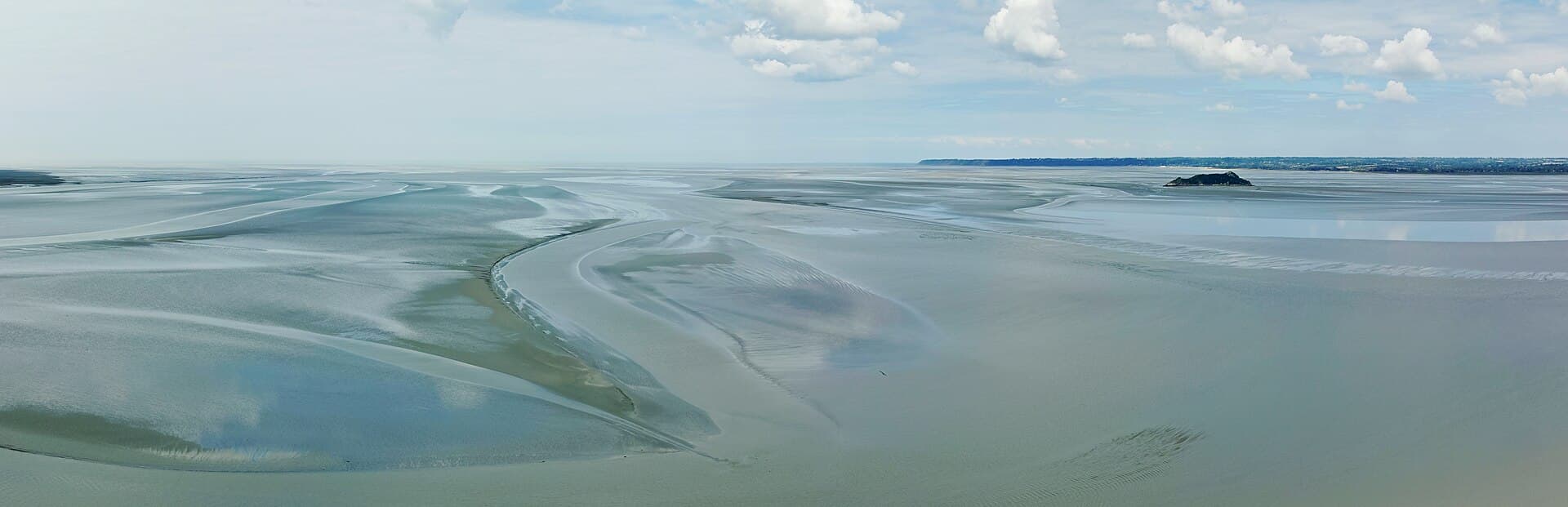
Mont-Saint-Michel is the headline site: 11th-century Gothic abbey UNESCO-listed, perched on an islet in a bay with Europe's highest tides. The visit requires at least a half-day: commercial Grande Rue (very touristy), abbey (€13, guided tour recommended), ramparts, gardens. Best: arrive at opening (9 am) or stay overnight for the magic of sunset and the illuminated night. Accommodation on the Mount is limited and expensive (€250-400/night), but the experience of sleeping there is unique. Alternative: hotels on the causeway (Pontorson, Beauvoir, Le Mont-Saint-Michel village). The bay crossing on foot (mandatory certified guide, 5-15 km depending on route, €25-40) is an exceptional experience — to organise several weeks in advance.
The D-Day beaches stretch 80 km between Sainte-Mère-Église and Caen. Five beaches: Utah (Americans), Omaha (Americans, the deadliest), Gold (British), Juno (Canadians), Sword (British). Must-sees: the American cemetery at Colleville-sur-Mer (free, 9,387 graves, moving memorial, view over Omaha Beach), Pointe du Hoc (cliffs scaled by American Rangers, landscape frozen in the bombings), remains of the Mulberry artificial port at Arromanches (visible at low tide), the Arromanches Landing Museum, the Memorial of Caen (1 full day recommended — one of Europe's best history museums). A guided 1-day tour (€80-120) is highly advised to grasp the historical context. Several British (Bayeux), Canadian (Bény-sur-Mer) and German (La Cambe) memorial sites.
Étretat is the other coastal must. The chalk cliffs rise 80 m above the Channel, sculpted by erosion into spectacular natural arches: Porte d'Aval (the most iconic), Manneporte (the widest), Porte d'Amont. The cliff walk (customs officers' path, GR21) offers exceptional panoramas — come early morning for the light and without the crowds. The village of Étretat retains its preserved charm: Notre-Dame Church, fish hall, Étretat Gardens (contemporary creation by Alexandre Grivko with sea view).
Honfleur, a small picturesque port at the mouth of the Seine, was the birthplace of Impressionism with Eugène Boudin. The Vieux Bassin with its colourful half-timbered houses, the Sainte-Catherine Church (entirely wooden, built by naval carpenters in the 15th century), the Eugène Boudin Museum delight visitors. Honfleur is also an excellent base for visiting the Côte Fleurie (Deauville, Trouville, Cabourg) and the Pays d'Auge.
The Pays d'Auge is gourmet Normandy par excellence: Cider Route (40 km circular), classified villages (Beuvron-en-Auge, Camembert), Calvados and cider estates where you can taste and buy directly. Camembert, the village that gave its name to the cheese, houses the Maison du Camembert (museum + tasting). The Côte Fleurie's seaside towns are chic: Deauville (palaces, casino, boardwalk, American Film Festival), Trouville (more authentic, fish market), Cabourg (Proust's Balbec, Grand Hôtel).
Bayeux is a major cultural stop: the Bayeux Tapestry (UNESCO, 70-metre 11th-century embroidery telling the conquest of England by William the Conqueror in 1066) is one of Europe's most extraordinary medieval treasures. The Notre-Dame Cathedral (11th-13th centuries) is one of France's most beautiful Gothic cathedrals. The Battle of Normandy Memorial completes the visit.
Rouen, historical capital of Normandy, deserves 1 day: Notre-Dame Cathedral (painted by Monet), Gros Horloge, Place du Vieux Marché (site of Joan of Arc's pyre), Museum of Fine Arts. Further east, Giverny (1h from Rouen, on the Île-de-France border) houses Claude Monet's gardens and house, open April to November — one of Europe's most poetic visits.
Read also
- Mont-Saint-Michel, wonder of the West — The thousand-year-old abbey between sky and sea, one of France's most-visited UNESCO sites.
- Étretat, the alabaster cliffs — Iconic natural arches of the Alabaster Coast that inspired the Impressionists.
- France — Complete country guide: entry rules, regions, budget, gastronomy.
- Brittany — Wild coastline, megaliths and corsair cities just west of Normandy.