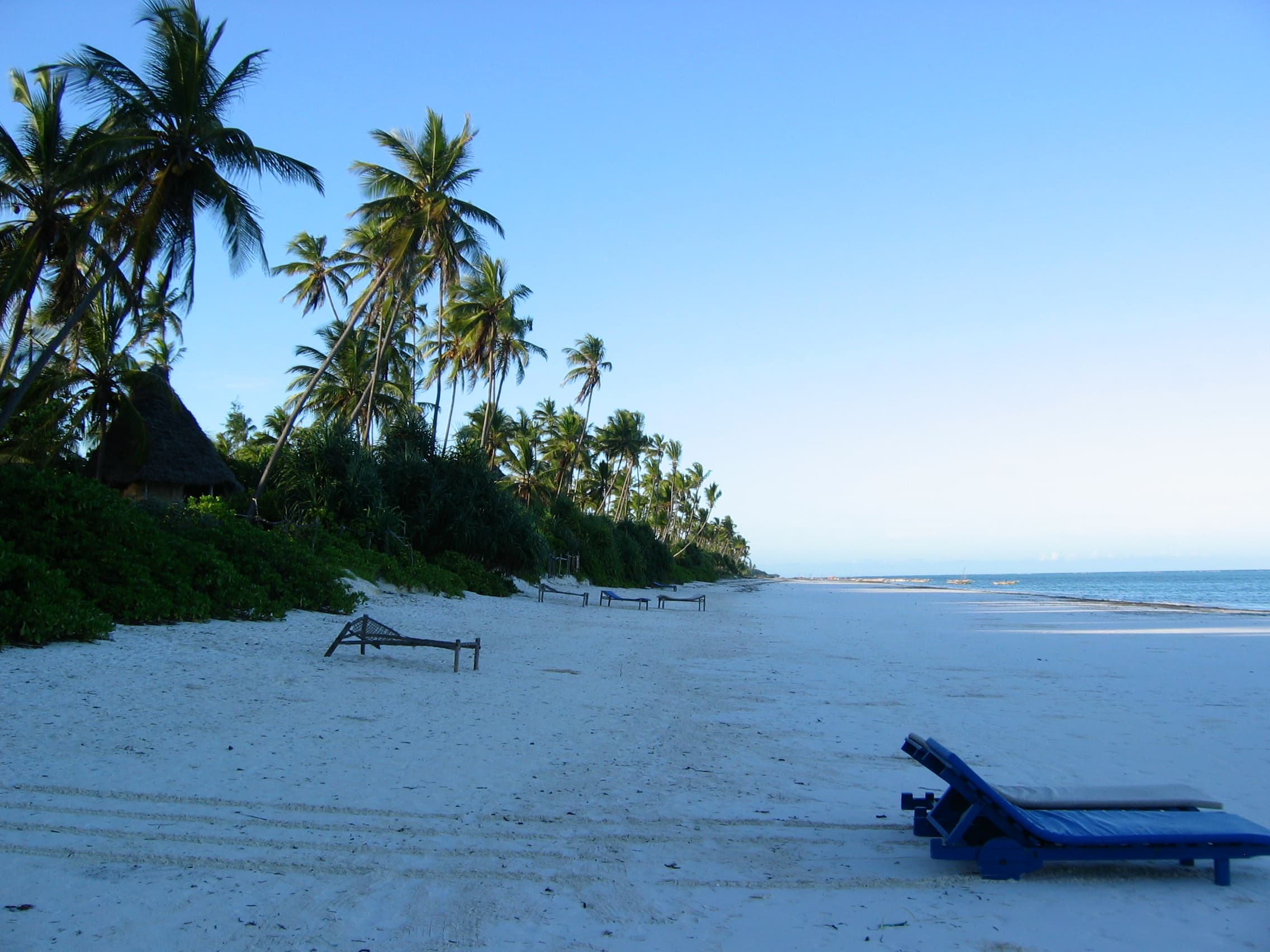
Zanzibar enjoys a tropical monsoon climate paced by Indian Ocean trade winds. Two main seasons stand out.
The long dry season (June to October), driven by the south-east kusi trade wind, is the ideal period for a beach and diving stay. The sky is clear, rains almost completely stop, the sea is crystalline at 24-26 °C, underwater visibility is maximal (up to 30 metres at Mnemba and Pemba). Temperatures are pleasant (24-29 °C), humidity less oppressive than in the austral summer. It's the European high tourist season, with a peak in July-August — book resorts 3-6 months ahead.
The hot wet season (November to February), driven by the north-east kaskazi trade wind, offers a warmer sea (28-29 °C) ideal for swimming, but with noticeably higher heat and humidity (temperatures 28-32 °C, 80-85% humidity). December to mid-January matches the Christmas/New Year peak season, with maximal rates. February is interesting for the Sauti za Busara festival, a major Swahili music event that turns Stone Town into an open music scene for 4 days.
The long rains (mid-March to May), also called Masika, are the absolute low season to avoid: intense tropical rains, several hours per day, rough sea, often compromised diving and snorkelling, several resorts closed in April-May for maintenance. Rates down 50-70%, but the experience is degraded.
The short rains (November alone) are less disabling, with brief afternoon showers and broadly workable conditions. Rates still reasonable before the Christmas high season.
The optimal window for a first trip: June to mid-October, avoiding the August peak. Mid-September is probably the best compromise between traffic/rates/conditions.
Read also
- Stone Town, UNESCO old city — The labyrinth of alleys with carved doors, Darajani market and the former slave market.
- Nungwi, the paradise northern tip — White sand beach, turquoise lagoon, traditional dhows and moderate tides.
- Northern Circuit: Serengeti and Ngorongoro — The great safari circuit to combine naturally with a Zanzibar beach stay.
- Tanzania — Full country guide: entry requirements, budget, regions and best time to visit.