ville
Stone Town
UNESCO-listed old city since 2000, over 560 carved doors, spice market and slave market memorial — one of the most beautiful Swahili cities in the world.
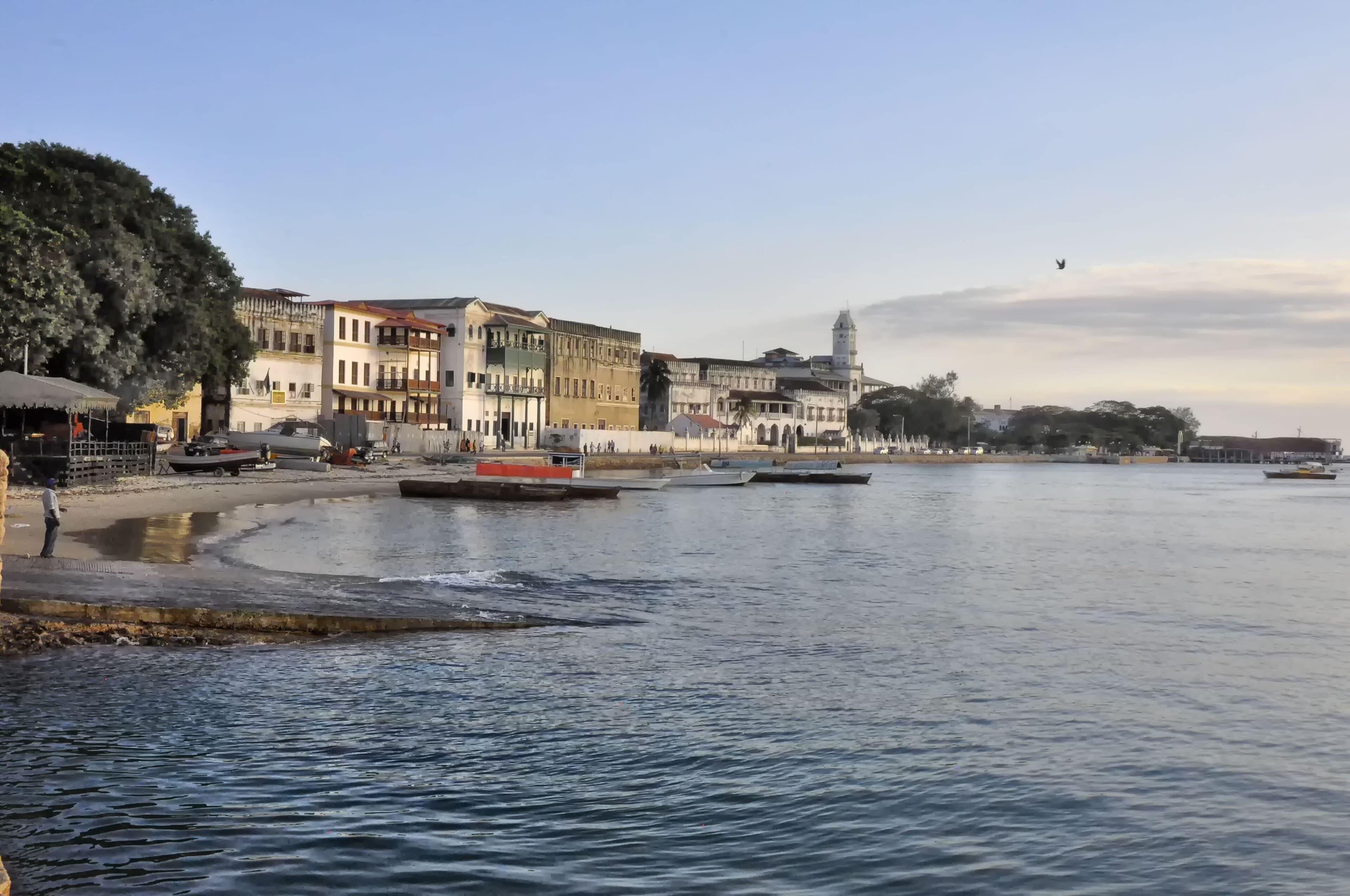
Stone Town (Mji Mkongwe in Swahili — 'the old city') is the historic and cultural heart of Zanzibar, UNESCO World Heritage-listed since 2000 for its unique architecture and its role as a millennial crossroads between Africa, Arabia, Persia and India. Set on the south-western tip of the main island of Unguja, on the Mkapwa Bay, it's a small city of 16,000 inhabitants (about 15 km²) that concentrates an extraordinary heritage density and constitutes the essential stop for any traveller to Zanzibar.
The history of Stone Town is that of a world-city born from trade. Since the 8th century, the Zanzibari archipelago has been a major crossroads of the Indian Ocean, on the monsoon route linking East Africa to the Arabian peninsula, Persia, India and later China and Europe. But it's in the 19th century that Stone Town reaches its peak, under Omani Sultanate rule: Sultan Sayyid Said moved his capital from Muscat to Zanzibar in 1832, transforming the city into a global trade hub for ivory, spices (cloves, cinnamon, cardamom) and — dark side of this prosperity — the East African slave trade. The Zanzibar slave market was, for a century, one of the largest in the world, before its forced abolition by the British in 1873.
This complex heritage reads in the city's unique architecture. Coral stone buildings (hence the name 'Stone Town', as opposed to the rest of the island built in wood and palm fronds) mix Arab influences (inner courtyards, high ceilings to evacuate heat), Persian (floral motifs), Indian (carved wooden balconies), European (the neo-Gothic Anglican cathedral built in 1873 on the very site of the slave market) and Swahili (white mosques with elegant minarets, more than 50 spread across the city). The most iconic visual signature: the carved doors, of which more than 560 are catalogued and UNESCO-protected. Each door tells a story — Indian motifs (lotus, waves), Arab (Quranic calligraphies), Persian (stylised flowers), sometimes brass-studded to recall the anti-elephant doors of Indian Gujarat.
The labyrinth of alleys of Stone Town is impossible to traverse in a straight line. Narrow streets (often less than 2 metres wide), winding, sometimes nameless, form a maze that disorients even Google Maps-equipped visitors. This configuration is not accidental: it served to protect from heat (narrow streets create shade) and slow potential invaders. Today, it's the best way to discover the city — getting lost is the very experience of Stone Town.
What we love
- ✅UNESCO old city since 2000: unique Swahili architecture in the world, mix of Arab, Indian, Persian influences
- ✅Over 560 carved doors catalogued, every alley is a visual discovery
- ✅Exceptional historical dimension: former slave market and memorial to visit (essential)
- ✅Swahili gastronomy at Forodhani Gardens night market — one of the most emblematic culinary experiences in Africa
- ✅Natural combination with Zanzibar beaches (Nungwi, Kendwa, Paje) for a perfect culture + beach stay
What to know
- ❌Dress code to respect: shoulders and knees covered for men and women (98% Muslim population)
- ❌High heat and humidity (28-32 °C) year-round, walking visits tiring during the day
- ❌Pickpockets and snatch thefts in the evening in dark alleys — caution recommended
- ❌During Ramadan (mobile calendar), local restaurants closed during the day, respect of customs expected
- ❌Constant noise: calls to prayer 5 times/day, traffic, market — Stone Town is not a quiet destination
Situation
Où se situe Stone Town ?
Ouvrir la carte en grand sur OpenStreetMap →Frequently asked questions
How many days to spend in Stone Town?+
Which hotel to choose in Stone Town?+
What to see absolutely in Stone Town?+
Is the slave market memorial worth visiting?+
Do you need a guide to visit Stone Town?+
What to eat in Stone Town?+
Is Stone Town safe at night?+
Our verdict
Stone Town is one of the most beautiful Swahili cities in the world and an essential stop on any Zanzibar trip. Its combination of unique UNESCO heritage, complex history (trade, slavery, millennial cultural mixing) and vibrant urban life makes it a destination in its own right, worth 1-2 nights before or after your beach stay. Our advice: choose a charm riad in the Shangani district (quiet, seafront) rather than in the heart of the labyrinth (noisy). Take a local guide for your first visiting afternoon (15-25 USD, indispensable to decode architecture and history). Imperatively visit the slave market memorial — it's an emotionally strong but essential experience to understand the archipelago. Dine at Forodhani night market. And favour June to mid-October for the optimal climate window.
Nearby

"Janvier : chaleur tropicale humide, mer chaude (29 °C). Ambiance post-Noël encore animée, festival Sauti za Busara approche."
Expert on Stone Town · 1 contributions
 Africa & Americas Desk — Mowando·Editor