Mowando

ville

Dar es Salaam

Tanzania's largest city and economic capital: national museum, morning fish market, Makonde crafts and essential gateway to Zanzibar and the southern safari.

4.20Dar es Salaam et Sud

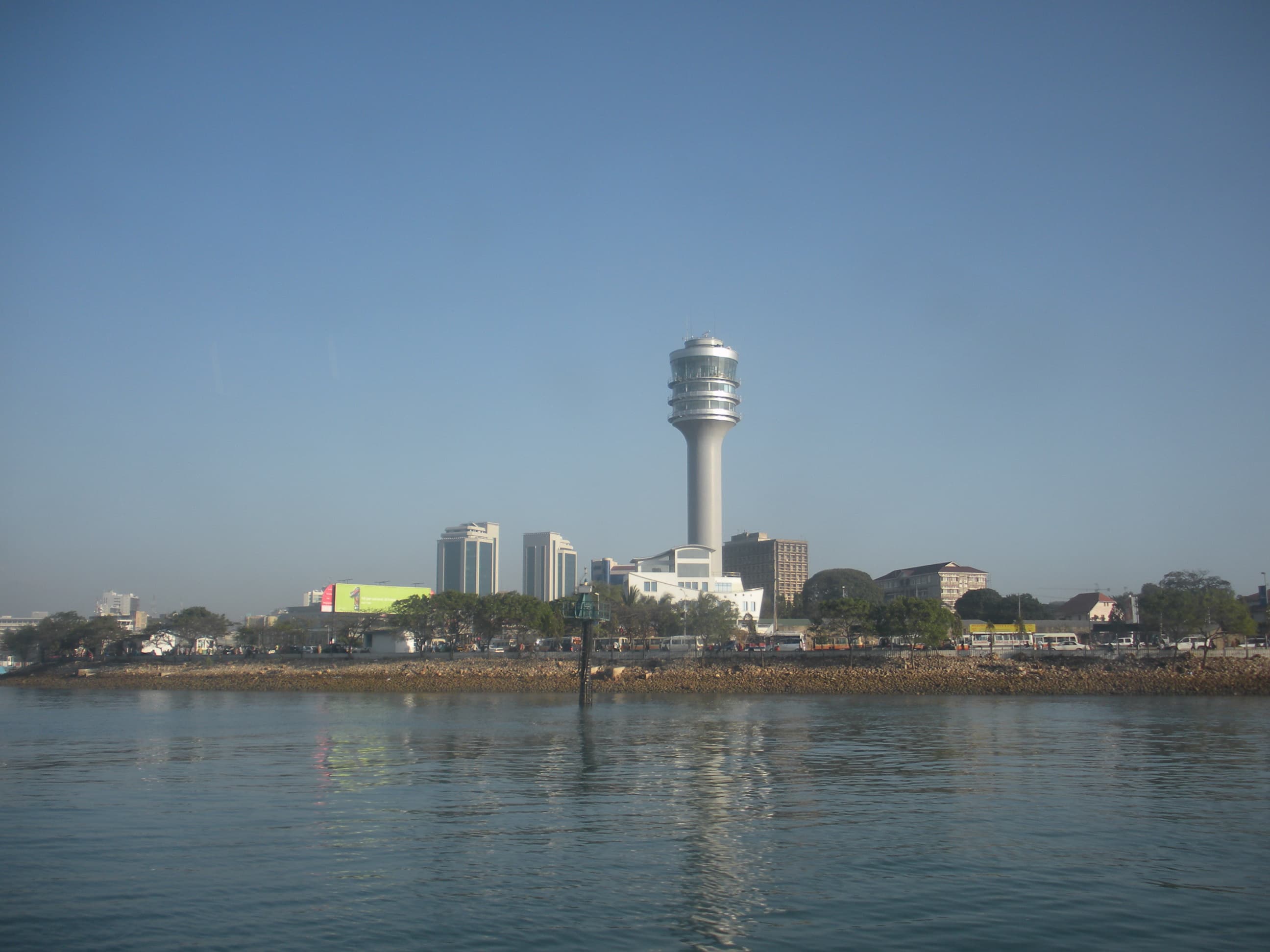
Dar es Salaam (often abbreviated 'Dar') is the economic capital and largest city of Tanzania, with around 5.4 million inhabitants — one of the most dynamic and fastest-growing metropolises in East Africa. Its name comes from Arabic Dār as-Salām meaning 'the house of peace' (or 'haven of peace'), a nickname given by Sultan Sayyid Majid bin Said of Zanzibar who founded the city in 1862. Although the political capital is officially Dodoma (inland, since the gradual transfer initiated in 1973), Dar remains the effective government seat, the central commercial port, the international airport hub, and the ferry terminal for Zanzibar — most travellers transit through it to southern Tanzania and the archipelago.

For the traveller, Dar es Salaam is mainly a transit point: arrival of international flight, immediate transfer to Zanzibar (20-min Cessna flight or 2-hr fast ferry) or to a southern safari park (Nyerere, Mikumi, Ruaha) by Cessna flight. Most tourists only spend one night on site — sometimes none if the connection is fast. For curious travellers, the city however deserves 1-2 days of Swahili urban immersion, distinct radically from Stone Town (more populous, less heritage, more modern and African).

The major sites concentrate in the city centre and the Msasani peninsula. The National Museum of Tanzania (Shaaban Robert Street, downtown) presents the hominid fossils discovered in Olduvai Gorge north of the Serengeti by paleontologists Louis and Mary Leakey in the 1950s-1960s — notably Zinjanthropus boisei (1.75 million years) and Homo habilis. The museum also presents collections on Swahili coast history, Makonde art and pre-colonial civilisations. 5 USD/person, open 9:30 am-6 pm, visit 1-2 hours.

What we love

  • International arrival point ideal for combining Zanzibar + southern safari (Nyerere, Mafia)
  • Kivukoni fish market: one of the most powerful sensory experiences in East Africa
  • National museum with the Olduvai hominid fossils (Zinjanthropus, Homo habilis)
  • Best place in Tanzania to buy authentic Makonde crafts (Mwenge village)
  • Excellent Swahili-international gastronomy in the Msasani-Oysterbay peninsula

What to know

  • Oppressive heat and humidity year-round (28-32 °C, 75-85% humidity), walking visits difficult during the day
  • Monster traffic jams in the city, particularly at rush hour (7-10 am and 4-8 pm)
  • Variable safety by neighbourhood: Kariakoo and Buguruni to avoid at night, possible snatch thefts in the centre
  • Significant atmospheric and noise pollution in downtown
  • Little architectural heritage compared to Stone Town (mainly German and British colonial heritage)

Situation

Où se situe Dar es Salaam ?

Ouvrir la carte en grand sur OpenStreetMap →

Frequently asked questions

Do you really need to spend a night in Dar es Salaam?+
It depends on your program. If your international flight arrives early in the day (before noon) and you have a connection to Zanzibar or the parks in mid-afternoon, you can transit directly without an overnight. If your flight arrives at the end of the day (after 4 pm), __a night in Dar is wiser__ to avoid stressful connections. For travellers curious about African urbanity and urban Swahili culture, __1-2 nights__ allow an interesting immersion (fish market, national museum, Mwenge village, peninsula restaurants). For most tourists on safari + Zanzibar trips, 1 night on arrival and 1 night on return (if needed) largely suffice.
Which hotels to choose in Dar es Salaam?+
Favour the __Msasani-Oysterbay peninsula__ (quiet, secure, restaurants, Coco Beach nearby) rather than downtown (noisy, variable safety at night). __Absolute luxury__: Hyatt Regency Dar es Salaam (downtown on the seafront, panoramic view, €250-400/night), Sea Cliff Hotel (Msasani peninsula, ocean view, €200-350/night). __Premium 5-star__: Serena Hotel Dar es Salaam (tropical central gardens, €180-300/night), Southern Sun Hotel (downtown, €150-250/night). __Boutique hotels__: Oyster Bay Hotel (charm, small, €130-200/night), Coral Beach Hotel (Coco Beach, €100-180/night). __Mid-range__: Best Western Plus Coral Beach (€90-150/night), Protea Hotel Courtyard (€100-160/night). __Budget__: YWCA Guesthouse (€40-70/night), New Africa Hotel (€60-100/night, downtown). Avoid Kariakoo district hotels (security).
What is the most practical way to reach Zanzibar?+
Two main options. __Cessna flight__ from the Coastal aerodrome (next to DAR) or directly from DAR with Precision Air: 20 minutes flight, 60-90 USD/segment depending on company (Coastal Aviation, Auric Air, ZanAir, Precision Air). Multiple daily flights, departures between 7 am and 6 pm. Practical but with baggage restrictions (15-20 kg in hold, 5-7 kg in cabin). __Azam Marine fast ferry__ from Dar port (Sokoine Drive terminal, downtown): 2-hour crossing, 35-50 USD in economy class, 60-80 USD in VIP. 4-5 daily departures between 7 am and 4 pm. More economical but can be uncomfortable in rough seas. For bulky luggage or travellers prone to seasickness, flight is preferable.
Is the Kivukoni fish market worth visiting?+
Absolutely, it's one of the most powerful sensory experiences possible in Dar. The market comes alive from __5:30 am__ with the return of traditional dhows laden with the night's catch. The fish hall, a huge building open onto the port, sees 50-80 tons of fish daily — tuna, swordfish, mahi-mahi, sharks, rays, squid, octopus. Auctions in fast Swahili, vibrant atmosphere, colourful cries, negotiations between fishermen, transporters and restaurateurs. Visit recommended __between 6 and 7:30 am__, when activity is at its maximum. Favour a local guide (10-15 USD for 1-2 hours, to ask your hotel) who decodes the activity and facilitates photos. Closed shoes and clothing that won't mind splashes recommended.
Are there bathable beaches in Dar es Salaam?+
Not really in the city itself. __Coco Beach__ (Msasani peninsula) is the most accessible urban beach, but the water is not very clean (proximity to port), not ideal for swimming — prefer it for Sunday atmosphere (family picnics, local life). For real beaches, two options: the __satellite islands__ (Bongoyo, Mbudya, Pangavini) accessible by dhow from Slipway in 30-45 min sailing — crystal-clear water, white sand, possible snorkelling, barbecue lunch, 50-80 USD/person for a full day. Or the __beaches north of Dar__ (Kunduchi, Bagamoyo, accessible in 1-1h30 by road) which host some resorts. To really enjoy the sea, the best obviously remains to go to __Zanzibar__ (20-min flight).
Is Dar es Salaam safe for travellers?+
Broadly yes, with precautions. The UK Foreign Office classifies Dar in __increased vigilance__ across the city. Safe areas: __Msasani-Oysterbay__ peninsula (where the best hotels are), downtown during the day. Areas to avoid at night: __Kariakoo__ (large market, dense by day, dangerous at night), __Buguruni__, __Manzese__, __Mwenge__ after nightfall. Main risks: __snatch thefts__ (phones, bags) in downtown, sometimes in broad daylight; __assaults__ rare but possible in popular districts at night. Precautions: don't walk alone after 10 pm outside the peninsula, use Uber/Bolt rather than street taxis, don't openly display your phone, keep passports and large sums in the hotel safe. In case of problem: 112 (single emergency number).
What to bring back from Dar es Salaam as a souvenir?+
Dar is the __best place in Tanzania to buy authentic Makonde crafts__ at __Mwenge__ village (10 km north of downtown, taxi 5-7 USD). The Makonde are globally recognised for their __black ebony sculptures__ (mpingo) — traditional motifs 'tree of life' (ujamaa), 'shetani' (spirits) figures, ceremonial masks. You can see artisans work in the open and buy directly, at prices significantly lower than tourist shops. Count €30-200 for a beautiful average piece. Other typical souvenirs: __kanga__ and __kitenge__ fabrics (colourful fabrics with printed Swahili proverbs, €5-15 per metre at Kariakoo market), __Zanzibar spices__ (cloves, cinnamon, cardamom, vanilla, €5-20 per packet), __Tanzanian coffees__ from Arusha and Kilimanjaro (€15-25 per kilo), local honey (in jar, €10-15). Avoid ivory sculptures (illegal and trafficking).

Our verdict

Dar es Salaam is mainly a transit point for most international travellers in Tanzania — mandatory step between international flight, Zanzibar and southern parks. As such, it deserves 1 night to decompress after the long flight, or even 2 nights for curious travellers wanting an authentic Swahili urban immersion (Kivukoni fish market at dawn, national museum with Olduvai fossils, Mwenge village for Makonde crafts, dinner at a good restaurant on the Msasani peninsula). Don't expect heritage comparable to Stone Town — Dar is a large African metropolis in motion, dense, noisy, sometimes exhausting, but also vibrant and authentic. Imperatively choose a hotel on the Msasani peninsula (Hyatt Regency, Sea Cliff, Serena Dar) for comfort and security, avoid the downtown for sleeping. And use Uber/Bolt rather than street taxis.

Nearby
The Editors
The Editorsauteur principal✓ Verified

"Janvier : chaleur tropicale humide, mer chaude (29 °C). Période intéressante pour combiner avec Mafia (saison requins-baleines)."

Expert on Dar es Salaam · 1 contributions

Mowando Letter

Once a month: the right destinations for the right season + the best booking windows.

No spam. One-click unsubscribe. Your data is never shared.