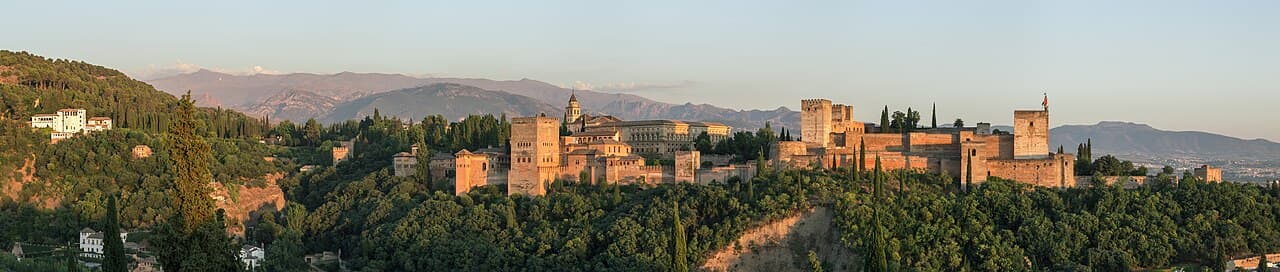
Spanish culture is the product of twenty centuries of exceptional civilisational cross-pollination. Colonised by Rome, Christianised, then governed for seven centuries by Muslim dynasties from North Africa, medieval Spain became the site of Al-Andalus — one of the most advanced civilisations in the Western medieval world, where Jews, Christians and Muslims created together a culture of extraordinary richness. The Alhambra in Granada, the Mezquita-cathedral in Córdoba and the Giralda tower in Seville stand as the most eloquent witnesses to this unique Hispano-Moorish legacy, unlike anything else in Europe.
Regional identity is the essential key to understanding contemporary Spain. The country is emphatically not a monolith: Catalonia has its own language (Catalan, spoken by some 10 million people), its own traditions and a distinct sense of national identity that fuels intense ongoing political debates. The Basque Country (Euskadi) cultivates a culture and a language — Euskara — that bears no relation to any Indo-European tongue, making it one of the oldest and most mysterious languages on earth and a source of immense local pride. Galicia speaks Galician, closely related to Portuguese, and its bagpipes, misty moors and Celtic festivals evoke the British Isles far more than the Mediterranean. Each region is effectively a destination in its own right.
Spanish art stands at the summit of Western creative achievement. The Museo del Prado in Madrid houses one of the greatest collections in the world: Velázquez, Goya, El Greco, Rubens and Hieronymus Bosch in rooms that any serious art lover must walk through at least once. The Reina Sofía, steps away, holds Guernica by Picasso — the most politically charged and emotionally devastating painting of the twentieth century. In Barcelona, the Museu Picasso and the Fundació Joan Miró contain exceptional collections from the two most internationally influential Spanish artists of the modern era. But it is Antoni Gaudí who best embodies Spanish creative singularity: the Sagrada Família (begun in 1882, expected to be completed around 2032), Park Güell, Casa Milà and Casa Batlló form seven UNESCO-listed buildings and the most startlingly original architectural body of work in history.
Flamenco — song, dance and guitar, fused into a single visceral art form — is the cultural expression most immediately identified with Spain across the world. Born in the Gitano communities of Andalusia in the eighteenth century, inscribed on UNESCO's Intangible Cultural Heritage list in 2010, it is both a technically demanding discipline and a raw channel for the deepest human emotions. In Granada's Sacromonte, Seville's Triana quarter and Madrid's Barrio de Las Letras, an authentic flamenco performance — where the duende (untranslatable: roughly, the spirit that possesses great art) is present — is one of the most emotionally intense experiences available anywhere in Europe.
The Camino de Santiago — the pilgrimage routes to the cathedral of Saint James in Santiago de Compostela — draws over 400,000 pilgrims a year from every corner of the world. The French Way via Roncesvalles and the Northern Way hugging the Cantabrian coast are the most-walked routes. Arriving at Santiago's cathedral after days or weeks on the road and attending the Pilgrim Mass remains one of the most quietly powerful travel experiences in Europe.
Read also
- Catalonia: Barcelona and the Costa Brava — The Sagrada Família, Park Güell, the Boqueria and the wild coves of the Costa Brava.
- Andalusia: Seville, Granada and Córdoba — The Alhambra, the Mezquita, flamenco and the white villages of the deep south.
- Castile and Madrid — The Prado, the Reina Sofía, Toledo and the castles of the Castilian plateau.
- Basque Country: San Sebastián and Bilbao — Pintxos bars in the Parte Vieja, Gehry's Guggenheim and La Concha beach.
- Balearic Islands: Mallorca, Menorca, Ibiza — Crystal-clear calas, hidden coves and legendary nightlife in the western Mediterranean.