
Expert on Spain · 1 contributions
 Mediterranean Desk — Mowando·Editor
The best periods
The best time to visit Spain is April to June and September to October.
Printemps — idéal dans tout le pays
- ✅Températures douces (16-24 °C) sur l'ensemble du territoire, de l'Andalousie à la Catalogne
- ✅Feria de Séville (avril), Semaine sainte à Grenade et Séville, Fête des Fleurs à Cordoue (mai)
- ✅Campagne andalouse en fleurs, vignobles de la Rioja qui bourgonnent, mer méditerranée encore calme
- ❌Pluies printanières possibles au nord (Pays basque, Galice) — prévoyez un imperméable
- ❌Réservations indispensables pour Semaine sainte et Feria : hôtels et transports complets des semaines à l'avance
Été — canicule au sud, plages au mieux
- ✅Mer chaude et plages de premier rang : Costa Brava, Ibiza, Majorque, Costa del Sol
- ✅Festivals de renommée mondiale : La Tomatina (Buñol, août), San Fermín (Pampelune, juillet), Sonar et Primavera Sound à Barcelone
- ❌Chaleur torride dans les villes continentales : Séville et Cordoue dépassent régulièrement 40-45 °C en juillet-août
- ❌Foule maximale sur les sites côtiers et les îles Baléares, prix hôteliers au sommet
- ❌Madrid et les grandes villes intérieures se vident partiellement en août
Automne — douceur et vendanges
- ✅Températures idéales (18-26 °C), lumière dorée sur les châteaux de Castille et les vignes de la Rioja
- ✅Vendanges en Rioja, Ribera del Duero et Catalogne — visites de bodegas au meilleur moment
- ✅Foule réduite, atmosphère apaisée dans les musées et sur les sites UNESCO
- ❌Pluies automnales plus fréquentes au nord (Galice, Pays basque) et parfois orageuses en Catalogne
- ❌Certaines structures balnéaires ferment mi-septembre en dehors des îles
Hiver — douceur sud, ski Pyrénées
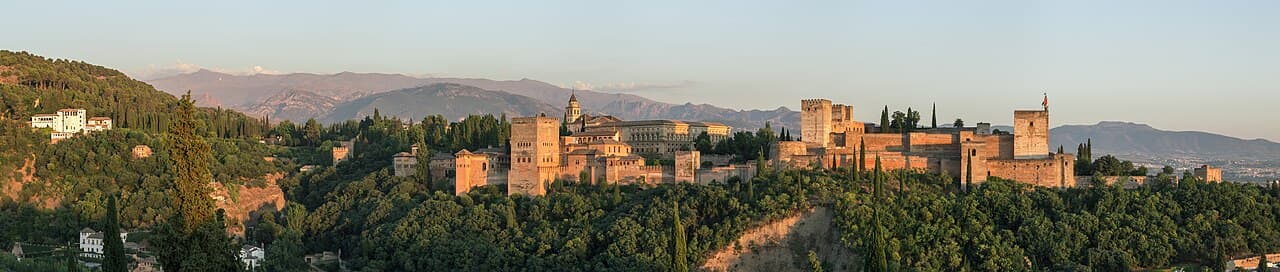
- ✅Sud andalou doux et ensoleillé (15-20 °C) : parfait pour visiter Séville, Grenade et l'Alhambra hors saison
- ✅Ski en Pyrénées (Baqueira-Beret) et en Sierra Nevada (la station la plus méridionale d'Europe)
- ✅Moins de monde sur les sites phares, prix hôteliers au plus bas, marchés de Noël à Madrid et Barcelone
- ❌Intérieur de la Meseta froid et souvent venteux (Madrid peut descendre sous 0 °C en janvier)
- ❌Journées courtes (lever du soleil à 8h30, coucher à 18h en décembre) qui limitent les visites
Climate by destination
The climate varies sharply from one region to another. See the month-by-month detail — temperatures, sea, crowds and flight prices — on each destination's 'when to go' page.
Frequently asked questions
Do EU citizens need a passport or just an ID card to enter Spain?+
Is Spain safe for tourists?+
When is the best time to visit Spain?+
How much does a trip to Spain cost?+
What is the AVE and is it worth it?+
How do tapas bars work — what should I know before walking in?+
Do Spanish restaurants really not open for dinner until 9pm?+
Is English widely spoken in Spain?+
Our verdict
Spain delivers on every promise — and usually exceeds them. Few countries in the world manage so effortlessly to combine heritage depth, creative cuisine, vivid nightlife and an extraordinary diversity of landscapes. The irritants are real — summer crowds on the coast, overtourism friction in Barcelona, the cultural time-shift around mealtimes — but they never seriously dent a destination that, at every season and in every budget bracket, manages to surprise, delight and enchant. Come in spring for the art cities and Andalusia in full bloom; summer for the beaches and the festivals; autumn for the wine harvest and the golden light on the meseta; and winter for the Alhambra without queues and the Canaries in their perennial spring. Whatever slice of Spain you choose, you will already be planning the next one before you have boarded your flight home.
Réserver votre séjour
Liens partenaires — une commission peut nous être reversée, sans surcoût pour vous.
 HébergementAnnulation gratuite
Hôtels & paradores en Espagne
Paradores historiques (monastères, châteaux), boutique-hôtels d'Andalousie, riads de Grenade : l'Espagne au meilleur prix.
ActivitéSans queueActivités en Espagne
Sagrada Familia, Alhambra (réservation obligatoire), tablao flamenco, tour des tapas Madrid, surf Cantabrie.
VolComparateurVols vers l'Espagne
Paris-Madrid, Paris-Barcelone, Paris-Séville : low-cost et compagnies régulières comparés au meilleur prix.