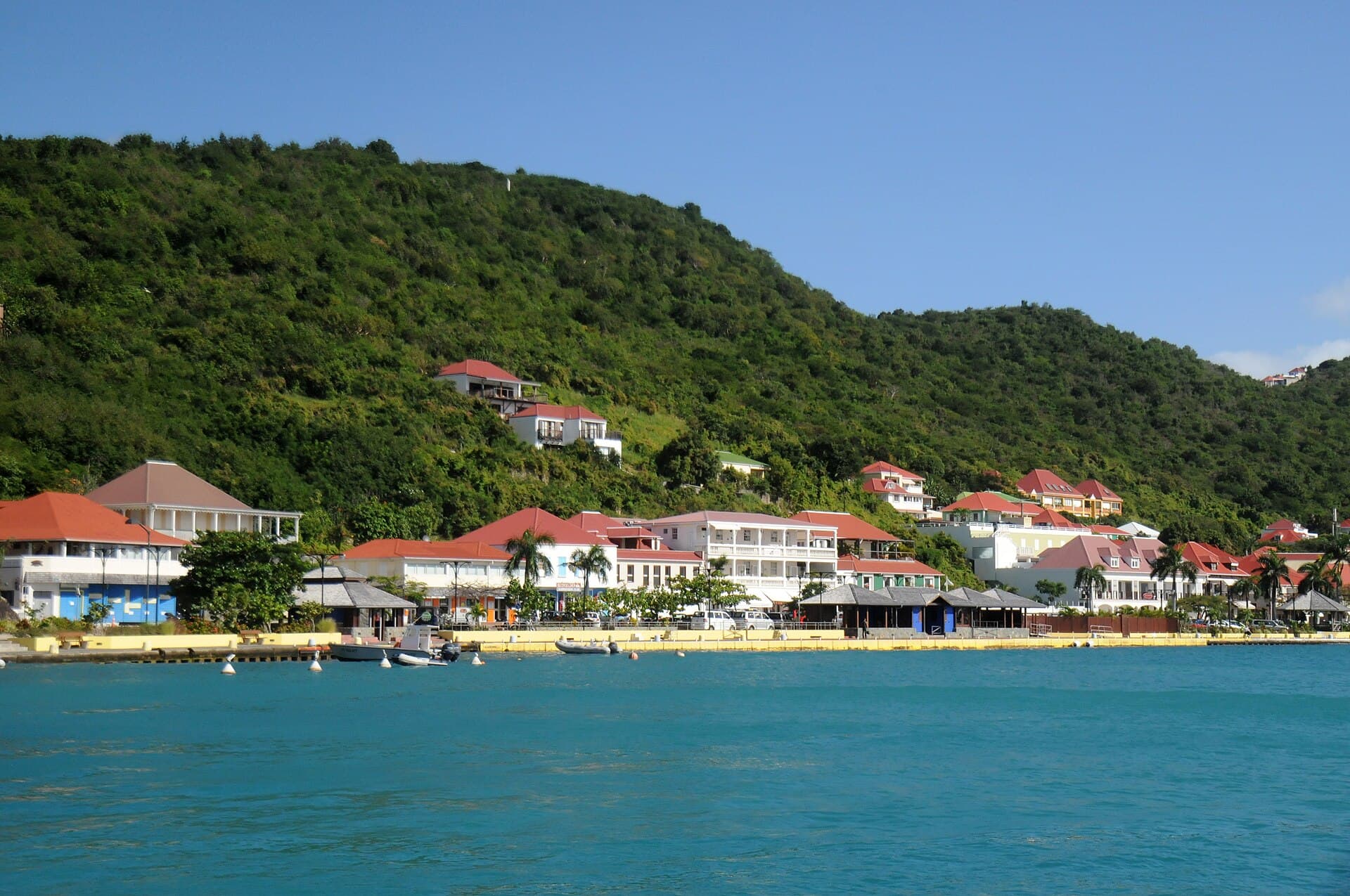
Saint Barth culture is unique in the French Antilles. Unlike Guadeloupe or Martinique, the island did not experience mass slavery — its small size, aridity and lack of rivers made it unsuitable for major sugar plantations. The population thus built itself around fishing, commerce and merchant marine (descendants of Breton and Norman French colonists arrived in the 17th century), with a nearly century-long Swedish parenthesis (1784-1878) that deeply marked the identity.
Gustavia, the capital, bears the name of King Gustav III of Sweden. The municipal flag features the Scandinavian cross. Several place names retain a Swedish footprint (Public, Lorient, Anse des Cayes). The Swedish period was prosperous and marked by a free port status that attracted American merchants, Sephardic Jews and sailors of all nationalities — hence the unexpected historical diversity of such a small island. In 1878, by local referendum, the Saint Barths voted their attachment to France — in exchange for retaining certain fiscal privileges that still endure (no income tax for residents).
The official language is French, spoken everywhere. English is understood and spoken in nearly all shops, restaurants and hotels — the international clientele (especially American) is largely dominant. The Saint Barth patois, derived from old Norman-Breton French, survives among the elders of the inland hamlets (Vitet, Toiny) but is dying out.
Daily culture is marked more by mainland French and Mediterranean art de vivre influence (gastronomy, fashion, design) than by Antillean creolity. Saint Barth is culturally closer to Saint-Tropez, Capri or Mykonos than to Pointe-à-Pitre or Fort-de-France. Music hears Caribbean zouk, soca and reggae but also international house, electro and pop in the beach clubs (Nikki Beach, Shellona, Le Ti St Barth).
Heritage consists of a few emblematic sites: Fort Gustaf (Swedish, 18th c.) and Fort Karl overlook Gustavia; the Wall House Museum traces the history of the island and the Swedish period; the Gustavia Lighthouse (1961, built on the foundations of a Swedish semaphore) offers the most beautiful panoramic view; the Toiny remains and the 18th-century chapels (Lorient, Corossol) testify to the rural life of yesteryear.
Read also
- Gustavia and south-west: capital and Shell Beach — The jet-set capital, Shell Beach at sunset and luxury boutiques — the urban and glamorous heart.
- Saint-Jean and north: Eden Rock and preserved coves — The iconic Saint-Jean beach, the spectacular airport and Anse des Cayes — the lively north coast.
- Gustavia, jet-set capital — Dead-end harbour, megayachts, luxury boutiques and gastronomic restaurants — the social heart of Saint Barth.
- Saint-Jean, beach and Eden Rock — Saint Barth's iconic beach: Eden Rock, white sand, spectacular plane landings.
- Gouverneur Beach, wild and preserved — One of the most beautiful beaches in the Caribbean: white sand, turquoise sea, pirate legends.