Filipino culture is the product of a cultural blend unique in Southeast Asia: a Malay-Austronesian base, three centuries of Spanish colonial administration (1565–1898) that embedded Roman Catholicism in daily life, then half a century of American presence (1898–1946) that installed English as the language of education and left lasting marks on architecture, food and institutions. The Philippines is today the only majority-Catholic country in Asia (over 80 percent of the population), and the liturgical calendar shapes the public year — Holy Week processions in Manila, the world's longest Christmas season that effectively starts in September, and exuberant patronal fiestas in every barangay.
The concept of bayanihan — the tradition of communal mutual help, originally embodied in the image of villagers carrying an entire bamboo house on their shoulders to a new site — remains a cardinal value of Filipino society and is repeatedly cited by travelers as the single most distinctive feature of the welcome they receive. Filipinos are renowned for their humor, resilience in the face of natural disasters and an almost reflexive friendliness. Smiles are everywhere, even in difficult situations. This authentic warmth contrasts with the more reserved reception travelers sometimes meet elsewhere in the region.
Multilingualism is a daily reality. The country counts more than 170 languages and dialects — Cebuano, Ilocano, Hiligaynon, Kapampangan and many more — with standardized Filipino (built on Tagalog) serving as the national lingua franca. Crucially for international travelers, English is the second official language and is spoken fluently by the vast majority of the urban population and confidently across rural tourist areas. Road signs, menus, hotel correspondence, even the airline safety video are all in English. For Americans, Britons, Australians and Canadians, the Philippines is by some distance the easiest country in Southeast Asia to navigate without a phrasebook.
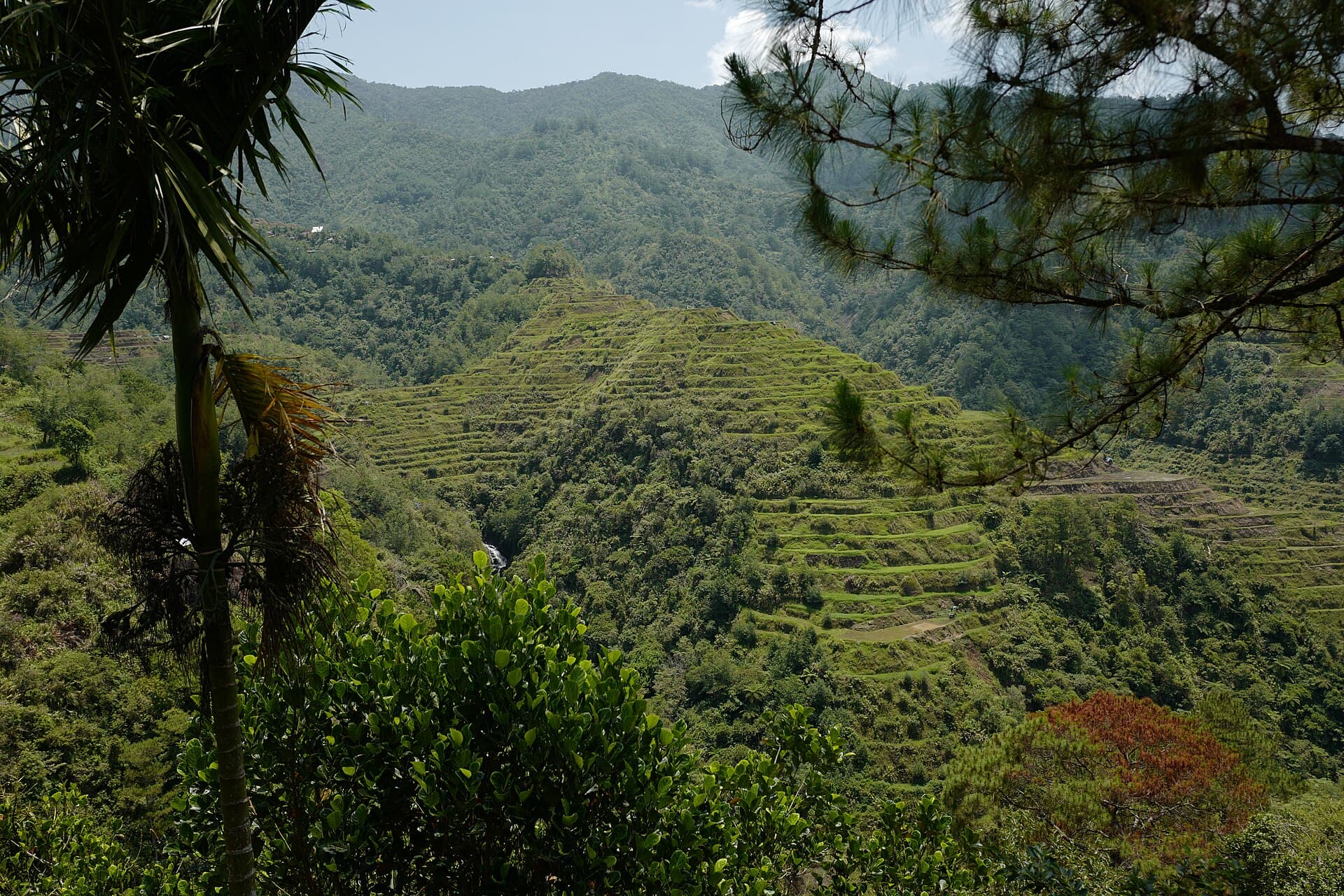
The architectural heritage carries the marks of colonial history: fortified Spanish-era cities (Intramuros in Manila, UNESCO-listed Vigan), the baroque churches of Luzon (also UNESCO-listed), and the colonial mansions of the haciendero class. The Banaue rice terraces, carved by the Ifugao people more than 2,000 years ago and inscribed on UNESCO's World Heritage list, are a striking testament to pre-colonial engineering. Local crafts — T'nalak woven cloth from the T'boli, Palawan basketry, the woodcarving traditions of Mindanao — reflect the country's striking ethnic diversity. Festivals like the Sinulog in Cebu (a January parade in honor of the Santo Niño) or the Ati-Atihan in Aklan are among the most spectacular in Southeast Asia and worth planning a trip around if your dates align.
Read also
- Palawan, the crown jewel of the Philippines — Hidden lagoons, Puerto Princesa's Underground River and the white-sand beaches of El Nido.
- The Visayas, the diving archipelago — Cebu, Bohol, Coron and the legendary WWII wrecks of the Sulu Sea.
- El Nido, the end of the world in Palawan — Emerald lagoons, limestone cliffs and island hopping at the heart of Bacuit Bay.