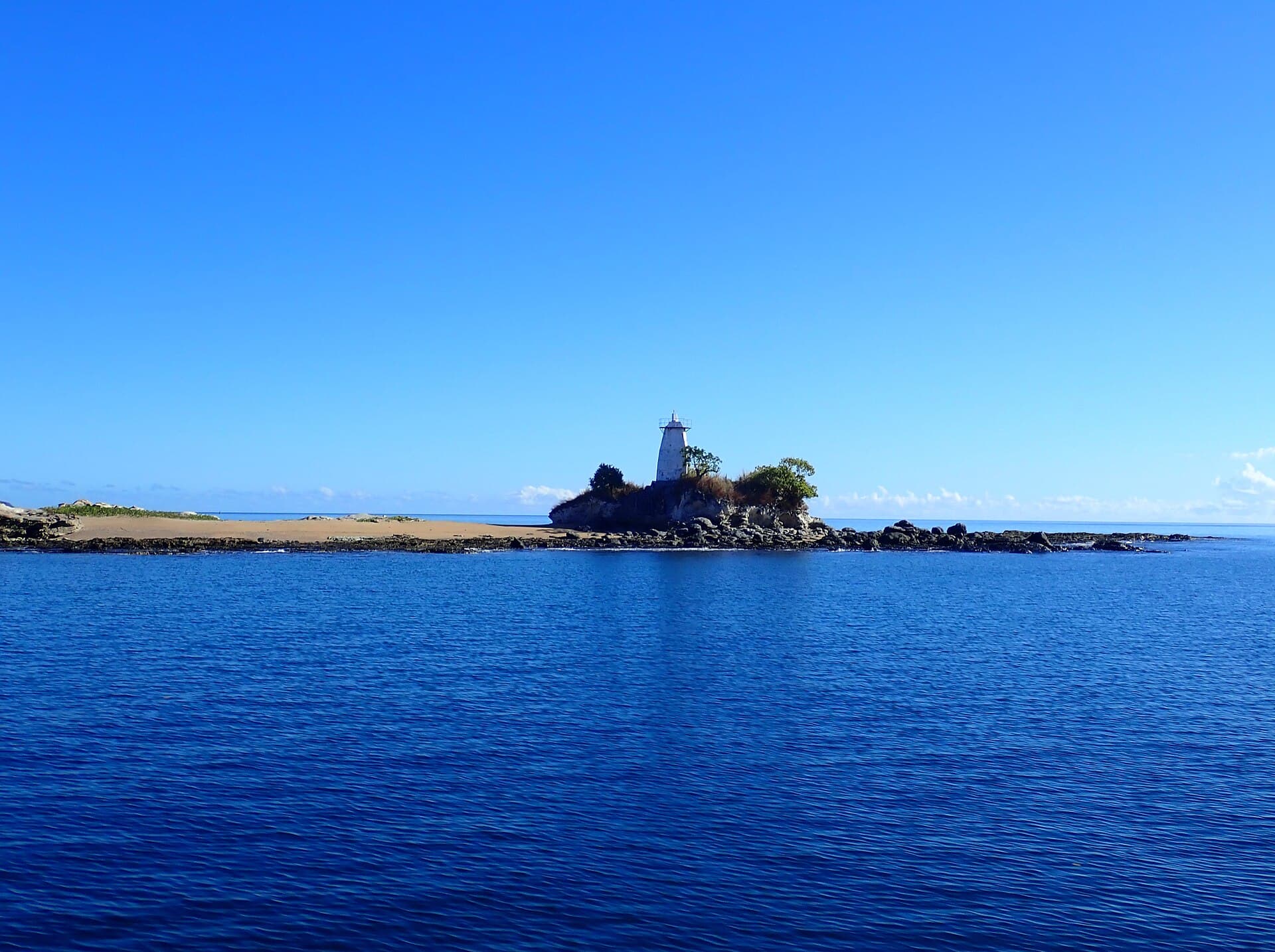
The Lagoon of Mayotte is one of the world's geological and ecological wonders — one of the planet's largest lagoons (1,500 km²), enclosed by a unique double coral barrier 195 km in circumference. This geological feature is rare: only a few regions of the world (New Caledonia, Bahamas, Belize) present a similar system. The lagoon shelters a spectacular marine biodiversity sanctuary: 15 cetacean species observed, 5 turtle species, over 250 coral species, 760 fish species.
It is this lagoon that alone justifies the trip to Mayotte. Not for its beaches — there are more beautiful elsewhere — but for what the sea contains: humpback whales from July to October, dolphins year-round (5 resident species), green and hawksbill turtles visible from the shore, manta rays and hammerhead sharks at the S-pass.
Geologically, the lagoon results from the gradual collapse of a large submarine shield volcano, around which a coral reef built up over millions of years. The first barrier (inner) protects a shallow lagoon (30-80 m on average). The second barrier (outer, 1-3 km offshore) forms a classic barrier reef. Between the two: a deep lagoon, rich in pelagic fauna, crossed by several passes.
Read also
- Grande-Terre and Mamoudzou — The main island, beaches, villages — boarding point of most boat outings.
- Petite-Terre and Dzaoudzi — The satellite island, the airport, Dzaoudzi port for outings to M'Bouzi and the S-pass.
- Mayotte — Complete guide of the 101st French department: formalities, budget, climate, regions.
- Réunion — The other French department of the Indian Ocean, humpback whales also in season.