Mowando

Region

Petra and the South

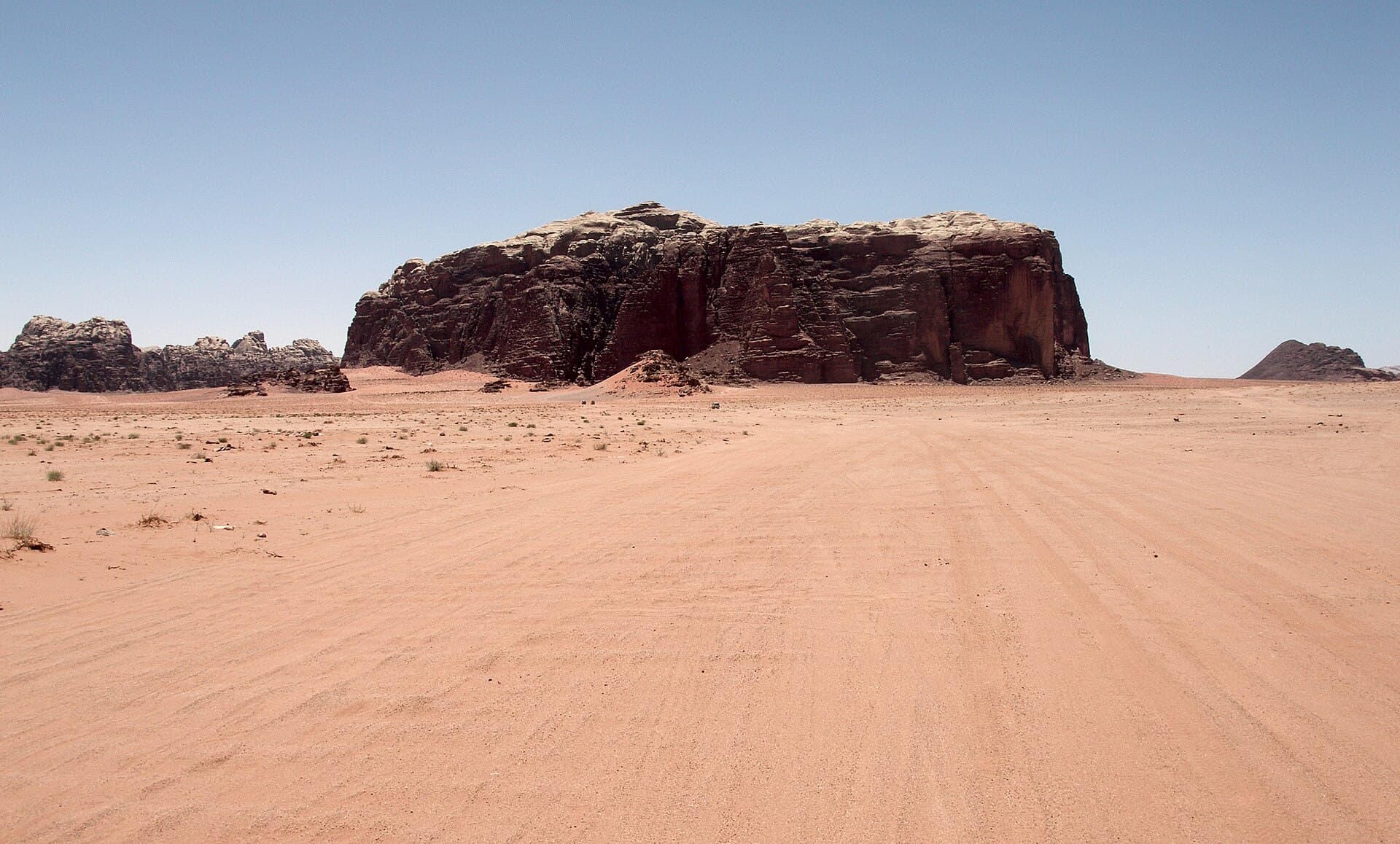
Jordan's mythical heart: Petra, UNESCO Nabataean capital and 7th Wonder of the Modern World, and Wadi Rum, UNESCO Martian desert where Lawrence of Arabia, Dune and several Star Wars were filmed — two of the greatest travel experiences in the world, 2 hours' drive from each other.

4.90

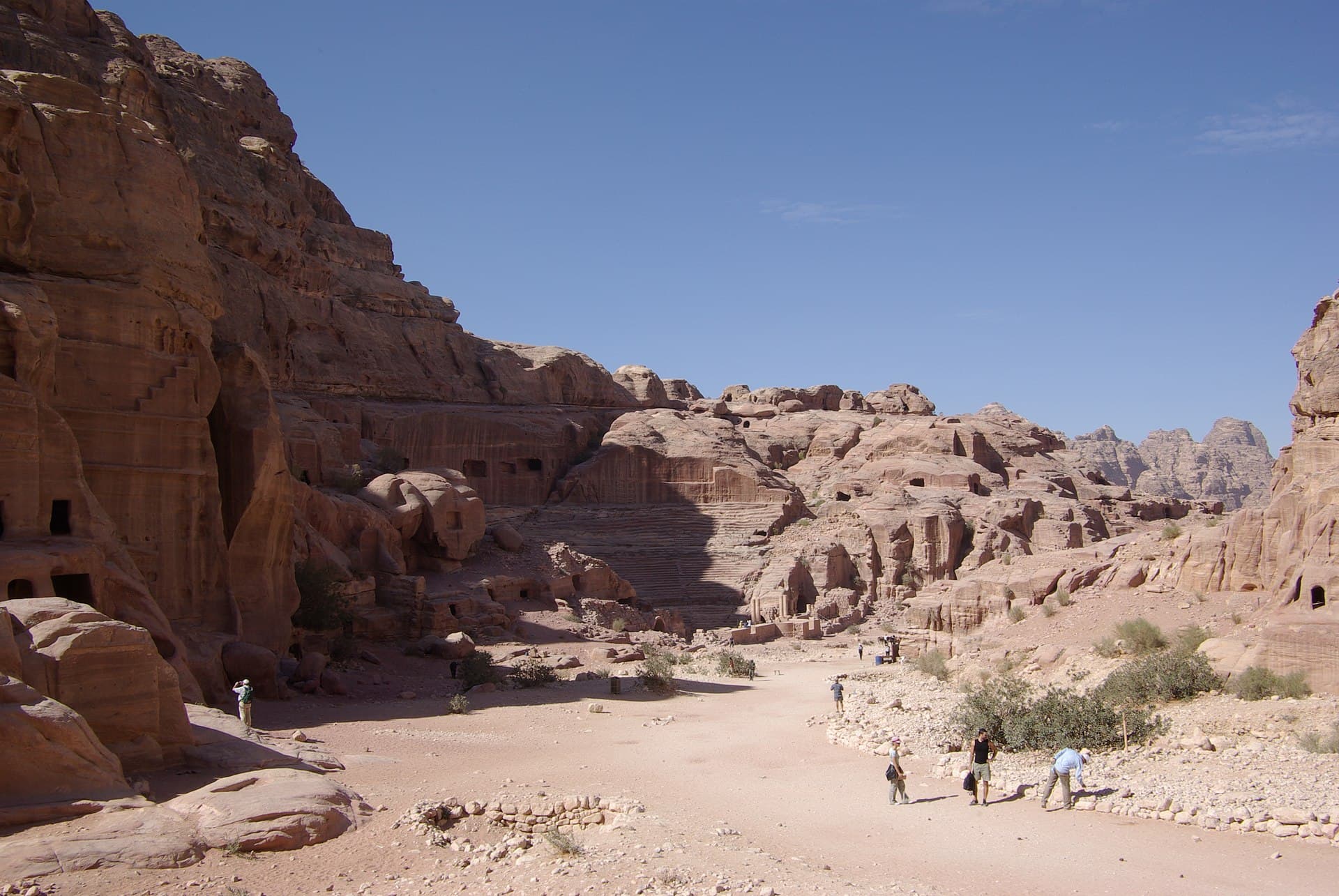
Petra and the South concentrate Jordan's two most iconic sites and one of the most extraordinary pairs of attractions in the world. The region revolves around two major poles just 100 km apart — Petra (the Nabataean city, UNESCO 1985, 7th Wonder of the Modern World since 2007) and Wadi Rum (the UNESCO 2011 desert, Martian landscapes of red dunes and sandstone cliffs) — to which are added the historical sites of the King's Road (the Crusader fortresses of Kerak and Shobak, witnesses to the Crusades).

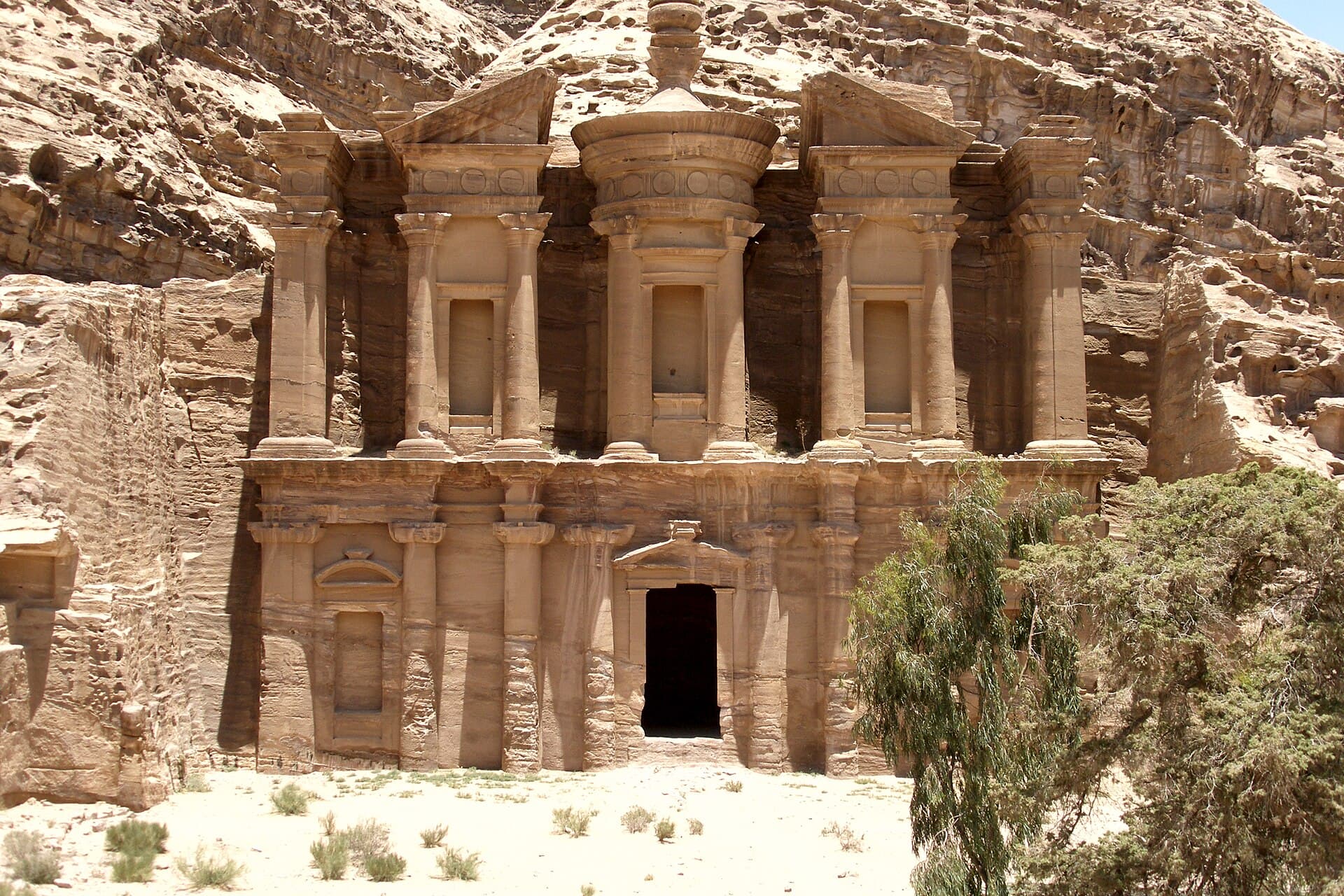
Petra is arguably one of the most striking archaeological sites in the world. Founded around the 4th century BC by the Nabataean people — caravan merchants who mastered the incense routes from Arabia to the Mediterranean — the city reached its peak between the 1st century BC and the 2nd century AD, when it was the capital of a kingdom extending from Sinai to Syria. Carved directly into the pink, ochre and purple sandstone cliffs of Wadi Musa, Petra was at once royal necropolis, ceremonial centre and global trading crossroads. Its dramatic access through the Siq — a natural canyon 1.2 km long and 80 m high narrowing to just 3 m wide — emerges abruptly onto the façade of the Khazneh ('the Treasury'), a Nabataean royal tomb 40 m high carved into the cliff, certainly the most photographed façade in the Middle East. But Petra is not just the Khazneh: 800 monuments have been recorded on the site, including the royal tombs, the Roman theatre (8,000 seats), the colonnaded street, the Great Temple and especially the Monastery (Ad-Deir) — a monument even larger than the Khazneh (47 m high), accessible after a climb of 800 steps cut into the rock (1h-1h30 walk from the main entrance).

1h30 drive south of Petra, Wadi Rum — nicknamed the 'Valley of the Moon' — is one of the most beautiful deserts in the world and one of the most otherworldly landscapes ever photographed. This vast expanse of 720 km² of orange dunes and red sandstone cliffs sculpted by winds since the primary eon (the rock itself dates from the Cambrian era, 540 million years ago) hosted T.E. Lawrence (Lawrence of Arabia) during the Arab Revolt against the Ottomans (1916-1918) — he found inspiration there for his book 'Seven Pillars of Wisdom' (the name is also that of a rock formation at the entrance to Wadi Rum). The desert has since served as a backdrop for dozens of films: Lawrence of Arabia (David Lean, 1962), Mission to Mars (Brian De Palma, 2000), Prometheus (Ridley Scott, 2012), Star Wars Episode VII and IX, Rogue One, Aladdin (Disney, 2019), Dune (Denis Villeneuve, 2021) — hence its nickname 'Hollywood of the Middle East'. The key experience is the night in a Bedouin camp — either in a traditional goat-hair tent, or in a transparent bubble suite to observe the Milky Way — accompanied by a zarb dinner (cooking underground in the sand, meat and vegetables).

The King's Road (Highway 35), the oldest commercial road in the world still active (mentioned in Genesis, travelled for at least 3,000 years), connects Amman to Petra crossing the Jordanian plateaus. Two remarkable Crusader fortresses dot the itinerary: Kerak (Crac of the Moabites, built in 1142 by lord Reynald of Châtillon, one of the most powerful fortresses of the Latin Kingdom of Jerusalem) and Shobak (Montréal, 1115, built by Baldwin I), both conquered by Saladin in 1187-1189. Further south, the Dana Nature Reserve (320 km² of biodiverse canyons, descending from 1,500 m to 50 m altitude in 14 km) offers one of the most beautiful hikes in the Middle East — from the Mediterranean forested plateau to subtropical desert in a few hours.

Explore Petra and the South

Spots in the region
Situation

Où se situe Petra and the South ?

Ouvrir la carte en grand sur OpenStreetMap →

Frequently asked questions

How many days do you need for Petra?+
__Minimum 2 days__ for Petra. The site is huge (264 km²), includes 800 recorded monuments and requires long walks. __Day 1__ covers the classic route from the main entrance: descent through the __Siq__ (1.2 km, 20 min gentle downhill walk), __Khazneh__ (the 'Treasury' — the iconic Petra moment), __colonnaded street__, __royal tombs__ (Urn, Silk, Corinthian, Palace), __Roman theatre__ (8,000 seats), __Great Temple__, climb up to the Qasr al-Bint. That's 4-6 hours of visit with breaks. __Day 2__ is dedicated to __climbs__: early morning for the __Monastery (Ad-Deir)__ — 800 rock-cut steps, 1h-1h30 climb, but spectacular reward at the top (47 m high façade, Petra's largest monument). Afternoon for the __High Place of Sacrifice__ (another sublime viewpoint over the valley). __With 3 days__, add secondary trails: Little Petra, 'Indiana Jones' trail from Little Petra to the Monastery, Al-Khubtha trail for plunging view over the Khazneh from above.
How much does Petra cost and how to save money?+
Petra entry costs __50 JOD (€65) for 1 day, 55 JOD (€72) for 2 days and 60 JOD (€78) for 3 days__ — these rates apply only if you spend at least one night in Jordan. For day visitors coming from Israel (Eilat-Aqaba then Petra), the rate explodes to __90 JOD (€117) for 1 day__. The __Jordan Pass__ (70-80 JOD depending on number of Petra days) is unbeatable: it combines __free visa__ (if stay ≥ 3 nights) + Petra entry + entry to 40 other sites (Jerash, Wadi Rum, Mount Nebo, Madaba, desert castles, Kerak, Shobak, Amman Citadel). Buy it BEFORE departure on jordanpass.jo. For __Petra by Night__ (illumination at the Siq exit three evenings a week, Mon-Wed-Thu 8:30-10 pm), count 17 JOD (€22) extra (not covered by the pass). Controversial experience — some find it magical, others too touristy.
How does Wadi Rum work in practice?+
__Wadi Rum__ is mandatorily visited with a __Bedouin guide__ (operations are managed by local tribes, mainly the Zalabia and Zawaideh). Three formulas. 1) __Half-day 4x4 excursion__ (€60-90 per person): 3-4h in the desert, photo stops at emblematic sites (Lawrence Spring, Khazali Canyon, Burdah Rock Bridge, red dunes) — possibility of combining with a return to Petra in the day. 2) __Full day 4x4 + night in Bedouin camp__ (€120-200 per person all-inclusive): the most popular formula, includes full visit, zarb dinner in the camp, night in traditional tent or bubble suite, sunrise on the dunes. 3) __2-3 day camel trek__ (€180-350 per person): for adventurers, desert crossing with improvised bivouacs. Recommended camps: __Memories Aicha Luxury Camp__ (bubble suites for star observation, €200-400/night), __Sun City Camp__ (more accessible bubbles, €150-250/night), __Wadi Rum Bedouin Camp__ (traditional family camp, €40-80/night with dinner and breakfast). Park entry: 5 JOD (€6.50), covered by Jordan Pass.
Should you do the Monastery climb at Petra?+
__Yes, absolutely__ — it's the most memorable Petra experience after the Khazneh. The __Monastery (Ad-Deir in Arabic, the 'Convent')__ is the largest monument in Petra (47 m high vs 40 m for the Khazneh) and probably the most impressive — its façade rises in silent mineral solitude, crowd-free (most visitors stop at the Khazneh). The climb requires going up __800 rock-cut steps__ (1h-1h30 climb depending on your condition), from the colonnaded street in the site. The __difficulty is moderate__ — suitable for anyone in good health, but trying in heat (prefer early morning before 10 am or after 3 pm). Possibility of using a donkey for the climb (15-20 JOD = €20-26), but ethically questionable (animals often mistreated). At the top: monumental façade, panoramic terrace over Wadi Araba desert and, from 'Best View in the World' 5 min further, striking plunging view over the mountains. Water (2 litres minimum), walking shoes and hat essential.
Bubble suite vs traditional camp at Wadi Rum?+
The two options offer radically different experiences. The __bubble suite__ (Memories Aicha Luxury Camp, Sun City Camp, Wadi Rum Magic Camp) is a 2010s innovation — transparent dome room (plexiglas-type composite material), air conditioning, private bathroom, comfortable double bed. You observe the stars __from your bed__, lying in comfort, without cold or sand. Magical for photographers (long-exposure Milky Way from bed) and couples. Rates: __€150-400/night__ dinner and breakfast included. The __traditional camp__ (black goat-hair Bedouin tent, simple wooden bed and mattress, shared bathrooms) is the __authentic__ experience — zarb dinner around the fire with Bedouin music, silent night in the desert (but cold in winter, hot in summer), campfire and sage tea under the stars. Rates: __€30-80/night__. Our recommendation: __bubble suite if budget allows__ (unique experience impossible elsewhere), traditional camp for authentic cultural immersion. Avoid dubious low-cost camps found on Booking — prefer recognised operators (Bedouin Lifestyle Camp, Wadi Rum Quiet Village, Aicha Memories).
Should you take the King's Road or the highway to Petra?+
It depends on your available time. The __Desert Highway (Highway 15)__ from Amman to Petra is 240 km and takes __3 hours__ — modern highway, mostly empty, monotonous flat desert landscapes. This is the option to prefer if you want to save time. The __King's Road (Highway 35)__ is 280 km but requires __6-8 hours__ to be appreciated — it's the __oldest commercial road in the world still active__ (mentioned in Genesis, travelled for 3,000 years). It crosses the Jordanian plateaus, descends into __Wadi Mujib__ (Jordan's 'Grand Canyon', spectacular landscape), passes through __Madaba__ (Byzantine mosaics), __Mount Nebo__ (view of the Promised Land), __Kerak__ (Crusader fortress) and __Shobak__ (another Crusader fortress). It's the __panoramic route__ par excellence — to do if you have 1-2 days to spare. Ideal: __go to Petra via the King's Road__ (with overnight stop at Kerak or Madaba), __return via the fast Desert Highway__. The __Wadi Araba Road__ (Jordan Valley along the Israeli border) is a 3rd picturesque option but less frequented.
Should you visit Kerak and Shobak?+
__Kerak__ is highly recommended if you take the King's Road — it's one of the __most impressive Crusader fortresses in the Middle East__. Built in 1142 by Reynald of Châtillon (notoriously famous figure of the Latin Kingdom of Jerusalem, notorious brigand who plundered Muslim caravans in violation of treaties), it fell to __Saladin__ in 1188 after a 14-month siege. The castle offers spectacular views over Wadi Mujib and the Dead Sea, as well as impressive underground passages, stables and dungeons. The __town of Kerak__ (40,000 inhabitants) is endearing, traditional, little-touristed. Count 2-3 hours on site. Entry: 2 JOD (€2.60), covered by Jordan Pass. __Shobak__ (Crusader Montréal) is more modest but more authentic — few visitors, free access to ruins, end-of-the-world atmosphere. Located 30 km north of Petra, it can be visited on the road with a small detour. More for lovers of history and military architecture than for the rushed classic tourist.

Our verdict

Petra and Southern Jordan are the mythical heart of the Hashemite Kingdom and concentrate two of the most memorable experiences any trip can offer. Dedicate a minimum of 4 days to the region: 2 days at Petra (day 1: Siq, Khazneh, colonnaded street, royal tombs, Roman theatre; day 2: Monastery climb and High Place of Sacrifice in the early morning, free afternoon for secondary trails) and 2 days at Wadi Rum (full-day 4x4 excursion, night in Bedouin camp under the stars, sunrise on the dunes). With a 5th day, add Kerak or Dana en route from Amman. The best season is March-May or October-November for optimal conditions. Absolutely avoid June to September (dangerous heat at Petra and Wadi Rum). Imperatively buy the Jordan Pass — it covers Petra (otherwise 50 JOD/day = €65), Wadi Rum (5 JOD = €6.50), Kerak and Shobak. The night in a bubble suite at Wadi Rum (Memories Aicha, Sun City Camp, €150-400/night) is one of the most memorable investments of the trip — comfortable star observation from your bed.

Mowando Letter

Once a month: the right destinations for the right season + the best booking windows.

No spam. One-click unsubscribe. Your data is never shared.