parc national
Wadi Rum
A desert of orange stone and sand so spectacular that Hollywood has been using it for thirty years to embody Mars — and where the night sky, free of light pollution, remains one of the purest in the world.
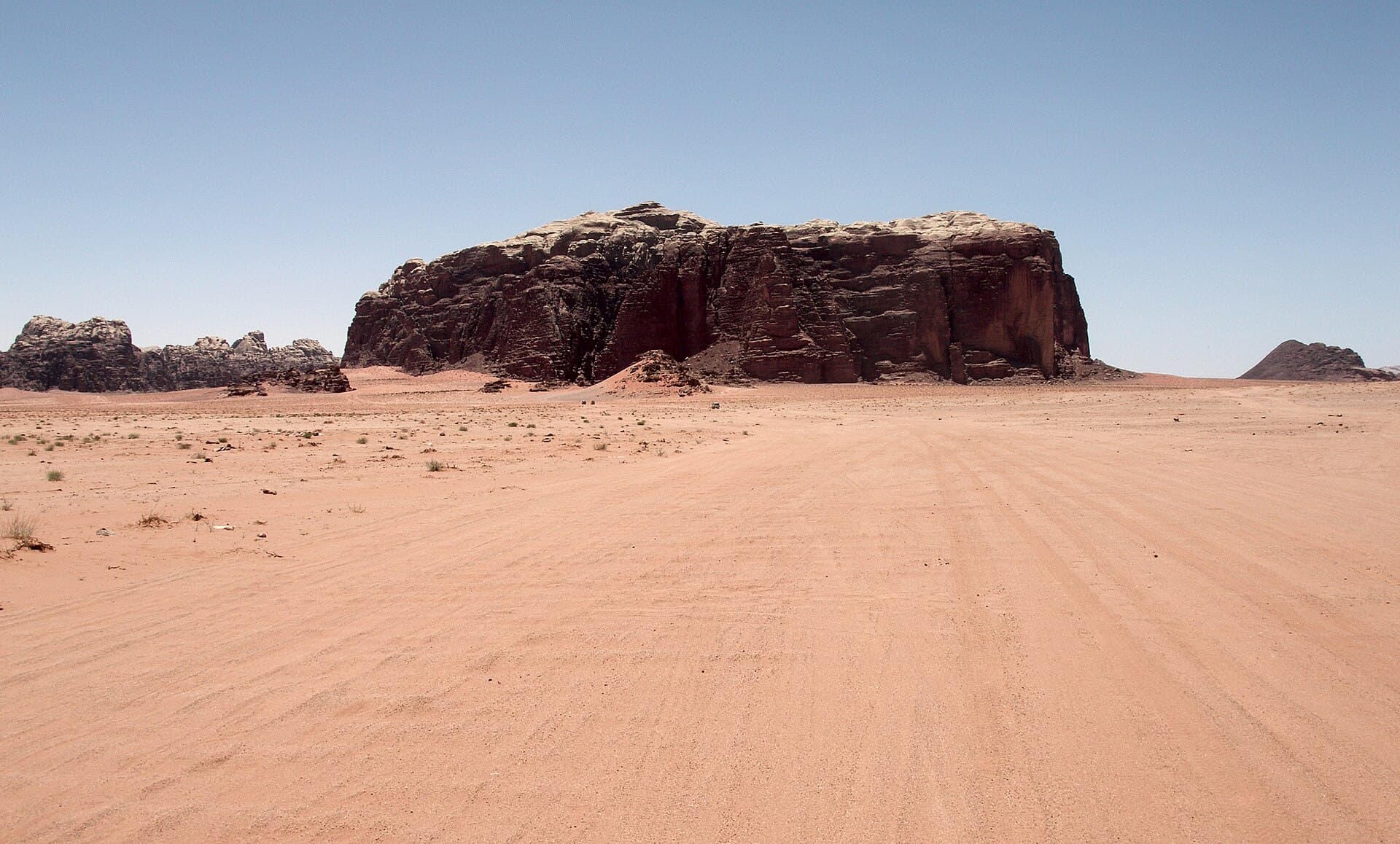
Wadi Rum — nicknamed the Valley of the Moon — is one of the most extraordinary deserts in the world and probably the most accessible of the great cinematic deserts. Listed as UNESCO world heritage in 2011 for its natural landscapes and for its 12,000-year-old petroglyphs, this 720 km² desert in southern Jordan, 60 kilometres north of Aqaba and 100 kilometres south of Petra, is an open-air geological cathedral. Red-orange sandstone cliffs 800 metres high rise abruptly from a fine paprika-coloured sand floor, sculpted by 500 million years of erosion into hallucinated shapes: natural bridges (Burdah Bridge, Um Fruth), arches, wave-shaped dunes (Khazali Canyon, Big Red Dune), decorated caves (Lawrence's House) and sheer rock towers. No other desert in the world combines this chromatic palette (red, orange, ochre, beige), this density of spectacular rock formations and this accessibility from a modern town (1 hour from Aqaba by car).
But Wadi Rum is not just a geological backdrop. It is also the ancestral territory of the Howeitat Bedouins, a tribe that has lived there for centuries and which today provides the tourist welcome via camps scattered across the desert — from simple bivouacs under traditional Bedouin tents to luxury bubble tents with transparent canopies overlooking the starscape. It is also a major site of recent history: T.E. Lawrence (Lawrence of Arabia) led his famous Arab Revolt against the Ottomans here in 1917-1918 alongside Prince Faisal, an experience he recounts in The Seven Pillars of Wisdom (title directly inspired by a rock massif in Wadi Rum). And it is finally one of the most used film locations in the world: Lawrence of Arabia (David Lean, 1962), The Mummy Returns (2001), Prometheus (2012), The Martian (2015), Rogue One: A Star Wars Story (2016), Aladdin (2019), and above all Dune (Denis Villeneuve, 2021 and 2024) which made it the official embodiment of planet Arrakis. Visiting Wadi Rum is walking through landscapes you will recognise without ever having been there.
What we love
- ✅UNESCO desert 2011 with Martian landscapes, one of the most spectacular in the world
- ✅Bedouin bivouac under the stars — unequalled starscape (zero light pollution)
- ✅Movie locations: Lawrence of Arabia, Dune, Star Wars Rogue One, The Martian, Aladdin
- ✅Multiple activities: Bedouin 4x4, camel trek, Burdah Bridge ascent, Seven Pillars climbing
- ✅Accessible from Petra (2h) and Aqaba (1h) — perfect combination for a southern Jordan circuit
What to know
- ❌Uneven camps: some very commercial and crowded, choose carefully (favour recommendations)
- ❌Frequent sandstorms in spring, sometimes hazy skies
- ❌Extreme heat from May to September (up to 45 °C), freezing nights in winter
- ❌Intense tourism in high season: clusters of 4x4 groups crossing on the tracks
Situation
Où se situe Wadi Rum ?
Ouvrir la carte en grand sur OpenStreetMap →Frequently asked questions
How many nights should I spend at Wadi Rum?+
How do I choose a camp at Wadi Rum?+
What does a Bedouin camp stay usually include?+
How do I get to Wadi Rum?+
Does the Jordan Pass cover Wadi Rum?+
Are there really cinema landscapes in Wadi Rum?+
Do I need specific equipment for Wadi Rum?+
Is Wadi Rum safe?+
Our verdict
Wadi Rum is one of those deserts you remember all your life. The combination of orange-tinted cliffs, the absolute silence once the jeep stops, the unparalleled starscape and the warm Bedouin welcome makes Wadi Rum a unique experience in the world tourism offer. Our advice: spend at least one night in a Bedouin camp (ideally two to fully enjoy the experience), choose your camp carefully (the best are Hasan Zawaideh Camp, Wadi Rum Magic Camp, Bedouin Lifestyle Camp; for luxury, Memories Aicha Luxury Camp and Sun City Camp with transparent bubble tents), book a half-day 4x4 tour with a local Bedouin guide to discover the major sites (Lawrence's House, Khazali Canyon, Big Red Dune, Um Fruth Bridge), and get up at 5am for sunrise — a magical moment when the cliffs shift from pale pink to scarlet red in fifteen minutes. Ideally combine Petra (2 nights) + Wadi Rum (1-2 nights) + Aqaba (1 night) for a perfect southern Jordan circuit.
Nearby

"Frais (10°C), tarifs bas, Wadi Rum glacial."
Expert on Wadi Rum · 1 contributions
 Mediterranean Desk — Mowando·Editor