Mowando

site archeologique

Petra

An entire city carved into the rose-coloured cliffs 2,300 years ago, accessible only via a 1.2 km canyon — the moment the Treasury appears at the end of the Siq is one of the most spectacular reveals travel can offer.

4.90Pétra et sud

Petra is, without exaggeration, one of the most extraordinary human creations. Capital of the Nabataean kingdom from the 4th century BC to the 2nd century AD, it prospered thanks to its strategic position on the caravan routes that linked southern Arabia (frankincense, myrrh), India (spices) and the Mediterranean. But what makes it unique in the world is its geology and the architectural use the Nabataeans made of it: carved into a spectacular massif of pink-orange sandstone, accessible only via a natural canyon (the Siq) 1.2 kilometres long and sometimes only 3 metres wide, the city developed funerary and religious architecture entirely sculpted into the cliff. The traveller walking through the Siq suddenly discovers, at the final turn of the canyon, the rose façade of the Khazneh (Treasury): 40 metres high, six Corinthian columns, a pediment carved with breathtaking precision into the living rock. No photograph captures this first visual shock, which remains one of the most intense moments of modern travel.

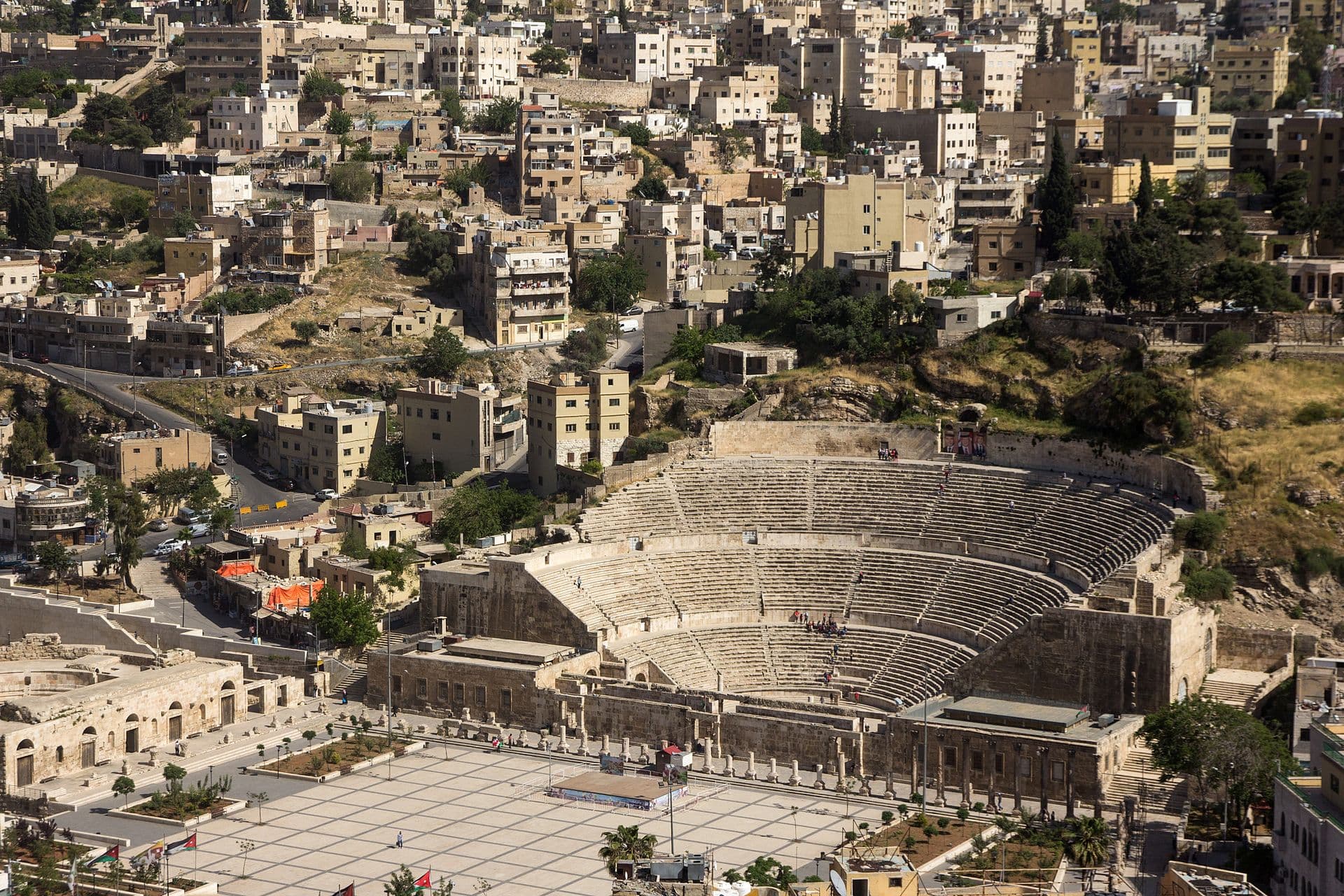
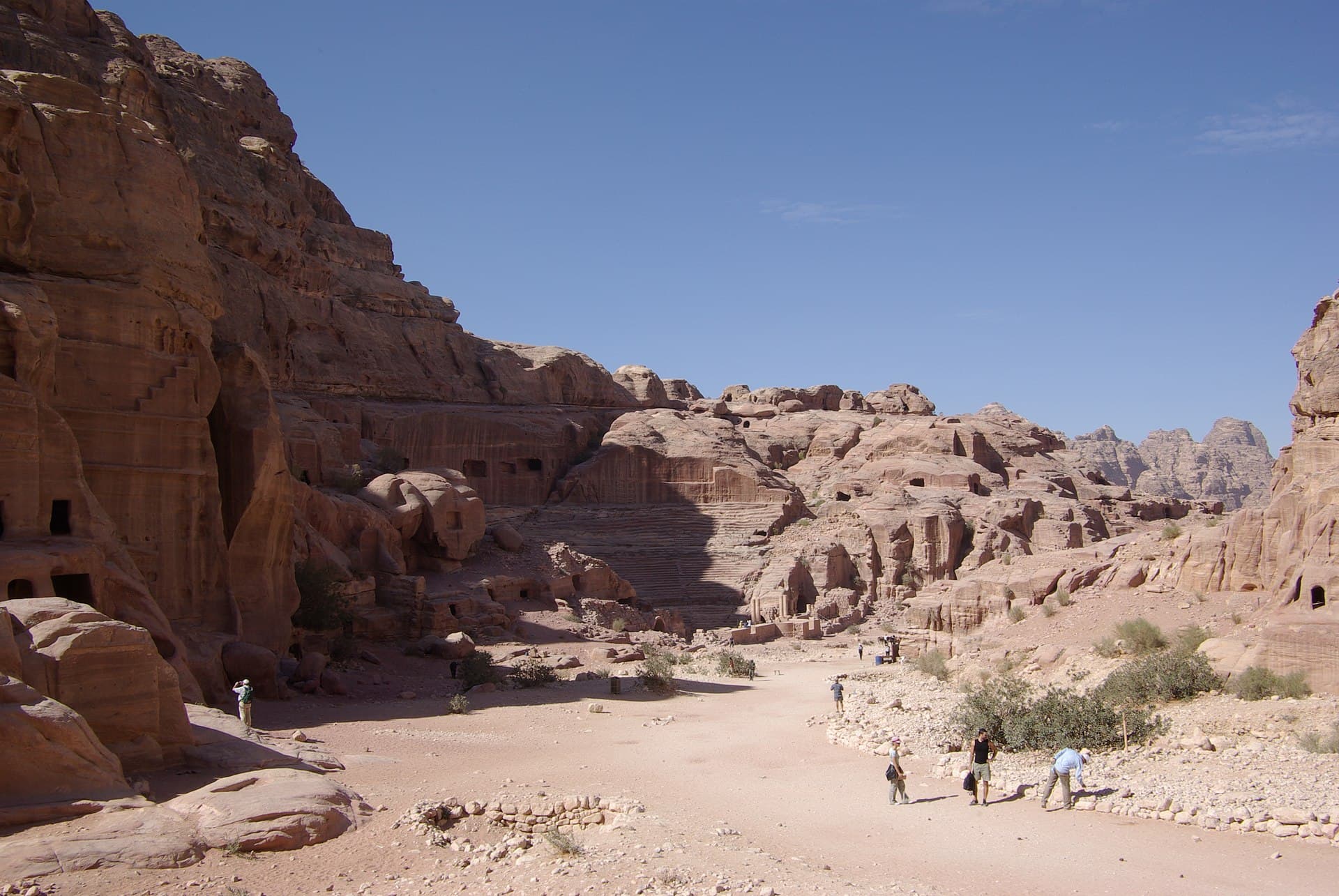
But Petra is not limited to the Khazneh. The site covers more than 264 km² and requires at minimum two days of visit to glimpse the essentials. Beyond the Treasury extends the Roman colonnaded street (Petra was conquered by Trajan in 106), the theatre carved into the rock (4,000 seats), the Palace Tomb, the Silk Tomb with hallucinatory colours, the imposing Royal Tombs, and after 800 steps of ascent, the immense Monastery (Ad Deir) — 47 metres high, even bigger than the Khazneh — which dominates a breathtaking panorama over the Edom mountains. Listed as UNESCO world heritage in 1985, voted one of the 7 Wonders of the Modern World in 2007 by 100 million online votes, Petra is on the list of the five most visited archaeological sites in the world — and is, for any serious traveller, one of those destinations to see once in a lifetime.

What we love

  • 7th Wonder of the Modern World (2007), UNESCO-listed 1985 — globally exceptional archaeological site
  • The Treasury appearing at the end of the Siq: one of the most intense moments of modern travel
  • Monastery (Ad Deir) after 800 steps: even bigger than the Treasury, breathtaking panorama
  • Petra by Night: 1,500 candles light the Siq and the Treasury, unforgettable experience
  • Huge site (264 km²) requiring a minimum of 2 days — rewards those who take their time

What to know

  • Very extensive site: minimum 8-10 km of walking per day, big elevation for the Monastery
  • Peak crowds at the Treasury between 10am and 2pm in high season (arrive at 6am or stay after 4pm)
  • Extreme heat from May to September (up to 42 °C, no shade in the Khazneh wadi)
  • Very expensive entry without Jordan Pass (50 JOD for 1 day, 55 JOD for 2 days)

Situation

Où se situe Petra ?

Ouvrir la carte en grand sur OpenStreetMap →

Frequently asked questions

How many days do I need at Petra?+
Two full days minimum are essential. Day one covers the classic itinerary: Siq → Treasury → Roman theatre → colonnaded street → Royal Tombs (5-6 hours). Day two allows the long ascent to the Monastery (800 steps, 2-3 hours round trip) and exploration of the High Places of Sacrifice. An optional third day allows you to add Little Petra (Siq al-Barid, 9 km north) and off-the-beaten-track hikes (Jebel Haroun, Tomb of the 53 Niches). Many travellers only give a single day to Petra: that is a mistake.
When should I buy the Petra entry ticket?+
The simplest is to buy the __Jordan Pass__ (70-80 JOD depending on the version, €85-100) before departure, which includes the Jordan entry visa and Petra entry for 1, 2 or 3 days, plus 40 other major sites (Wadi Rum, Jerash, Amman Citadel, Mount Nebo...). The Jordan Pass pays for itself on day one at Petra (single-day ticket 50 JOD i.e. €65, two days 55 JOD, three days 60 JOD). Buy online at jordanpass.jo. Without Jordan Pass and without prior visa, the Petra ticket jumps to 90 JOD (€115) — major saving.
What time should I arrive at Petra?+
At opening, absolutely: 6am in summer (May-October), 6:30am in winter (November-April). The Treasury is in shadow until about 9:30-10am (golden light arrives mid-morning), but the empty Siq before 7am, the absence of noise, and the morning coolness are unique experiences. Coach groups arrive around 9:30-10am and saturate the Siq and Treasury until 2pm. An alternative is to arrive after 3pm and stay until closing (5-6pm depending on season), with sunset light on the façades.
Is Petra by Night worth it?+
Yes, absolutely — it is a one-of-a-kind experience. Three nights a week (Monday, Wednesday, Thursday, 8:30-10:30pm), the Siq is lit by around 1,500 candles placed on the ground along the 1.2 km canyon, and the Treasury is lit by hundreds more candles while a Bedouin musician plays the flute. The atmosphere is magical, almost mystical. Count 17 JOD (€22) in addition to the daytime ticket (free with Jordan Pass... but NO: Petra by Night is NOT included in the Jordan Pass, beware of the confusion). Book the same morning at the ticket office.
Do I need a guide for Petra?+
Strongly recommended for the first day. The site is huge, the history complex (Nabataeans, Romans, Byzantines, Crusades), and signage limited. An official qualified guide costs 50-70 JOD (€65-90) for 4-5 hours. Otherwise, English/French audioguides available at the ticket office for 6 JOD (€8), or a good guidebook (Lonely Planet, Rough Guide). Many Bedouins offer guide services at the entrance — check their official qualification and negotiate the price upfront to avoid disappointment.
How do I climb to the Monastery (Ad Deir)?+
The Monastery sits at the top of a plateau reached by about 800 steps cut into the rock from the centre of the site (Qasr al-Bint). Count 45 minutes to 1h15 of climbing depending on your fitness, 30-45 minutes down. Several Bedouin cafés line the way for resting. If you are tired or struggling, donkeys (15-20 JOD one way) can take you up — avoid in peak summer when animal conditions are concerning. Prefer morning or late afternoon to avoid heat and crowds. The panorama at the top fully justifies the effort.
Are there restaurants at Petra?+
Inside the site, several small Bedouin cafés (Qasr al-Bint, near the Roman theatre, at the foot of the Monastery) serve sandwiches, falafels and drinks at tourist prices (8-15 JOD). The __Basin Restaurant__ (buffet cafeteria at the centre of the site) is more complete but lacks charm (20-25 JOD). It's best to plan a picnic (sandwiches bought in Wadi Musa, water, fruit) and have lunch at the foot of a cliff. In Wadi Musa (the nearby village), many restaurants serve authentic Jordanian cuisine: __My Mom's Recipe__ (excellent family mansaf), __The Cave Bar__ (Jordan's first troglodyte wine bar), and the Mövenpick and Marriott hotel restaurants.
Which hotel should I choose in Wadi Musa for Petra?+
Wadi Musa (the village next to Petra, 5-10 min by shuttle from the main entrance) offers all categories. Budget: __Petra Gate Hotel__ (€25-40/night, mountain view, warm welcome). Comfort: __Petra Moon Hotel__ (€60-90/night, 200 m from the entrance), __Petra Marriott__ (€120-180/night, exceptional panorama). Luxury: __Mövenpick Resort Petra__ (€180-300/night, just opposite the entrance), __Marriott Petra__ (renovated), or the new __Old Village Resort__ and __Petra Guest House Hotel__. Book 2-3 months ahead in high season (March-May, September-November).

Our verdict

Petra is one of those destinations you don't tell, you live. No photograph, no film, no story prepares you for the first visual shock of the Treasury appearing at the end of the Siq, nor for the feeling of grandeur felt before the Monastery after the 800-step ascent. Our advice: plan two full days minimum (ideally three if you want to add Little Petra and the desert tombs), buy the Jordan Pass before departure (which includes the visa, 2-day Petra entry and 40 other sites), arrive at opening (6am in summer, 6:30am in winter) to enjoy the Treasury without crowds and the golden morning light, and book Petra by Night absolutely (Mondays, Wednesdays, Thursdays). Stay in Wadi Musa, the nearby village, in a hotel with breakfast included so you can leave early. The experience is physically demanding but remains one of the great moments of modern travel.

Nearby
The Editors
The Editorsauteur principal✓ Verified

"Frais (10°C), tarifs bas, Wadi Rum glacial."

Expert on Petra · 1 contributions

Mowando Letter

Once a month: the right destinations for the right season + the best booking windows.

No spam. One-click unsubscribe. Your data is never shared.