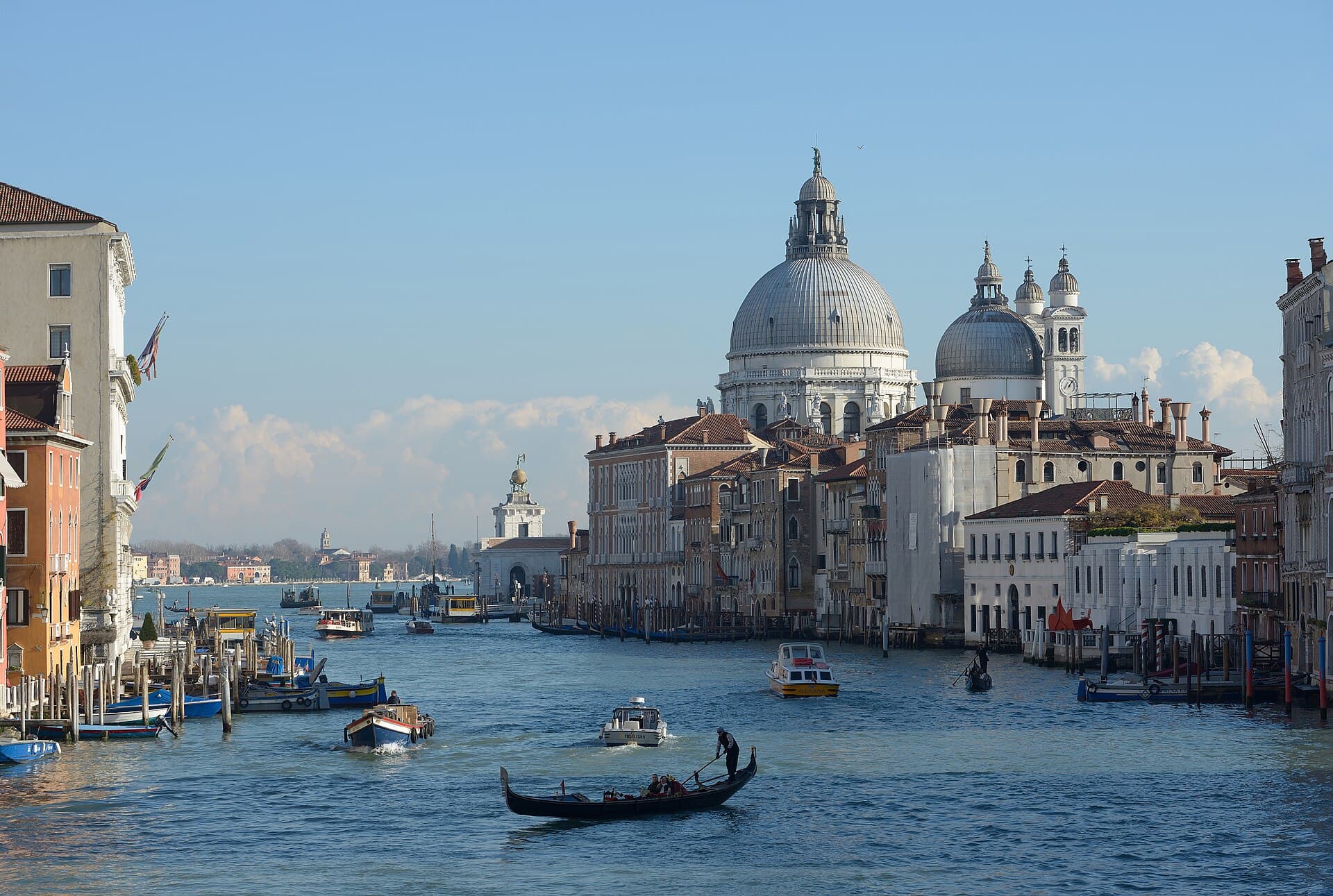

"Janvier est le mois le plus calme à Venise. Le brouillard enveloppe parfois la lagune en journées entières, créant une atmosphère mystérieuse et très photographique. Musées presque vides, prix plancher."
Expert on Venice · 1 contributions
The best periods
The best time to visit Venice is April to June and September to October. The most recommended months are Juin, Juillet, Août.
Printemps — Venise retrouve ses couleurs
- ✅Temperatures douces (15-24 °C), sans la lourdeur de l'été
- ✅La Biennale d'Architecture (années paires) ou d'Art (années impaires) en juin
- ✅Foule croissante mais encore gérable, en dehors du week-end de Pâques
- ❌Pâques : Venise extrêmement bondée pendant 3-4 jours
- ❌Vaporetti surchargés le week-end
Été — haute saison intense
- ✅Festival du Film de Venise en août-septembre (Mostra), longues soirées lumineuses
- ✅Excursions en lagune dans des conditions idéales
- ❌Venise saturée de touristes (jusqu'à 80 000 visiteurs/jour en août)
- ❌Chaleur et humidité fortes (30-32 °C, taux d'humidité élevé), odeurs du canal
- ❌Hébergements hors de prix, réservations nécessaires plusieurs mois à l'avance
Automne — lumière et sérénité retrouvée
- ✅Températures agréables (16-25 °C), lumière rasante et dorée sur la lagune
- ✅Fréquentation en nette baisse après la rentrée, ambiance plus vénitienne
- ✅Mostra del Cinema en septembre, atmosphère festive et culturelle
- ❌Risques d'acqua alta (inondation) dès octobre, bottes nécessaires
- ❌Certains jours de novembre, la cité peut sembler froide et mélancolique
Month-by-month climate
Temperatures, rainfall and sunshine in Venice across the 12 months.
| Jan | Fév | Mar | Avr | Mai | Juin | Jui | Aoû | Sep | Oct | Nov | Déc | |
|---|---|---|---|---|---|---|---|---|---|---|---|---|
| Min | 1° | 3° | 5° | 8° | 14° | 18° | 21° | 21° | 17° | 12° | 6° | 3° |
| Max | 8° | 10° | 13° | 16° | 21° | 26° | 29° | 29° | 24° | 19° | 13° | 9° |
| Mer | — | — | — | — | — | — | — | — | — | — | — | — |
| Pluie | 62mm | 40mm | 58mm | 66mm | 125mm | 87mm | 57mm | 72mm | 95mm | 109mm | 72mm | 83mm |
| Soleil/j | 5.9h | 7.1h | 9h | 10.5h | 11h | 13h | 13.3h | 12.1h | 10.3h | 7.7h | 6.4h | 4.5h |
Tourist crowds
Monthly attendance levels (0 = empty, 100 = saturated).
Average flight prices
Average round-trip Paris → Venice by month.
Frequently asked questions
How many days should I plan for Venice?+
How do I reach Venice from London or Paris?+
When is the best time to visit Venice without the crowds?+
What is acqua alta and how do I prepare for it?+
Do I have to pay to enter Venice?+
Which Venice neighbourhood is least touristy?+
Are the Murano and Burano excursions worth it?+
What's the best way to get around Venice?+
Our verdict
Venice is one of those destinations you should see at least once in your life — not because the city has been hyped, but because the reality genuinely surpasses the hype. The Grand Canal at first light, the palazzi reflecting in the water, the deserted alleys of Cannaregio in the early afternoon — the experience is both wholly singular and gently melancholy, because you sense throughout that this city is fighting for its survival. The maths is brutal: 55 000 residents, up to 30 million visitors a year, an ageing housing stock and a working population steadily priced out by short-term rentals. Coming as a visitor is therefore both a privilege and a small responsibility.
Our advice: come outside summer, stay at least two nights (one is genuinely insufficient), and lose yourself deliberately. The single greatest Venetian pleasure is to abandon the map for an afternoon and follow your instinct down side calli. Eat your cicchetti standing up in a bacaro in Cannaregio, take an early vaporetto out to Torcello, watch the lights come on over the lagoon from the Fondamente Nuove and skip the gondola unless it really means something to you. Stay on the island itself if your budget allows — Venice empties out a little once the day trippers leave at five, and that's when the city quietly belongs to those who chose to stay overnight. Venice reveals itself only to travellers who accept its terms; on those terms, it rewards you enormously.
Réserver votre séjour
Liens partenaires — une commission peut nous être reversée, sans surcoût pour vous.
 HébergementAnnulation gratuite
Hôtels & séjours en Italie
Du B&B de charme au palazzo historique, à Rome, Florence, Venise et dans toute la péninsule italienne.
ActivitéCoup de cœurVisites & billets coupe-file en Italie
Colisée, galerie des Offices, basilique Saint-Marc, balade en gondole : évitez les files avec des billets réservés.
VolComparateurVols vers l'Italie
Rome, Venise, Milan, Naples : des vols directs de 1 h 30 à 2 h 30 depuis la France, comparés en un coup d'œil.
Similar destinations