ville
Florence
The city where the Renaissance was born — and where masterpieces by Botticelli, Leonardo and Michelangelo still live in the palaces that commissioned them.
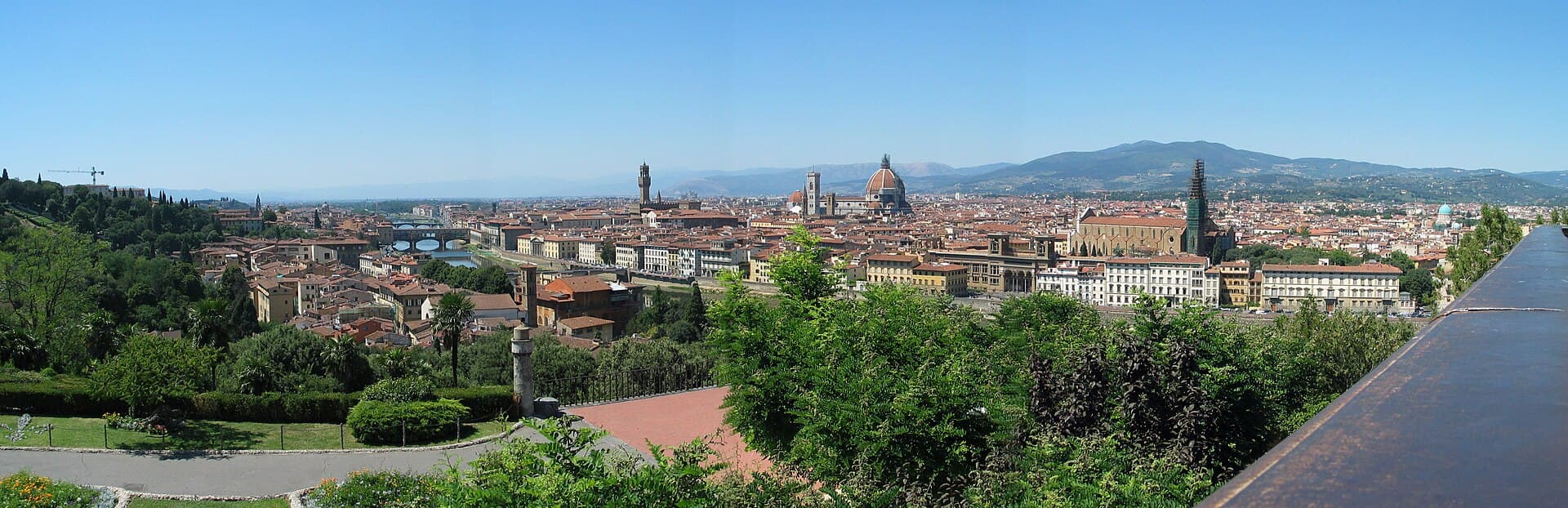
Florence is one of the most extraordinary cities in Europe: barely 350 000 residents, yet a concentration of masterpieces that outpaces any major capital. Birthplace of the Renaissance, the city saw Dante, Giotto, Brunelleschi, Donatello, Botticelli, Leonardo da Vinci and Michelangelo work within its walls across just two centuries — an intellectual and artistic miracle that historians are still trying to fully explain. That heritage is all still in place, in the very buildings that first housed it: the Uffizi Gallery in the Medici palace, the Accademia where Michelangelo's David has stood since 1504, the dome of Brunelleschi that has dominated the Florentine skyline since 1436.
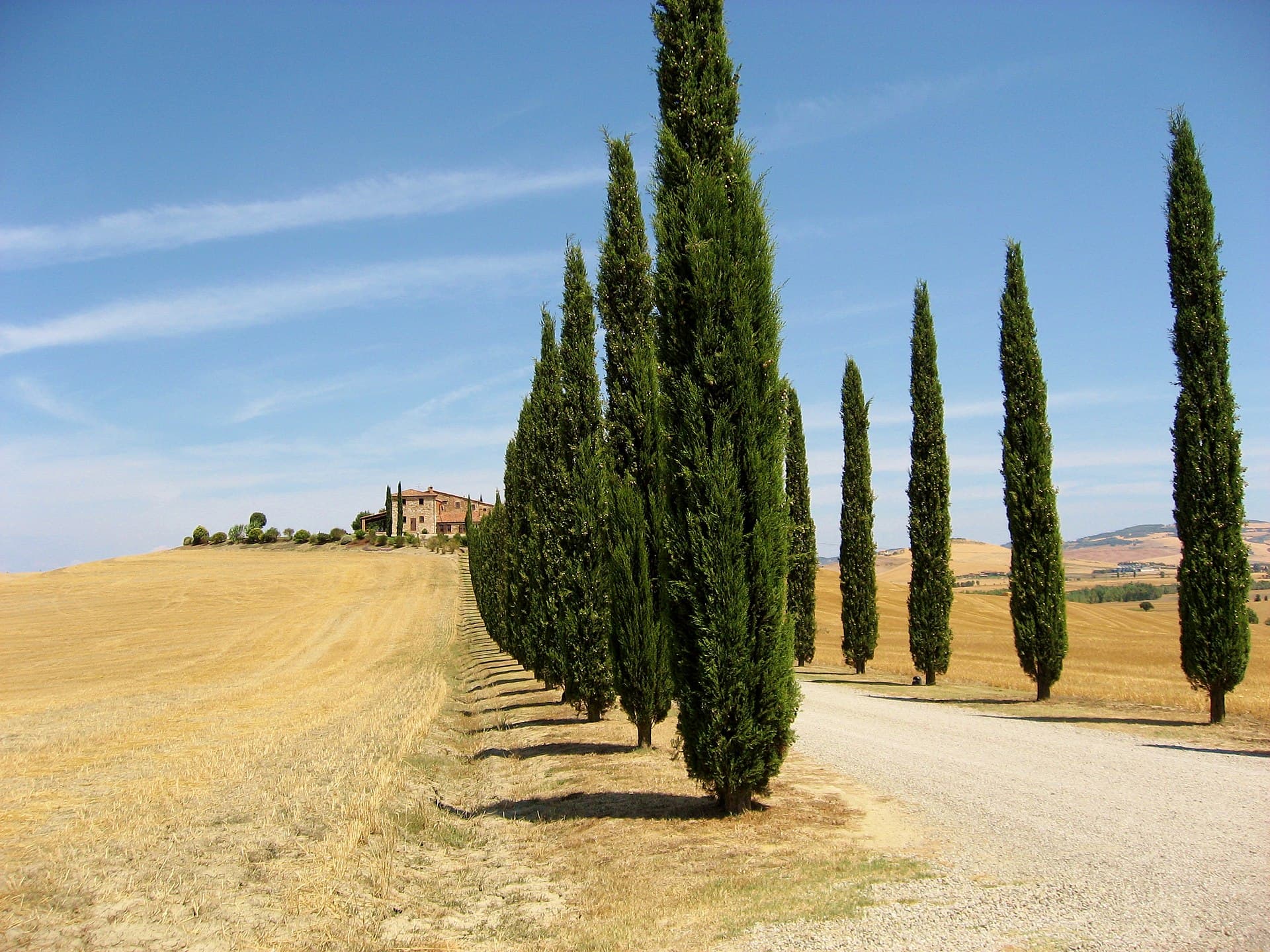
But Florence isn't just a museum city. It lives, eats, drinks and knows how to enjoy itself. The Oltrarno district on the left bank of the Arno holds the city's most authentic everyday life — artisan workshops, second-hand bookshops, unpretentious neighbourhood restaurants — and offers a beautiful contrast to the academic splendour of the museums. Around Florence, Tuscany unfolds with some of Europe's loveliest countryside: the Chianti hills 30 minutes' drive away, the cypress alleys of the Val d'Orcia, the thermal baths of Saturnia. The single biggest tactical mistake travellers make in Florence is staying inside the city centre for the entire trip; the smartest is pairing two or three city nights with a couple in a Chianti agriturismo, with a hire car waiting at the gate.
What we love
- ✅Unrivalled concentration of Renaissance masterpieces in a human-scale city
- ✅Uffizi Gallery, Michelangelo's David and Brunelleschi's Dome — three global icons in the same city
- ✅Easy access to the Tuscan countryside: Chianti, Val d'Orcia, Siena within an hour
- ✅Outstanding Tuscan cuisine: bistecca fiorentina, pici, ribollita, Chianti Classico
- ✅Compact, walkable city — a real advantage over Rome or Milan
What to know
- ❌Heavy crowds at the Uffizi and the Duomo — booking essential
- ❌Punishing summer heat (33-36 °C), uncomfortable for long museum days
- ❌Historic centre is almost entirely touristic in peak season
- ❌A car is essential to explore the surrounding countryside
Situation
Où se situe Florence ?
Ouvrir la carte en grand sur OpenStreetMap →Frequently asked questions
How many days should I plan for Florence?+
Do I need to book the Uffizi in advance?+
Where do I find a proper bistecca fiorentina?+
Which Florence neighbourhood feels least touristic?+
Can I do a Chianti day trip from Florence?+
How do I get to Florence from London or Paris?+
Is the climb to the Duomo's dome worth it?+
Any lesser-known sights in Florence worth a visit?+
Our verdict
Florence is one of those destinations that deserves a dedicated trip. The artistic density is such that you cannot seriously explore it in less than three days, and every visit reveals something new. The city should be taken slowly: a morning at the Uffizi, a long lunch over bistecca in San Niccolò, a sunset walk up to Piazzale Michelangelo, an evening in an Oltrarno wine bar with a glass of Chianti Classico. That Florentine rhythm, balanced between art and the art of living, is the essence of the experience — and the visitors who try to do too much always look the most exhausted by day three.
Our firm advice: come in April-May or September, lock in your Uffizi and Accademia bookings the day your trip is confirmed, and base yourself in Oltrarno rather than directly next to the Duomo. You'll get better food, friendlier service and a real Florentine morning — a queue at the corner bakery, an espresso at the counter, a slightly aggressive scooter on the cobbles. And do not, under any circumstances, skip a day in the Chianti: the rolling vines and cypress avenues just south of Florence are one of Europe's greatest landscapes, and Florence wouldn't quite be Florence without them as a frame.
Réserver votre séjour
Liens partenaires — une commission peut nous être reversée, sans surcoût pour vous.
 HébergementAnnulation gratuite
Hôtels & séjours en Italie
Du B&B de charme au palazzo historique, à Rome, Florence, Venise et dans toute la péninsule italienne.
ActivitéCoup de cœurVisites & billets coupe-file en Italie
Colisée, galerie des Offices, basilique Saint-Marc, balade en gondole : évitez les files avec des billets réservés.
VolComparateurVols vers l'Italie
Rome, Venise, Milan, Naples : des vols directs de 1 h 30 à 2 h 30 depuis la France, comparés en un coup d'œil.
Nearby

"Janvier est le mois le plus calme à Florence : les Offices sont presque vides, les hôtels pratiquent leurs tarifs les plus bas. Idéal pour les amateurs d'art qui veulent les chefs-d'œuvre pour eux seuls."
Expert on Florence · 1 contributions