ville
Venice
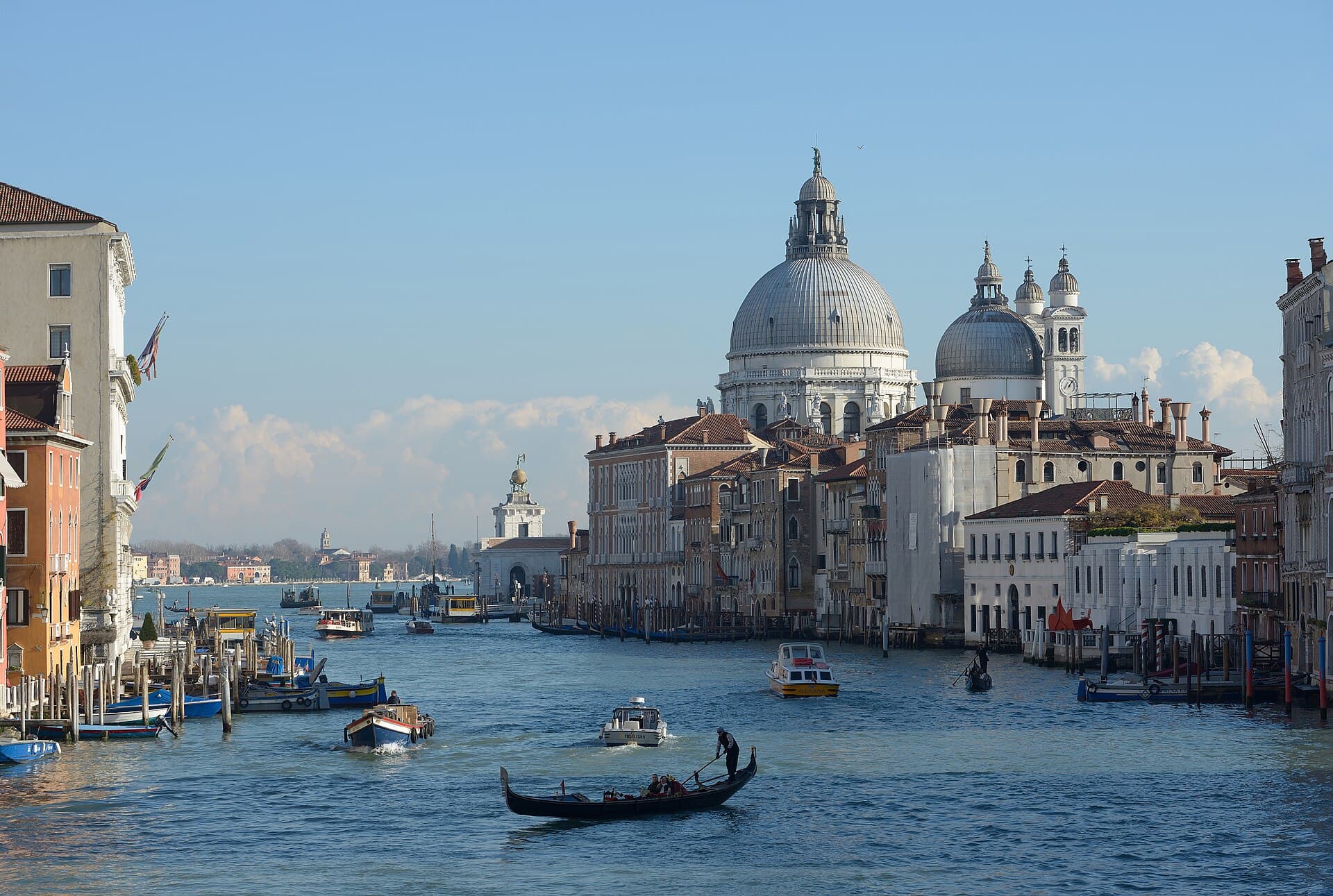
Nowhere in the world do you walk on water quite like in Venice — a city built on 118 islets, utterly unique and frankly irreplaceable.
Venice is a city without equal in the world. Built across 118 islets connected by 400 bridges and 170 canals in a sheltered Adriatic lagoon, it has defied the laws of urban logic and engineering for more than a thousand years. La Serenissima — as the city is still nicknamed, in homage to the Venetian Republic that dominated Mediterranean trade for over a millennium — has left behind a monumental heritage that ranks her historic centre among the most extraordinary on the planet: St Mark's Basilica (Byzantine architecture unique in Western Europe), the Doge's Palace (a masterpiece of Venetian Gothic), the Grand Canal lined with palazzi, the Gallerie dell'Accademia (Titian, Bellini, Tintoretto, Veronese).
But Venice is also a living city — 55 000 permanent residents — that resists its own touristification with a mix of dignity and quiet melancholy. Step away from St Mark's Square and the Grand Canal and the districts of Cannaregio, Dorsoduro and Castello still reveal an authentic local life: the morning markets at Rialto, the bacari (wine bars) where you stand at the counter eating cicchetti with a chilled glass of white, the narrow calli that ring with the footsteps of schoolchildren in the morning. Venice rewards slowness; it rewards the visitor who accepts that getting briefly lost is part of the experience rather than a problem to be solved. And it punishes anyone who tries to do the whole city in a single panting day, jostling between the Doge's Palace and the Bridge of Sighs in the August heat.
What we love
- ✅A city unlike any other in the world — a travel experience with no real equivalent on the planet
- ✅Exceptional UNESCO heritage: St Mark's Basilica, the Doge's Palace, the Grand Canal
- ✅The Carnevale (February), the Biennale and the Venice Film Festival rank among Europe's biggest cultural events
- ✅Distinctive Venetian cuisine: cicchetti, seafood risotto, fegato alla veneziana, Prosecco and Spritz
- ✅Easy lagoon excursions to Murano, Burano and Torcello — quieter, equally striking islands
What to know
- ❌Heavy summer overcrowding (up to 80 000 day-trippers) — a real degradation in July-August
- ❌Accommodation is among the most expensive in Italy — by some distance
- ❌Acqua alta flood risk from November to March; rubber boots are non-negotiable
- ❌Demographic decline and accelerating touristification — a city slowly losing its residents
Situation
Où se situe Venice ?
Ouvrir la carte en grand sur OpenStreetMap →Frequently asked questions
How many days should I plan for Venice?+
How do I reach Venice from London or Paris?+
When is the best time to visit Venice without the crowds?+
What is acqua alta and how do I prepare for it?+
Do I have to pay to enter Venice?+
Which Venice neighbourhood is least touristy?+
Are the Murano and Burano excursions worth it?+
What's the best way to get around Venice?+
Our verdict
Venice is one of those destinations you should see at least once in your life — not because the city has been hyped, but because the reality genuinely surpasses the hype. The Grand Canal at first light, the palazzi reflecting in the water, the deserted alleys of Cannaregio in the early afternoon — the experience is both wholly singular and gently melancholy, because you sense throughout that this city is fighting for its survival. The maths is brutal: 55 000 residents, up to 30 million visitors a year, an ageing housing stock and a working population steadily priced out by short-term rentals. Coming as a visitor is therefore both a privilege and a small responsibility.
Our advice: come outside summer, stay at least two nights (one is genuinely insufficient), and lose yourself deliberately. The single greatest Venetian pleasure is to abandon the map for an afternoon and follow your instinct down side calli. Eat your cicchetti standing up in a bacaro in Cannaregio, take an early vaporetto out to Torcello, watch the lights come on over the lagoon from the Fondamente Nuove and skip the gondola unless it really means something to you. Stay on the island itself if your budget allows — Venice empties out a little once the day trippers leave at five, and that's when the city quietly belongs to those who chose to stay overnight. Venice reveals itself only to travellers who accept its terms; on those terms, it rewards you enormously.
Réserver votre séjour
Liens partenaires — une commission peut nous être reversée, sans surcoût pour vous.
 HébergementAnnulation gratuite
Hôtels & séjours en Italie
Du B&B de charme au palazzo historique, à Rome, Florence, Venise et dans toute la péninsule italienne.
ActivitéCoup de cœurVisites & billets coupe-file en Italie
Colisée, galerie des Offices, basilique Saint-Marc, balade en gondole : évitez les files avec des billets réservés.
VolComparateurVols vers l'Italie
Rome, Venise, Milan, Naples : des vols directs de 1 h 30 à 2 h 30 depuis la France, comparés en un coup d'œil.
Nearby

"Janvier est le mois le plus calme à Venise. Le brouillard enveloppe parfois la lagune en journées entières, créant une atmosphère mystérieuse et très photographique. Musées presque vides, prix plancher."
Expert on Venice · 1 contributions