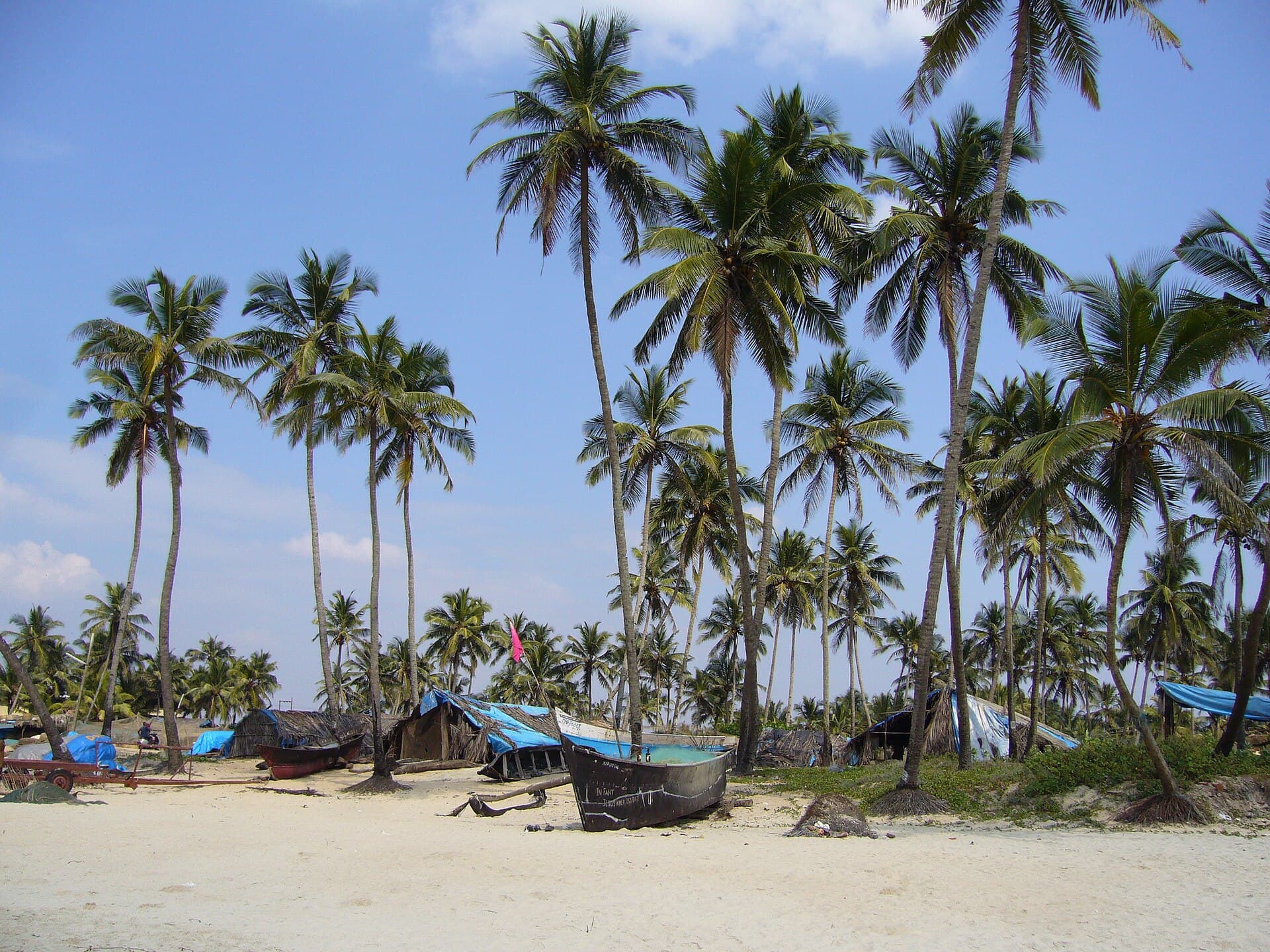
Goa is India's most atypical and particular state — unique Portuguese heritage in Asia (the only Portuguese territory in India from 1510 to 1961, i.e. 451 colonial years), Catholic enclave in a Hindu subcontinent (25% Christians, almost unique status in India), India's number-one beach destination (3 million annual tourists, 25% of international tourism in India), and the option par excellence for tropical Indian beaches without complications.
Goa is also India's smallest state by area (3,700 km², equivalent to Corsica). This geographical compactness allows covering the essentials in 5-10 days without changing accommodation. The tourist geography simply structures: a north-south axis along 105 km of coast, with two distinct vibes — festive North (Calangute, Baga, Anjuna, Vagator, Arambol, Mandrem) inherited from the 1960s-1970s hippie era, and quiet South (Palolem, Agonda, Patnem, Colva, Benaulim) more upscale and romantic.
Our editorial angle: Goa is the quintessential Indian beach destination, but also the least "Indian" of Indian destinations. The atmosphere is largely Westernised, tourism is mature and organised, the experience is familiar for a European — which makes it both its quality (ease, safety, beaches) and its flaw (little Indian authenticity). That's why we systematically recommend combining Goa with another region — Golden Triangle for Mughal culture, Kerala for the alternative coast, Mumbai for the metropolis.
Read also
- India — complete country guide — Everything to know: mandatory e-Visa, currency, regions, best time to visit.
- Kerala & South — The other Indian coast: Alleppey backwaters, Munnar plantations, quieter Varkala beaches.
- Mumbai & Maharashtra — Mumbai, Ellora and Ajanta — neighbouring financial metropolis and cultural UNESCO caves complement.
- Delhi & Rajasthan — Golden Triangle and palaces: combine with Goa for north culture + south-west beaches.