Region
Goa
Former Indian Portuguese colony (1510-1961) — unique Catholic heritage in India (Baroque cathedrals, UNESCO Bom Jesus Basilica with St Francis Xavier's body), tropical beaches and India's festive capital.
Goa is India's most atypical state — the smallest area (3,700 km², 1.5 million inhabitants), a 451-year Portuguese colonial heritage (1510-1961) that made it India's Catholic enclave (25% Christians, 65% Hindus, 8% Muslims), and India's number-one beach destination (3 million annual tourists, 800,000 international).
The Portuguese history shaped Goa uniquely in Asia. Captured in 1510 by Afonso de Albuquerque (second viceroy of Portuguese India) who made it the Estado da Índia capital, Goa became in the 16th century one of the world's most prosperous cities — nicknamed "Rome of the Orient", more populous than Lisbon. The decline began in the 17th century. The territory remained Portuguese until Operation Vijay (1961), when the Indian army ended Portuguese sovereignty.
This heritage left a unique architectural and cultural patrimony. Old Goa (Velha Goa) hosts an exceptional UNESCO ensemble: Basilica of Bom Jesus (1605, contains the incorrupt body of St Francis Xavier, Jesuit evangeliser of Asia who died in 1552), Sé Cathedral (1619, Asia's largest cathedral), Church of St Francis of Assisi (1521). The Goan cuisine is one of India's most distinct — heavily Portuguese-influenced (vinegar, chilli, garlic, pork allowed unlike rest of India) and creolised with local spices: vindaloo (pork-vinegar-garlic-chilli curry), sorpotel, xacuti, bebinca (7-layer cake), feni (local cashew or coconut liquor).
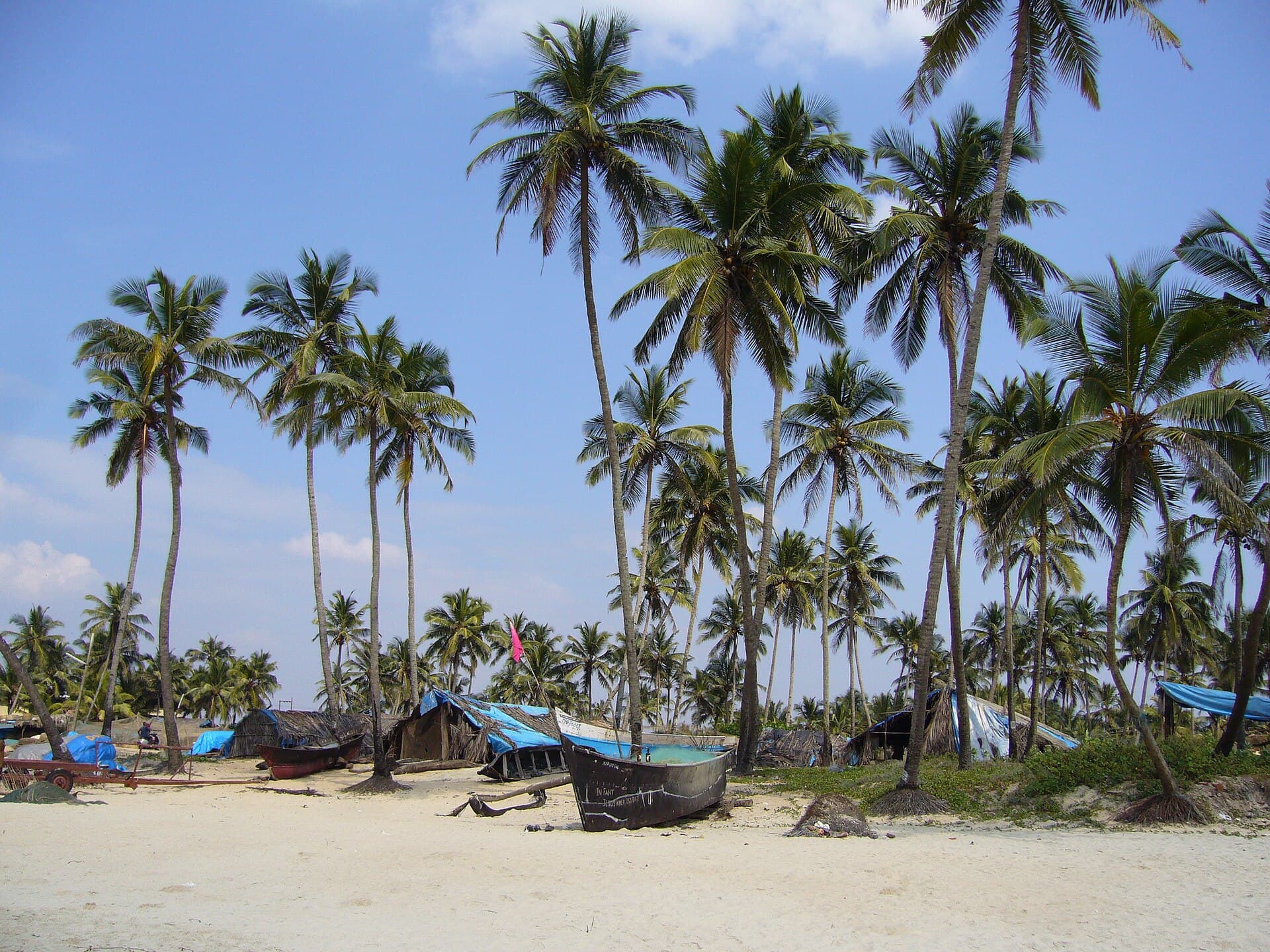
The tourist offering organises around two distinct hubs. North Goa (Mandovi river to Tiracol) is the festive epicentre — Calangute and Baga are the busiest beaches, Anjuna and Vagator have a hippie reputation inherited from the 1960s-1970s, Arambol and Mandrem further north keep an alternative yoga spirit. South Goa (Zuari river to Karwar) is quieter, more authentic, more upscale — Palolem (crescent palm-fringed beach), Agonda (longer beach, yoga atmosphere), Patnem, Colva, Benaulim (quieter beaches with 5-star resorts like Park Hyatt, Leela, Taj Exotica).
Explore Goa
Situation
Où se situe Goa ?
Ouvrir la carte en grand sur OpenStreetMap →Frequently asked questions
North or South Goa: which to choose?+
Best time to visit Goa?+
How to get to Goa from Europe?+
Should I visit Old Goa and what to see?+
Best Goa resorts?+
Is Goa really dangerous at night?+
Our verdict
Goa is India's most atypical state — unique Portuguese heritage in India (UNESCO Old Goa, Bom Jesus Basilica with St Francis Xavier's body), quality tropical beaches, distinct Indo-Portuguese creole cuisine, old festive atmosphere. It's the #1 option for tropical Indian beaches. Our recommendation: avoid saturated North (Calangute, Baga) unless seeking intense nightlife; favour the South (Palolem, Agonda, Patnem) for quiet romantic beaches. Ideal period: mid-November to mid-March (dry season, but book 3-6 months ahead for Christmas-New Year). Avoid June-September (monsoon). Combine 4-7 nights Goa with another region. Goa alone deserves 5-10 days. Luxury option: Park Hyatt Goa Resort & Spa (Cansaulim, South, €400-700/night) or Taj Exotica Resort & Spa (Benaulim, €500-900/night).