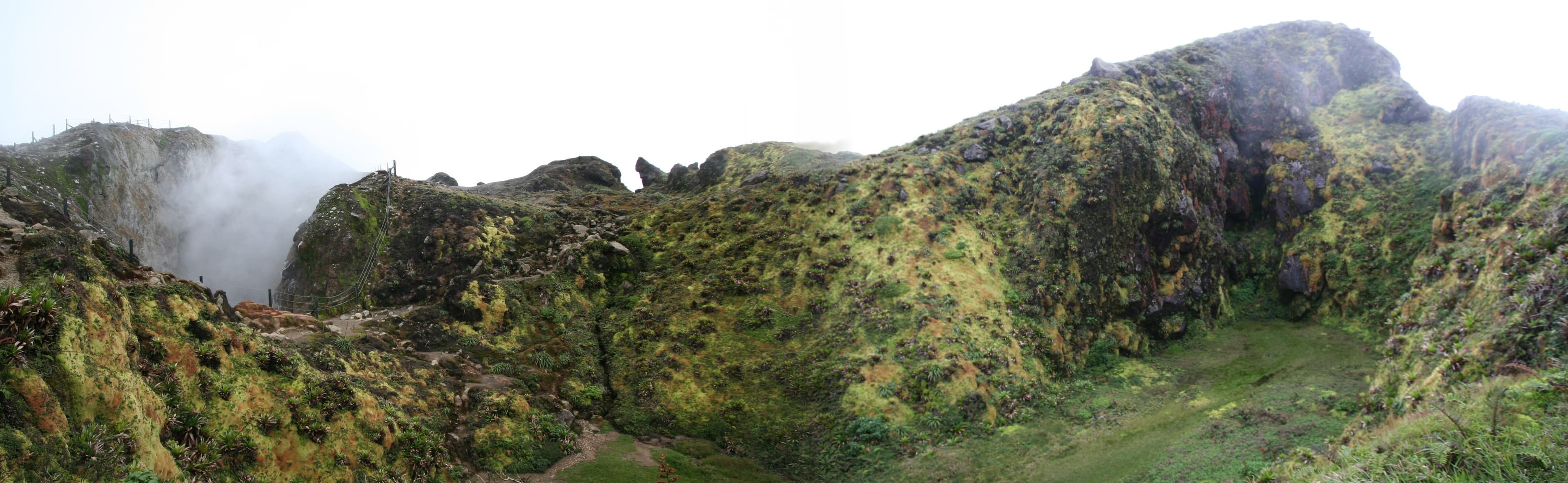

"Janvier : conditions idéales pour la Soufrière. Partez tôt (6h-7h) du parking de la Savane à Mulets pour profiter du sommet dégagé avant l'arrivée des nuages vers 10h."
Expert on La Soufrière · 1 contributions
 Africa & Americas Desk — Mowando·Editor
The best periods
The best time to visit La Soufrière is December to April. The most recommended months are Mai, Juin.
Saison sèche — la meilleure période pour le sommet
- ✅Visibilité optimale au sommet (1467 m) le matin, panorama jusqu'à la Dominique par grand beau temps
- ✅Sentiers secs et sûrs, conditions parfaites pour la randonnée 3h aller-retour
- ✅Chutes du Carbet à débit modéré mais spectaculaire, baignades sereines aux Bains Jaunes
- ❌Affluence sensible au parking de la Savane à Mulets en haute saison touristique
- ❌Réservation des gîtes à Saint-Claude indispensable plusieurs semaines à l'avance
- ❌Risque de file d'attente courte au sommet par grand beau temps
Mai-juin — intersaison idéale
- ✅Météo encore favorable au sommet, foule en fort retrait
- ✅Forêt tropicale qui reverdit après les premières pluies, faune (colibris, rainettes) active
- ✅Chutes du Carbet à débit en hausse, plus spectaculaires
- ❌Premières averses tropicales possibles, brume plus fréquente au sommet en fin de mois
- ❌Quelques sentiers secondaires (Chutes Grand Carbet) plus glissants
Hivernage — jungle au maximum, sommet aléatoire
- ✅Chutes du Carbet à leur débit maximal : spectacle nature exceptionnel
- ✅Forêt tropicale primaire d'un vert intense, biodiversité à son apogée
- ✅Tarifs hébergements au plus bas hors juillet-août
- ❌Sommet de la Soufrière souvent dans les nuages — visibilité aléatoire
- ❌Sentiers glissants et dangereux par temps de pluie
- ❌Risque cyclonique d'août à octobre, ascensions parfois interdites
Month-by-month climate
Temperatures, rainfall and sunshine in La Soufrière across the 12 months.
| Jan | Fév | Mar | Avr | Mai | Juin | Jui | Aoû | Sep | Oct | Nov | Déc | |
|---|---|---|---|---|---|---|---|---|---|---|---|---|
| Min | 13° | 13° | 13° | 14° | 15° | 16° | 15° | 16° | 16° | 16° | 15° | 13° |
| Max | 18° | 18° | 18° | 19° | 20° | 21° | 20° | 21° | 21° | 20° | 19° | 18° |
| Mer | — | — | — | — | — | — | — | — | — | — | — | — |
| Pluie | 65mm | 76mm | 93mm | 59mm | 52mm | 79mm | 129mm | 118mm | 175mm | 175mm | 145mm | 78mm |
| Soleil/j | 10.6h | 10.7h | 11.2h | 11.5h | 11.3h | 11h | 10.5h | 10.8h | 10.7h | 9.9h | 10h | 10.3h |
Tourist crowds
Monthly attendance levels (0 = empty, 100 = saturated).
Average flight prices
Average round-trip Paris → La Soufrière by month.
Frequently asked questions
How to climb La Soufrière of Basse-Terre?+
Is La Soufrière dangerous?+
How to visit the Carbet Falls?+
What are the Bains Jaunes and should I go?+
Where to stay near La Soufrière?+
Our verdict
The ascent of La Soufrière of Basse-Terre is the founding nature experience of any stay in Guadeloupe — one of the rare active volcanoes easily accessible to hikers in Europe and the Caribbean. The summit (1,467 m, highest in the Lesser Antilles), the lunar landscape of fumaroles, the panoramic view of the archipelago and Dominica justify the trip on their own. Combine with the Carbet Falls (2nd fall at 110 m, accessible 30 min walk) and the Bains Jaunes (free sulphurous hot swimming). Set off EARLY (before 7:30 am from the car park), equip yourself with walking shoes, windbreaker and water, and base yourself in Saint-Claude (the closest, 700 m altitude) or Deshaies (Caribbean coast 1h away).
Similar destinations