île
Fakarava
Fakarava is home to the most powerful dive site in the world: the Tumakohua south pass, where hundreds of grey reef sharks gather on the drop-offs, and where 18,000 groupers come together at each full moon of June-July to spawn — documented by Laurent Ballesta in '700 Sharks in the Night'.
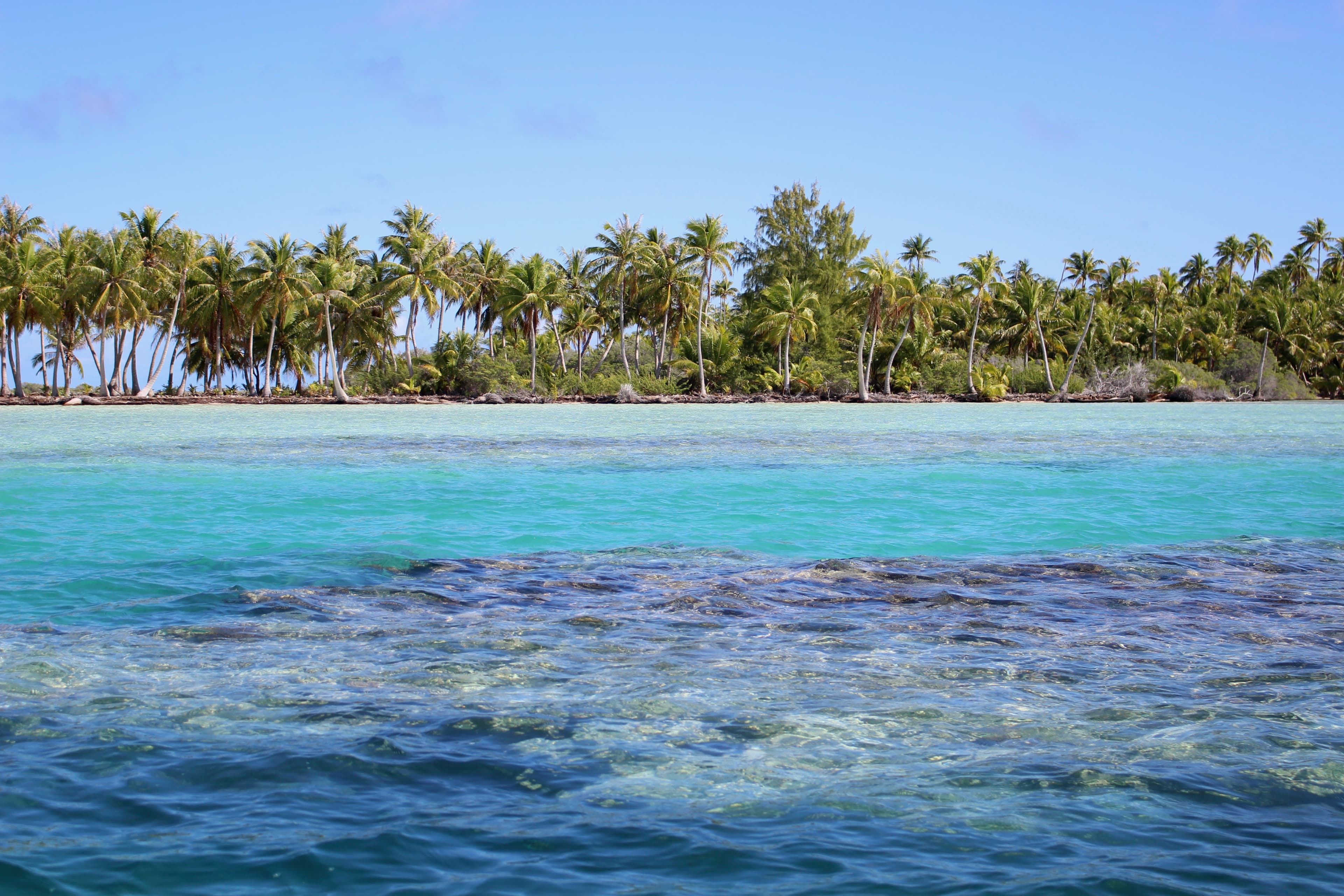
Fakarava is, for seasoned divers, the ultimate marine sanctuary of French Polynesia. This crescent-shaped atoll 60 km long and 25 km wide (1,121 km² lagoon, the second-largest in the Tuamotu archipelago after Rangiroa) is classified UNESCO Biosphere Reserve since 2006, due to the exceptional richness of its marine biodiversity and the preservation of its coral ecosystems. Its population is tiny (850 inhabitants between the villages of Rotoava in the north and Tetamanu in the south), making it one of the most authentic and least touristic destinations in the territory.
Fakarava has two main passes connecting the lagoon to the ocean: the north Garuae pass (at Rotoava village, 1.6 km wide — the widest pass in French Polynesia) and the south Tumakohua pass (60 km south, near the historic village of Tetamanu, 200 m wide). Both offer exceptional diving, but it is the south Tumakohua pass that has built Fakarava's global legend.
The south Tumakohua pass is classified among the three most beautiful dive sites in the world by all international rankings. Its particularity: a 'wall of grey reef sharks' (Carcharhinus amblyrhynchos) — up to 700 individuals observable on a single drop-off during drift dives, the largest permanent gathering of grey reef sharks in the world.
But the absolute event of Fakarava is the camouflage grouper (Epinephelus polyphekadion) spawning aggregation that occurs each year around the full moon of June or July. For 3-5 days, up to 18,000 groupers concentrate in the south pass to spawn — a phenomenon unique in the world. This gathering in turn attracts hundreds of grey reef sharks coming to feed. The phenomenon has been documented by Laurent Ballesta and his team in the film '700 Sharks in the Night' (2019) — one of the global references of contemporary marine documentary.
The south-east point of the atoll shelters the Pink Sands — a rose-orange sand beach of rare beauty, accessible by day boat excursion (€90-150/person). One of the most iconic landscapes of the Tuamotu archipelago.
What we love
- ✅South Tumakohua pass: world top 3 dive sites, wall of grey reef sharks (700 individuals)
- ✅18,000 grouper aggregation in June-July (full moon): unique in the world
- ✅UNESCO Biosphere Reserve since 2006: exceptionally preserved marine life
- ✅Pink Sands in the south-east: unique pink-sand beach in Polynesia
- ✅Ultra-authentic atmosphere, almost deserted atoll outside dive clubs
What to know
- ❌Very limited accommodation: Havaiki Lodge + pensions, advance booking
- ❌Technical dives in strong current in the passes (advanced level recommended)
- ❌Limited supplies (only one shop on the whole atoll)
- ❌Air Tahiti flights less frequent than for Rangiroa
- ❌Long Rotoava-Tetamanu boat-bus journey (1 h 30) if you want to dive the south pass daily
Situation
Où se situe Fakarava ?
Ouvrir la carte en grand sur OpenStreetMap →Frequently asked questions
When can you see the grouper aggregation at Fakarava?+
How many nights should I spend in Fakarava?+
Do you need to be a certified diver for Fakarava?+
Where to stay in Fakarava?+
How do you get to Fakarava?+
What are the Pink Sands of Fakarava?+
Our verdict
Fakarava is the ultimate diver sanctuary in French Polynesia. The south Tumakohua pass, with its wall of grey reef sharks (700 individuals) and the annual gathering of 18,000 groupers, offers one of the most powerful underwater experiences in the world. The UNESCO Biosphere Reserve guarantees an exceptionally preserved marine fauna. The landscapes of the Pink Sands in the south-east and the deserted southern motus are among the most iconic in the Tuamotus. But it is an ultra-niche destination: very limited accommodation, minimalist atmosphere, technical dives in strong current. Plan a minimum of 7-10 days on site (the Rotoava-Tetamanu journey takes a day). Prioritise June-July (grouper aggregation) or May-June/September-October (optimal conditions). Combine Fakarava with Rangiroa and the Society Islands for a signature 14-18 night trip.
Nearby

"Été austral chaud-humide."
Expert on Fakarava · 1 contributions
 Africa & Americas Desk — Mowando·Editor