The French Riviera is a succession of seaside resorts and cultural cities, from the Var to the Italian border. Nice (capital of the Riviera, France's 5th city) offers the Promenade des Anglais, Old Nice and the Liberation Market, the Matisse Museum, Castle Hill, and easy access to Antibes (Picasso Museum, old town), Cannes (Croisette, festival), Èze (medieval village perched at 427 m), Monaco (the Rock, casino, exotic garden). Saint-Paul-de-Vence (Fondation Maeght, one of the most beautiful modern art collections) and Vence (Matisse Rosary Chapel) complete the cultural experience. The beaches from Cannes to Menton are pebbled; sand only at Antibes (Salis beach), Cap d'Antibes, or further on the Saint-Tropez peninsula (Pampelonne beaches).
Marseille (France's 2nd city, capital of French Mediterranean) needs at least 2 days to be appreciated. The Old Port, Notre-Dame de la Garde, MuCEM (Museum of European and Mediterranean Civilisations, architecture Rudy Ricciotti), the Panier district, La Major Cathedral, the fish market on Quai des Belges — the city is discovered on foot. But Marseille's main attraction is the Calanques (National Park since 2012): a white limestone massif plunging into turquoise water, 20 km of protected coastline between Marseille and Cassis. The calanques of Sormiou, Morgiou, En-Vau, Sugiton, are accessible on foot (1-2h hike) or by boat from the Old Port. Land access is regulated in summer (June-September) to preserve the site.
Cassis (15 km east of Marseille), a small fishing port at the foot of Cap Canaille (Europe's highest maritime cape, 394 m), is one of Provence's most beautiful coastal villages. Its AOC Cassis white wines (clairette, marsanne) perfectly accompany the port's seafood.
Aix-en-Provence is the former capital of Provence — water city, art city, student city. Cours Mirabeau lined with plane trees and fountains, Cézanne's studio, Saint-Sauveur Cathedral, Place d'Albertas, the Richelme and Place des Prêcheurs markets (Tuesday, Thursday, Saturday) condense Provençal art-of-living. Aix is an excellent base for exploring the Luberon (30 min), Marseille (30 min) or Cassis (40 min).
Avignon, former capital of the papacy (1309-1377), is dominated by its Palais des Papes (UNESCO), the largest Gothic fortress in Europe. The Avignon Bridge (Pont Saint-Bénézet), the intact ramparts (4 km), Place de l'Horloge, Musée Calvet make the city a major cultural site. The Festival d'Avignon (theatre, July) is the most important French cultural event after Cannes. Nearby: Châteauneuf-du-Pape (vineyards), Pont du Gard (UNESCO Roman aqueduct 25 min away), Orange (UNESCO Roman theatre), Arles (Arena, Saint-Trophime Cathedral, the Alyscamps — all UNESCO).
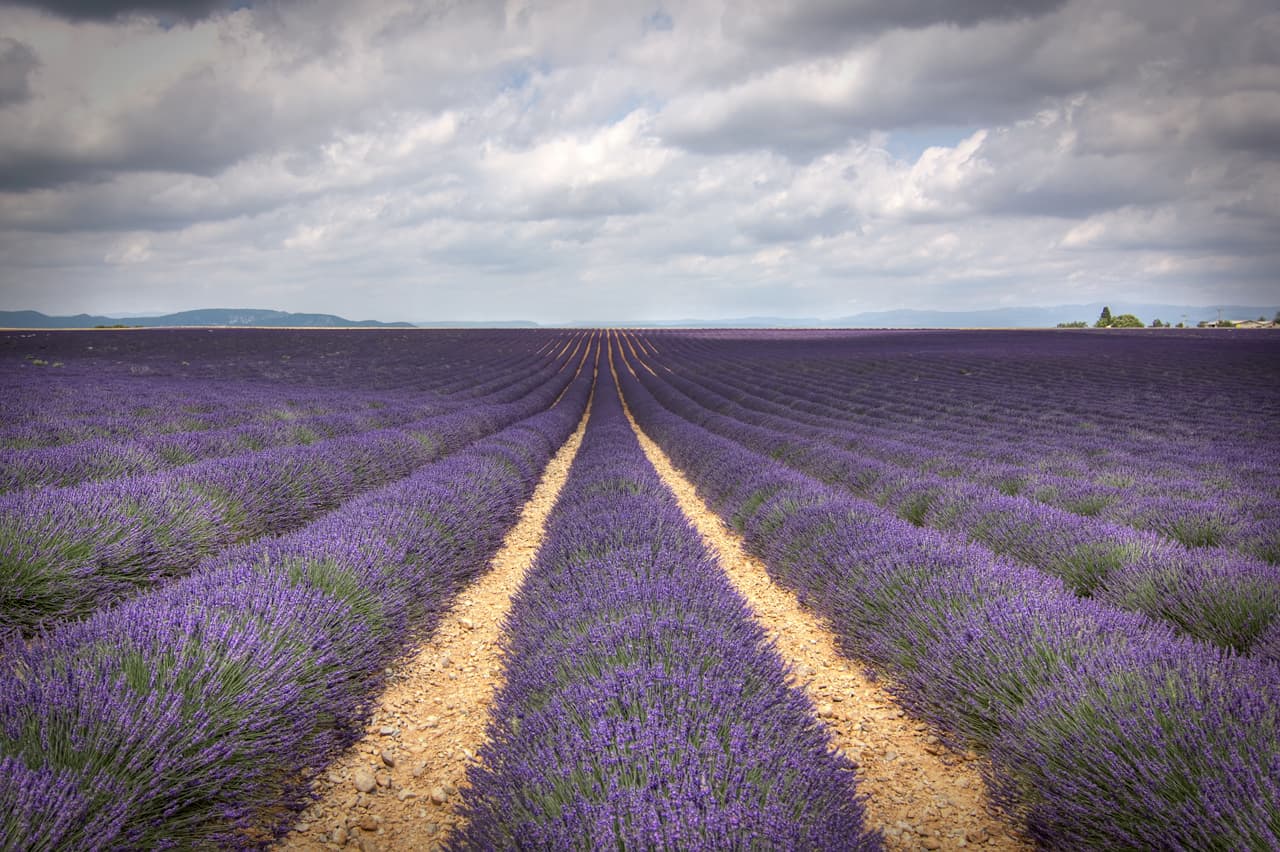
The Provençal hinterland (Luberon, Vaucluse, Upper Var, Alpes-de-Haute-Provence) unfolds a succession of perched villages and emblematic landscapes. The Luberon: Gordes (the most iconic), Roussillon (red ochres), Ménerbes, Bonnieux, Lacoste, Sénanque Abbey (Cistercian, surrounded by lavender). The Gorges du Verdon: Europe's deepest canyon (700 m), for hiking, swimming, canoeing and bungee jumping. Moustiers-Sainte-Marie: village perched at the foot of cliffs, famous for its faience. The Plateau de Valensole: lavender fields as far as the eye can see (bloom mid-June to mid-August).
Finally, the Camargue (Bouches-du-Rhône, on the border of PACA and Occitanie) offers landscapes unique in France: wetlands, Camargue bulls and horses, pink flamingos, salt marshes, manades. Saintes-Maries-de-la-Mer, Aigues-Mortes, the Pont-de-Gau Ornithological Park are the major sites.
Read also
- Nice, capital of the French Riviera — Promenade des Anglais, Old Town, Liberation Market: Mediterranean elegance at its finest.
- Marseille, the Phocaean city — Old Port, Notre-Dame de la Garde, calanques and MuCEM: France's largest Mediterranean city.
- Avignon, city of Popes — UNESCO Palais des Papes and Avignon Bridge: Provence's historic capital.
- France — Complete country guide: entry rules, regions, budget, gastronomy.