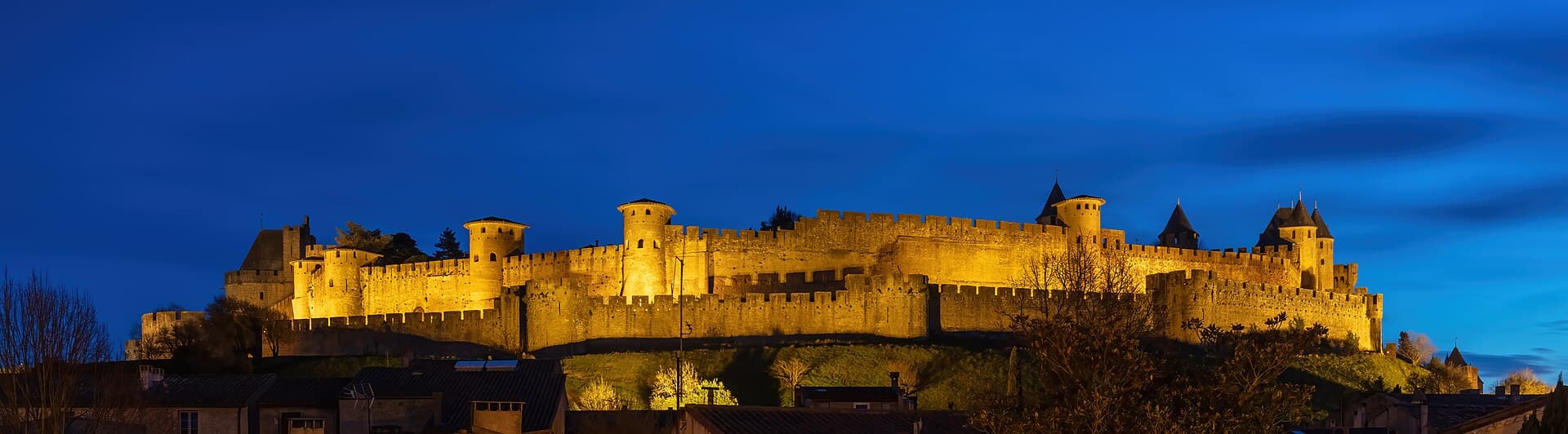
Occitanie is France's 2nd region by area — 72,700 km² combining 220 km of Mediterranean coast, the central Pyrenees, the south of the Massif Central, and the Languedoc and Midi-Pyrenees hinterland. This geographical diversity translates into exceptional tourist wealth: 4 major UNESCO sites (Carcassonne, Pont du Gard, Cévennes, Cirque de Gavarnie), 220,000 hectares of vineyards (France's largest vineyard by area), family beaches and Pyrenean summits over 3,000 m.
For a weekend (3 days), target a sub-region: Toulouse + Carcassonne (3 days culture), or Montpellier + Pont du Gard + Sète (3 days coast + Roman), or Perpignan + Collioure + Eastern Pyrenees. With a week (7 days), combine 2 sub-regions: Toulouse + Carcassonne + Albi + Pyrenees (Midi-Pyrénées), or Montpellier + Pont du Gard + Cévennes + Sète + Collioure (Languedoc-Roussillon). Over 10-14 days, the complete tour of Occitanie becomes possible: Camargue + Mediterranean coast + Carcassonne + Toulouse + central Pyrenees.
The key to a successful stay: choose 2-3 bases and explore in star fashion. Toulouse is the ideal base for the southwest, Montpellier for Languedoc, Perpignan for Roussillon. A car is essential.
Read also
- Carcassonne, Europe's largest medieval city — 3 km of UNESCO ramparts, 52 towers, double wall: the medieval dream restored by Viollet-le-Duc.
- France — Complete country guide: entry rules, regions, budget, gastronomy.
- Provence-Alpes-Côte d'Azur — Provence, Marseille and Riviera just east of Occitanie.
- Nouvelle-Aquitaine — Bordeaux, Basque Country and Pyrenees-Atlantiques west of Occitanie.