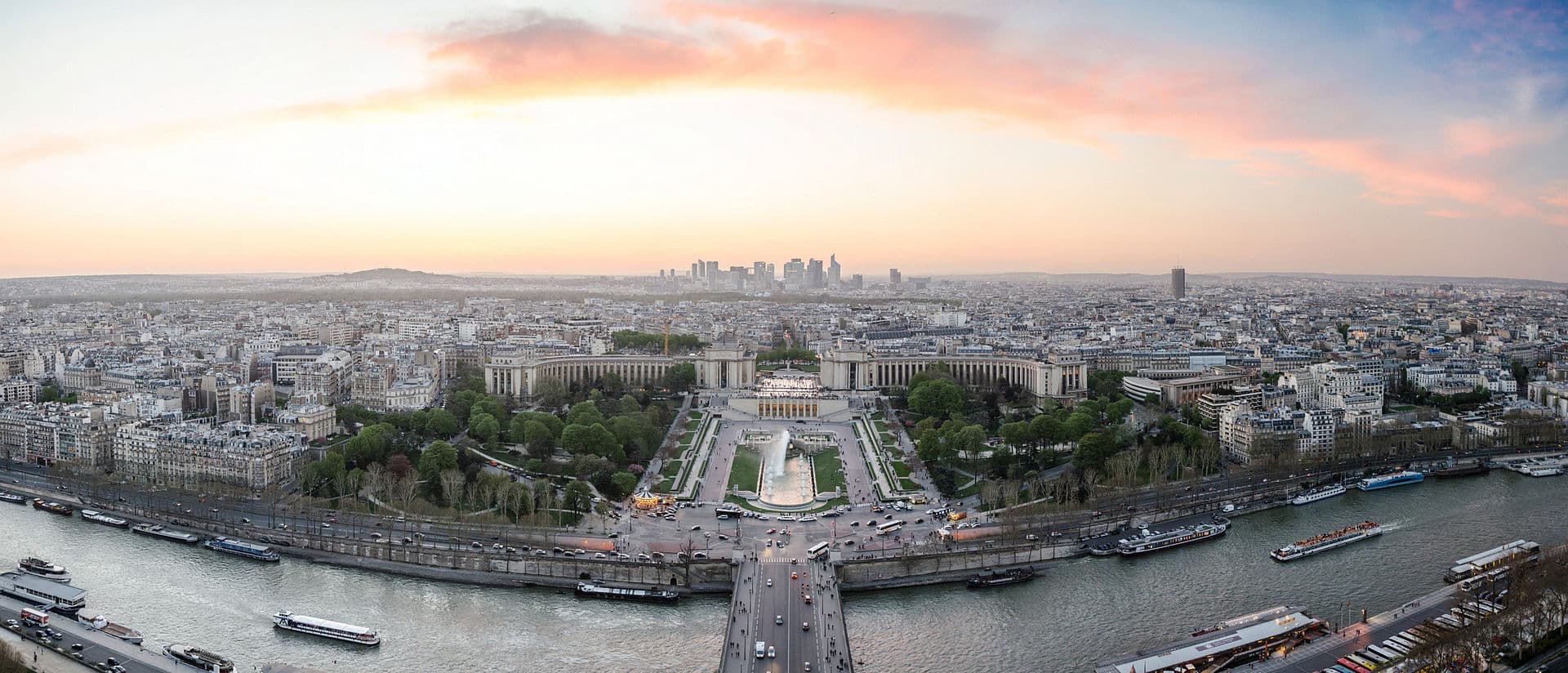
French culture is one of the most influential in the world — France was for centuries the centre of European art, letters, philosophy and fashion. From Chartres Cathedral to Impressionism, from the 18th-century Enlightenment to the 1960s New Wave, France has produced works, ideas and aesthetics that fanned out across the planet. The UNESCO heritage roll lists 53 French sites: historic centres (Paris, Lyon, Strasbourg, Bordeaux, Avignon), monuments (Versailles, Mont-Saint-Michel, Carcassonne, Reims, Chambord), cultural landscapes (Loire Valley, Causses and Cévennes, Champagne).
French museums are among the world's richest. The Louvre, the planet's most-visited museum with nine million annual visitors, houses the Mona Lisa, the Venus de Milo, the Winged Victory of Samothrace and 35,000 exhibited works. The Musée d'Orsay (Impressionism), the Centre Pompidou (modern and contemporary art), the Musée du Quai Branly (non-Western art), the Picasso Museum and the Cité de l'Architecture round out Paris's offer. The provinces line up first-rate museums of their own: Lyon's Musée des Beaux-Arts (France's second collection after the Louvre), the Musée Fabre in Montpellier, the MuCEM in Marseille, the Musée Unterlinden in Colmar (Grünewald's Isenheim Altarpiece).
The French language itself is a cultural artefact — the language of Molière, Voltaire, Hugo, Proust and Camus. The French are attached to their language and appreciate visitor effort: a 'Bonjour' on entering a shop and a 'Merci beaucoup' on leaving open doors no guidebook mentions. English is understood in Paris tourist areas and on the Riviera, but the provinces remain firmly French-speaking and will respond warmly to a few words.
The French cultural calendar is dense: the Festival d'Avignon (theatre, July), the Cannes Film Festival (May), La Folle Journée in Nantes (classical music, January-February), Les Vieilles Charrues in Brittany (music, July), Solidays in Paris (charity festival, June), the Fête de la Musique (21 June nationwide), the Journées du Patrimoine (September, free access to hundreds of normally closed sites). Every village celebrates its patron saint in summer — these ducasses (North), vogues (Lyon area) or férias (Southwest) are authentic windows on local life.
Read also
- Île-de-France: Paris and its royal setting — The world's capital of cultural tourism, the Palace of Versailles and weekend escapes in the Chevreuse Valley.
- Provence-Alpes-Côte d'Azur — Lavender, calanques, the Riviera: Nice, Marseille, Avignon, Saint-Tropez and the hilltop villages.
- Paris, the City of Light — Eiffel Tower, Louvre, Notre-Dame, Montmartre — the French art of living in the world's capital of style.
- Mont-Saint-Michel, wonder of the West — The thousand-year-old abbey between sky and sea, one of France's most-visited sites.
- Bordeaux, the Aquitaine pearl — The UNESCO-listed Port of the Moon, world capital of wine and gateway to the Basque Country.