ville
Saint-Malo
Brittany's most beautiful fortified city: walled ramparts, beaches, archipelago — Saint-Malo combines corsair heritage and Breton seaside art of living.
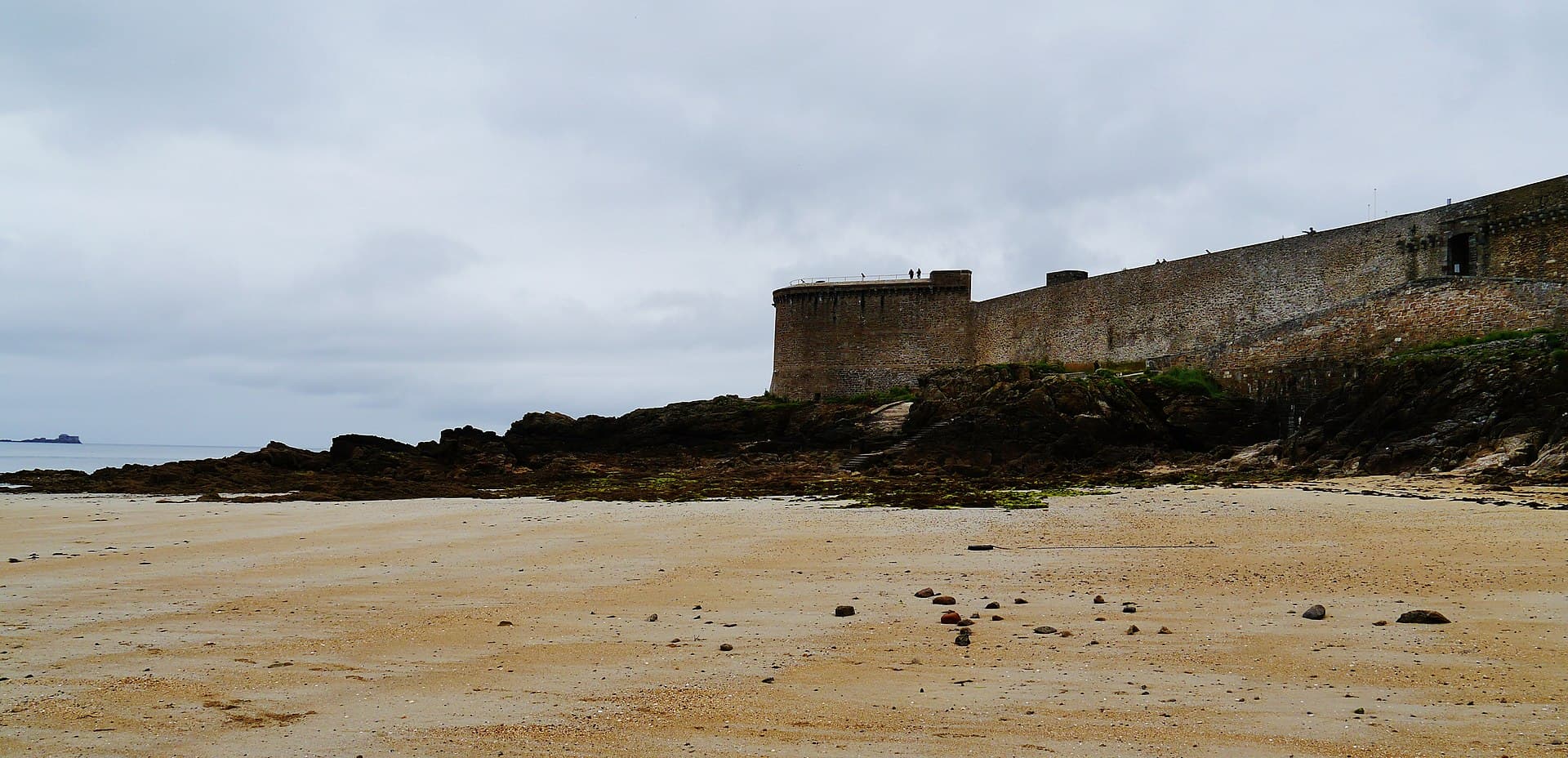
Saint-Malo is one of Brittany's most emblematic cities — a fortified corsair city that wrote French maritime history from the 16th to 18th centuries with its shipowners and navigators (Jacques Cartier, Robert Surcouf, René Duguay-Trouin). Destroyed 80% by Allied bombing in August 1944, the walled town was entirely rebuilt stone by stone in the 1950s-1960s — an exceptional restoration that makes Saint-Malo today one of France's most beautiful fortified cities.
The ramparts walk (1.8 km around the fortifications, free) offers exceptional panoramas over the archipelago: Grand Bé (islet accessible at low tide, sheltering Chateaubriand's tomb, born in Saint-Malo), Petit Bé (Vauban fortifications), National Fort (17th-century citadel built by Vauban). The Saint-Vincent Cathedral (12th-18th centuries, contemporary stained-glass after rebuilding), the Saint-Malo château (city history museum), the cobbled lanes and granite houses make the walled town an open-air museum.
But Saint-Malo is also a popular family seaside resort. The beaches of Sillon (3 km of fine sand facing the bay), Bon-Secours (intra-muros, natural seawater pool at low tide), Éventail, and Pont allow you to combine culture and swimming. 5 km away by boat, Dinard (the "Emerald Coast" opposite) extends the experience with its Belle Époque villas. 12 km away, Cancale (French oyster capital). 50 km away, Mont-Saint-Michel. The Saint-Malo TGV station allows arrival from Paris in 3h.
What we love
- ✅UNESCO walled town: 1.8 km of ramparts, exceptional archipelago panorama
- ✅Quality beaches: Sillon (3 km), Bon-Secours (natural seawater pool)
- ✅Exceptional maritime heritage: history museum, National Fort, Grand Bé (Chateaubriand)
- ✅Accessibility: TGV Paris-Saint-Malo 3h, boat shuttle to Dinard
- ✅Sea gastronomy: Cancale oysters, seafood platters, crêpes
What to know
- ❌Heavy crowds in summer intra-muros
- ❌Intra-muros hotels expensive (€180-300/night in summer) and limited
- ❌Unpredictable Breton weather, frequent rain
- ❌Difficult parking in high season (paid outer car parks)
Situation
Où se situe Saint-Malo ?
Ouvrir la carte en grand sur OpenStreetMap →Frequently asked questions
How do I get to Saint-Malo?+
How many days?+
Sleep intra-muros or outside?+
What to do in Saint-Malo in 1 day?+
Where is Grand Bé?+
When to see spring tides?+
What to eat in Saint-Malo?+
Our verdict
Saint-Malo is one of France's most beautiful fortified cities — exceptional corsair heritage doubled with Breton seaside art of living. The ramparts walk (1.8 km, free) is the essential experience, ideally at sunset. Combine with a day in Cancale (12 km, oyster capital), a visit to Grand Bé at low tide (Chateaubriand's tomb), and a boat trip to Dinard (5 km, Belle Époque). Visit in May-June or September for the best conditions; in summer, sleep outside intra-muros for reasonable prices, or book 3-6 months ahead.
Nearby

"Hiver doux Côte d'Azur, ski Alpes."
Expert on Saint-Malo · 1 contributions
 France Desk — Mowando·Editor