ville
Giza
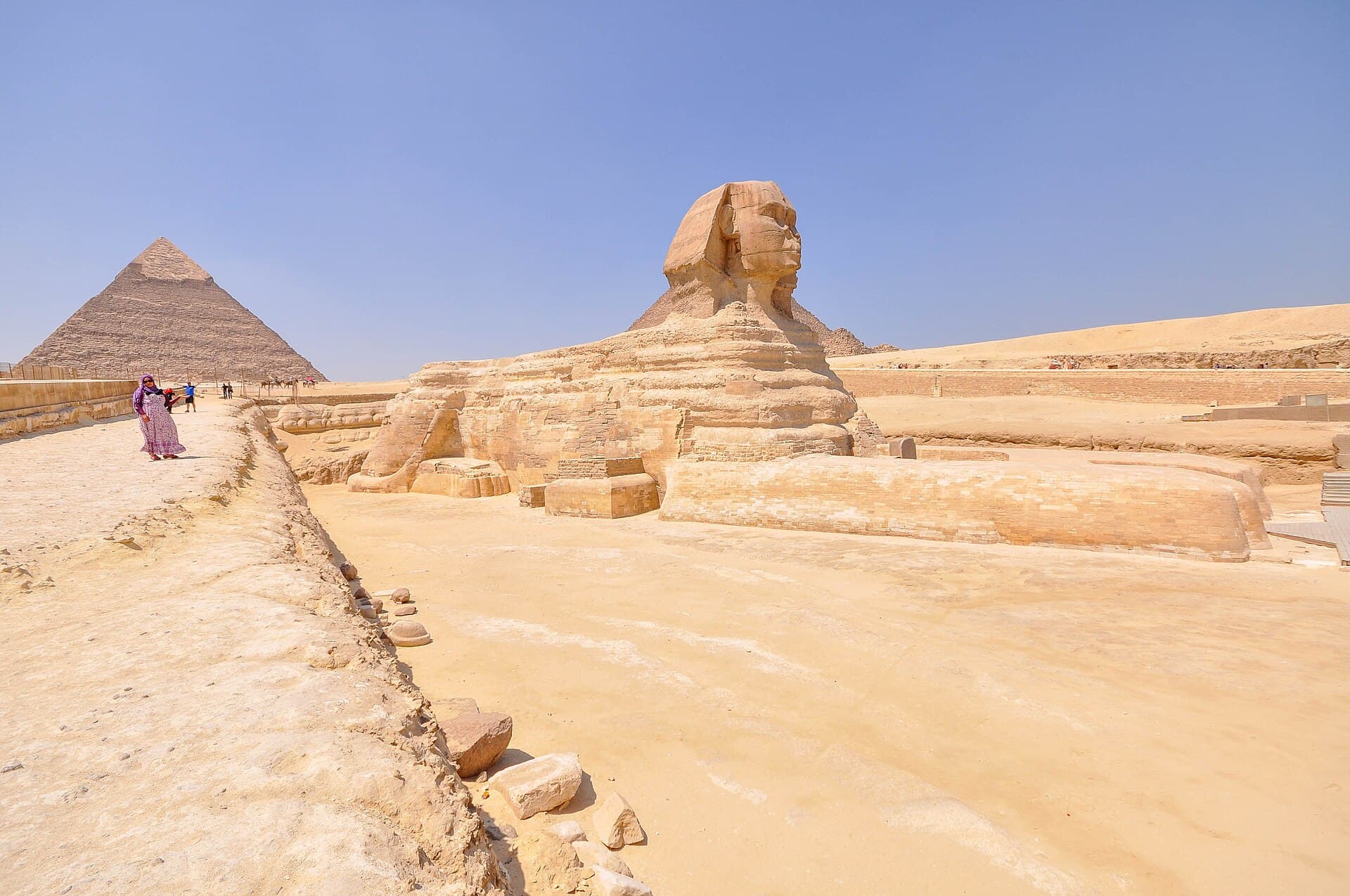
Khufu, Khafre, Menkaure and the Sphinx facing the Grand Egyptian Museum: the world's densest concentration of pharaonic heritage, 20 km from central Cairo.
Giza is probably the most iconic archaeological site in human history. On a desert plateau that once overlooked the Nile delta, three giant pyramids built 4,500 years ago — Khufu (the Great Pyramid, originally 146 m high, the only surviving Wonder of the Ancient World), Khafre (still crowned with its original limestone casing at the apex) and Menkaure (the smallest of the three but often the visitors' favourite for its architectural balance) — sum up by themselves three centuries of Egyptian civilisation under the Old Kingdom. At their feet, the Sphinx, carved from the bedrock, has stood silent guard for forty-five centuries.
Giza is not only an ancient site: since 2024, it is also the home of the Grand Egyptian Museum (GEM), the largest archaeological museum in the world. Two decades in the making and officially inaugurated in 2024 (after several postponements), the GEM brings together in a 92,000 sq m building designed by Heneghan Peng more than 100,000 pieces of pharaonic art, including the entire Tutankhamun treasure (5,400 objects) until now scattered between Cairo and several storerooms. The view from the main atrium frames the pyramids of Khufu and Khafre directly through a monumental window — one of the finest architectural gestures of the 21st century. A visitor who combines the plateau and the GEM achieves in a single day what once required multiple trips across Cairo. Giza is a fragile site, beset by commercial pressure (touts, insistent camel drivers, fake guides), but minimal planning is enough to fully enjoy one of the great moments of any trip to Egypt.
What we love
- ✅Three great pyramids + Sphinx + GEM concentrated in 2 sq km, combined visit possible in 1 day
- ✅Grand Egyptian Museum (GEM) opened in 2024: world's largest archaeological museum
- ✅Complete Tutankhamun treasure (5,400 pieces) now reunited in a single venue
- ✅Evening sound and light show on the plateau, unique atmosphere
- ✅Option of camel or horseback rides in the desert at sunset
What to know
- ❌Intense commercial harassment: touts, camel drivers, very insistent fake guides
- ❌Zero shade on the plateau: unbearable heat from April to October
- ❌Site degraded by mass tourism, occasional litter
- ❌Sharp price hikes since GEM opened (€35 for GEM alone)
Situation
Où se situe Giza ?
Ouvrir la carte en grand sur OpenStreetMap →Frequently asked questions
How long do I need at Giza?+
Can I enter the pyramids?+
Is the Grand Egyptian Museum worth it?+
How do I get to Giza from Cairo?+
Should I hire a guide for Giza?+
How do I avoid scams at Giza?+
Is the sound and light show worth it?+
Our verdict
Giza is unmissable, and the opening of the Grand Egyptian Museum in 2024 has transformed the experience: what used to be a tiring half-day among touts has become a full-day combined visit pairing a major archaeological site with world-class museum design. Our advice: start at the plateau opening (8:00), move to the GEM mid-day to escape the heat, and return for the sound and light show in the evening. Avoid June to August, beware of touts (never follow anyone claiming to be your official guide), and book your GEM tickets online (timed slots). One of the three or four great moments of a traveller's life.
Nearby


"Saison sèche idéale, 22°C journée."
Expert on Giza · 1 contributions
 Africa & Americas Desk — Mowando·Editor