ville
Trinidad
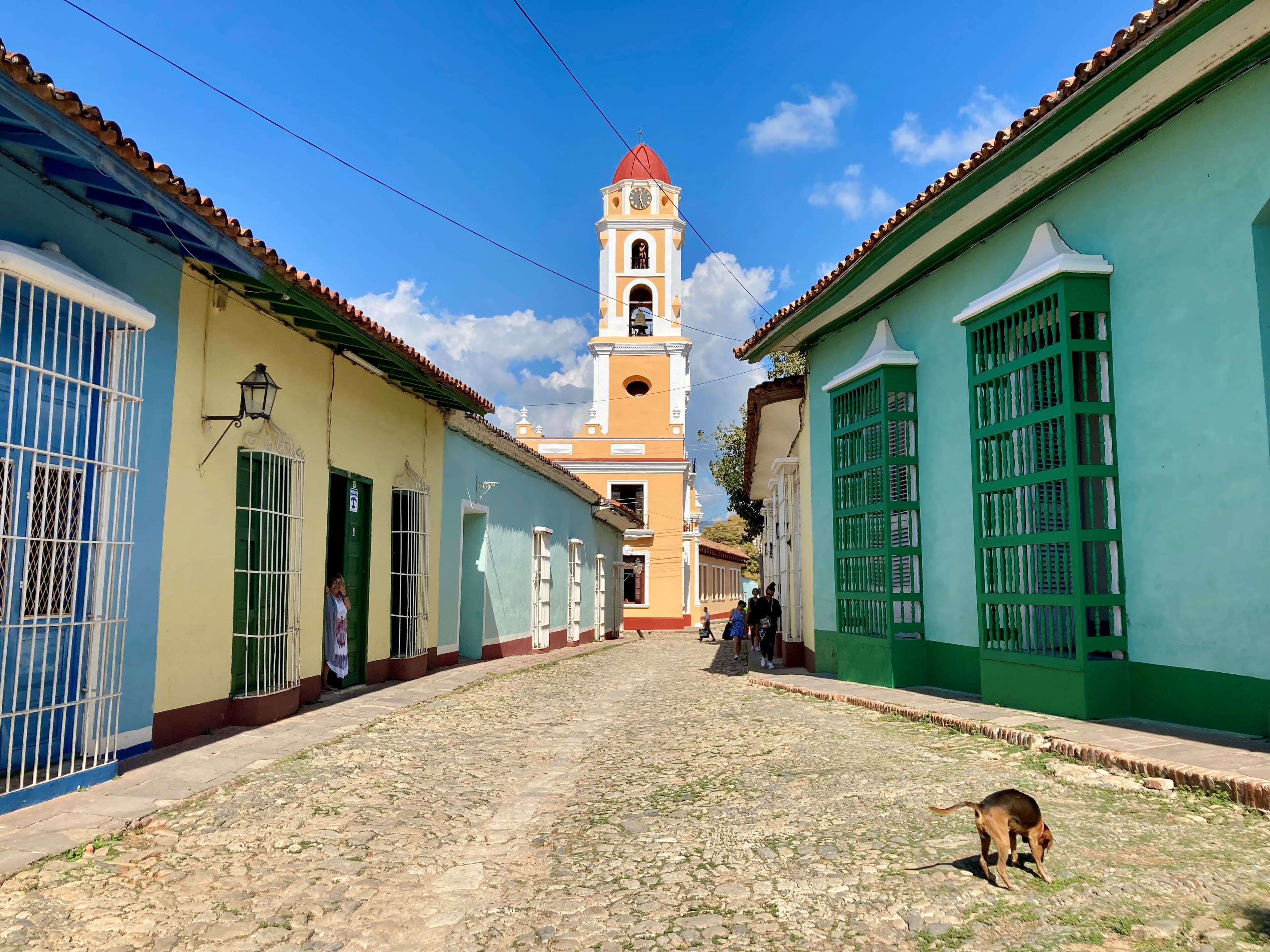
One of the most beautiful colonial towns in Latin America, frozen in 18th-century sugar wealth, where uneven cobbles still ring with salsa every evening.
Trinidad is one of the best-preserved colonial towns in Latin America. Founded in 1514 by Diego Velázquez as one of Cuba's first seven settlements, it prospered in the 18th and early 19th centuries on intensive sugar cultivation in the nearby Valle de los Ingenios (Valley of the Sugar Mills) — becoming Cuba's third-richest city behind Havana and Camagüey. The collapse of the sugar market after the abolition of slavery in 1886 paradoxically preserved Trinidad: the city couldn't afford to modernise its palaces, and the colonial urban ensemble froze in time around 1850.
UNESCO World Heritage-listed since 1988 alongside the Valle de los Ingenios, Trinidad today offers a unique journey back in time: its cobbled streets paved with uneven river pebbles, its pastel façades (yellow, blue, sea-green, pink), its wrought-iron window grilles reaching the ground, its sugar-baron palaces (Palacio Cantero, Palacio Brunet) converted into museums and its peaceful atmosphere make it the leading cultural destination in central Cuba. The Plaza Mayor, the historic heart, holds the parish church, the palaces of the great sugar families and the benches where Trinitarios gather.
At night, Trinidad transforms. The Casa de la Música, on the monumental steps descending from the Plaza Mayor, becomes the stage for nightly salsa orchestras from 10pm — free, open-air, electric atmosphere. The Casa de la Trova, just nearby, alternates son cubano and traditional boleros until 2am. And the Disco Ayala — set in a natural cave outside the town — delivers after midnight one of the most surreal nightlife experiences in Cuba.
What we love
- ✅UNESCO Trinidad: 18th-century colonial ensemble, one of the finest in Latin America
- ✅Casa de la Música every evening: free outdoor live salsa on the Plaza Mayor steps
- ✅Perfect combination of colonial town + paradise Ancón beach (12 km) + Valle de los Ingenios nature
- ✅Outstanding casas particulares, warm Trinitario hospitality
- ✅Peaceful by day, festive by night — the quintessential Cuban balance
What to know
- ❌Growing touristification: central lanes saturated mid-day in high season
- ❌Very uneven cobbles, difficult for wheelchairs and high heels
- ❌No airport — only road access from Havana (5-6h)
- ❌Frequent water and power shortages (as everywhere in Cuba)
Situation
Où se situe Trinidad ?
Ouvrir la carte en grand sur OpenStreetMap →Frequently asked questions
How many days do you need in Trinidad?+
How do you get to Trinidad from Havana?+
Where to stay in Trinidad: casa particular or hotel?+
Is Trinidad really frozen in the 18th century?+
What are the absolute must-sees in Trinidad?+
Our verdict
Trinidad is probably the most beautiful colonial town in Cuba — and one of the finest in Latin America. Its exceptional preservation, its unrivalled nightly music scenes and its rare town + beach + nature combination make it an essential stop on any Cuban trip. Plan three nights minimum: one day for the town (Plaza Mayor, museums, lanes), one for the Ancón beach or Valle de los Ingenios, one to breathe and enjoy evenings at the Casa de la Música. Stay in a casa particular in the historic centre, near the Plaza Mayor — you'll be within salsa range.
Nearby

"Janvier à Trinidad est rêvé : ciel bleu, 27 °C en journée, soirées fraîches sur les escaliers de la Casa de la Música où la salsa tourne jusqu'à minuit."
Expert on Trinidad · 1 contributions
 Africa & Americas Desk — Mowando·Editor