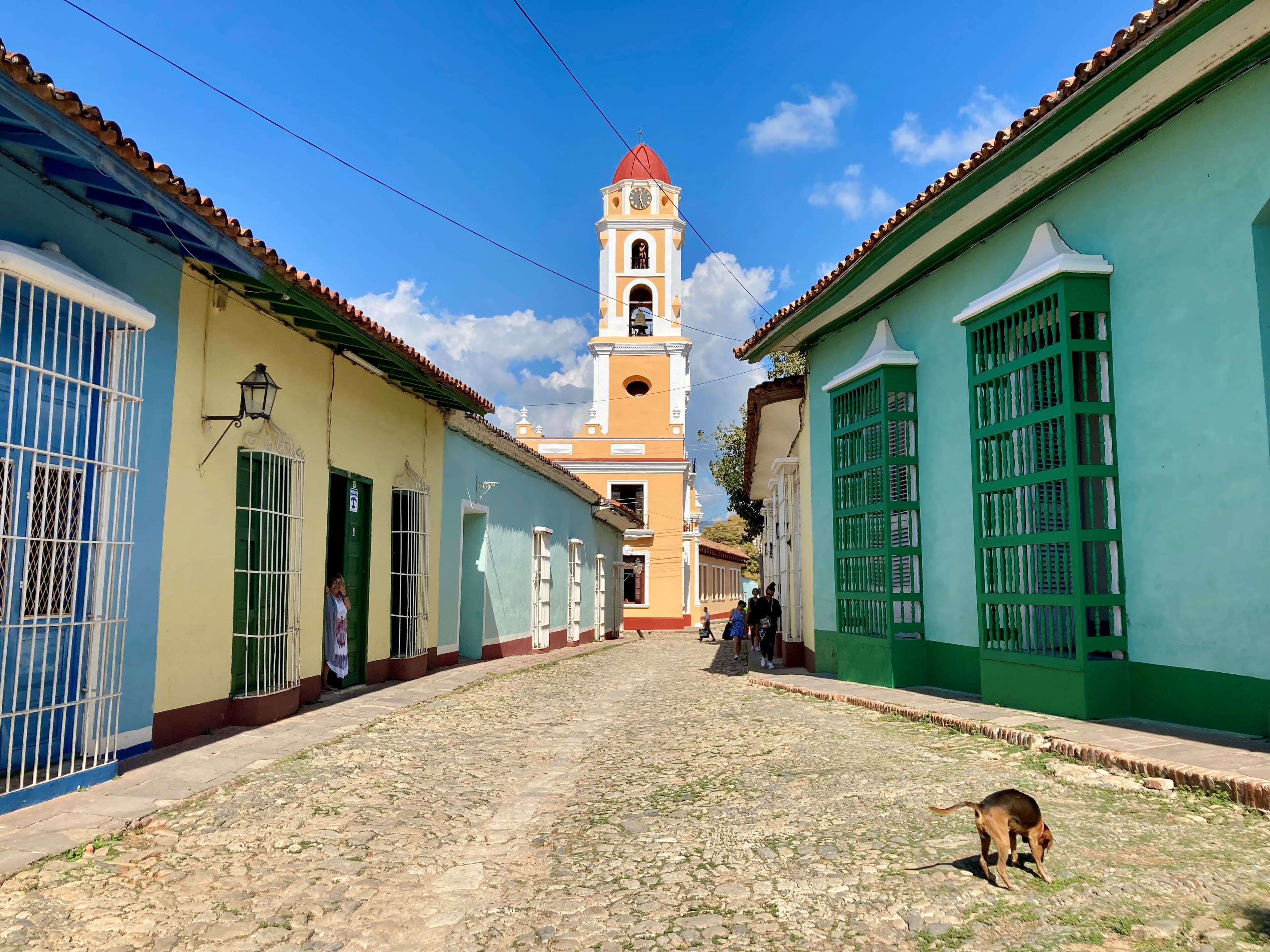
Trinidad unfolds in several sequences. The Plaza Mayor and the colonial museums are the historic core. The parish church of Santísima Trinidad (neoclassical, 19th century, free) houses the Christ of Vera Cruz, a Spanish statue rescued from a shipwreck. The Palacio Cantero (Museo Histórico Municipal, €2, unmissable) — a 19th-century sugar palace with fountain patio — lets you climb the lookout tower for the legendary panoramic view over ochre tile roofs and the turquoise sea beyond. The Palacio Brunet (Museo Romántico, €2) recreates the opulent interior of a Creole aristocratic sugar family. The Museo de Arqueología Guamuhaya and the Museo de Arquitectura Colonial round out the offering for enthusiasts.
Wandering the cobbled lanes is the other great pleasure. Walk without a map through the quarter around Plaza Mayor — Calle Real del Jigüe, Calle Cristo, Calle Maceo — to discover hidden patios, façades in unlikely colours and artisan shops. The craft market on Calle Jesús María offers lace, embroidered linens and local instruments.
Playa Ancón (12 km south) is the essential beach escape. White sand, turquoise water at 27 °C all year, palm trees, paid loungers (€3-5), beach bars with ceviche and mojito. Get there by taxi (€10-15 return with wait) or tourist bus (cube-bus, €2 per ride). Plan at least half a day.
The Valle de los Ingenios (UNESCO-listed with Trinidad) tells the story of the town's sugar wealth. The tourist train (€15-20, 6h round trip) leaves Trinidad and heads into the valley to Manaca Iznaga — a former sugar mill with a 45-metre lookout tower (€1 climb, magnificent view over the plantations). Several former mills (San Isidro, Guáimaro) can be visited.
Topes de Collantes (a nature park 20 km in the Escambray mountains) offers hikes to El Nicho and Salto del Caburní waterfalls (day excursion €30-40, 4x4 required for park access).
In the evening, the Casa de la Música (free outdoors on the Plaza Mayor steps, €1 inside) programmes salsa and son cubano orchestras nightly from 10pm — electric atmosphere, impromptu dance lessons with the Trinitarios. The Casa de la Trova (Calle Echerri, €1) alternates boleros and traditional trova in a more intimate setting. After midnight, the Disco Ayala — set in a natural cave outside town — offers a unique nocturnal experience (€15 all-in entry with taxi transfer from the centre).
Read also
- Central Cuba — Trinidad, Cienfuegos, Santa Clara: the historic and revolutionary heart of Cuba.
- Havana — The Cuban capital: UNESCO Old Havana, the Malecón, late-night salsa.
- Cuba — Complete country guide: visa, currency, regions, best time to visit.
- Santiago de Cuba — Cuba's second city, cradle of the revolution and of son cubano.