parc national
Plitvice Lakes
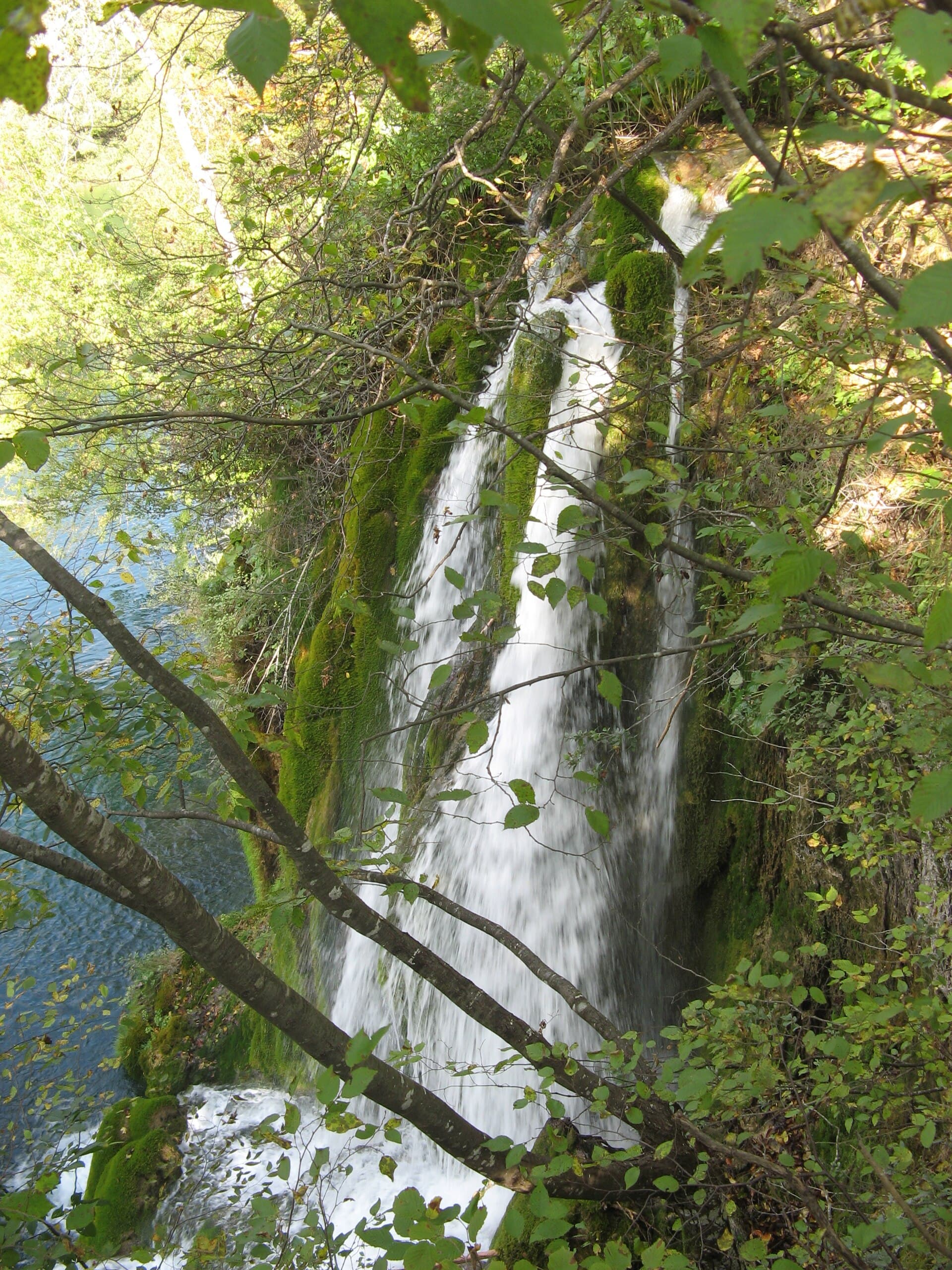
Sixteen terraced lakes along an 8 km canyon, linked by 92 waterfalls that turn the water into a liquid turquoise sculpture — a karst phenomenon found nowhere else in the world.
Plitvice Lakes National Park (Plitvička jezera) is, without question, Croatia's most beautiful natural park and one of Europe's most extraordinary. Inscribed on the UNESCO World Heritage list since 1979 — eight years before Croatian independence, under Tito's Yugoslavia — this 296 km² park protects a unique karst phenomenon: sixteen terraced lakes along 8 km of canyon, linked by 92 waterfalls that turn the water into a liquid sculpture. The lakes split into two groups — the twelve upper lakes (Gornja jezera, upstream) carved into dolomite, and the four lower lakes (Donja jezera, downstream) cut into limestone — for a total drop of 133 metres from the highest (Prošćansko, 636 m) to the lowest (Novakovića Brod, 503 m).
The extraordinary colour of the lakes — turquoise, emerald green, cobalt blue depending on depth, light and angle — results from a fascinating biochemical process. The waters, loaded with calcium carbonate dissolved by the Bijela and Crna rivers, deposit this limestone as they rush over the mosses, algae and bacteria that populate the natural sills. These deposits form travertine barriers (porous, fragile limestone) that grow on average 1 cm per year — continuously creating new waterfalls and erasing old ones. Plitvice is one of the few places in the world where you can watch this phenomenon in real time.
The wildlife in the park is remarkable. Lika, the forested region surrounding Plitvice, shelters one of Western Europe's last populations of brown bears (60-80 individuals in the park and its surroundings), along with wolves (rare but present), Eurasian lynx (reintroduced in the 1970s), wild boar, deer, chamois and more than 126 bird species (golden eagles, tawny owls, black woodpeckers). Spotting them remains difficult — animals flee the busy trails — but enthusiasts can organise guided dusk outings. The park is explored via a network of wooden walkways (18 km in total) that line or span the waterfalls, along with silent electric boats that cross the largest lakes (notably Kozjak, the deepest at 47 m).
What we love
- ✅Site UNESCO d'une beauté exceptionnelle : 16 lacs turquoise, 92 cascades, paysage unique au monde
- ✅Réseau de 18 km de passerelles en bois très bien aménagées, accessible à tous niveaux
- ✅Faune préservée : ours bruns, loups, lynx, 126 espèces d'oiseaux
- ✅Accessible depuis Zagreb (2h) et Zadar (1h30) — combinable avec un voyage en Dalmatie
- ✅Plus beau en automne (couleurs des forêts) et au printemps (cascades au débit maximal)
What to know
- ❌Saturation extrême en juillet-août : jusqu'à 15 000 visiteurs/jour, files d'1h aux entrées
- ❌Prix d'entrée en haute saison élevés : 40 €/adulte en juillet-août (vs 23,90 € hors saison)
- ❌Baignade strictement interdite dans tous les lacs (préservation du travertin)
- ❌Logistique : hébergement limité sur place, prévoir voiture ou bus + entrée matinale impérative
Situation
Où se situe Plitvice Lakes ?
Ouvrir la carte en grand sur OpenStreetMap →Frequently asked questions
How long should I plan to visit Plitvice?+
How much is the entrance fee?+
Can you swim in Plitvice's lakes?+
How do I get to Plitvice from Zagreb or Split?+
Should I stay overnight at Plitvice or do a day trip?+
Plitvice or Krka: which to choose?+
Our verdict
Plitvice Lakes National Park is one of Europe's most spectacular natural sites — perhaps the world's most beautiful karst park. The sixteen terraced turquoise lakes, the 92 waterfalls, the network of wooden walkways that lets you approach every fall, the primary forest wrapping around it all: everything is exceptional. The one real constraint is summer saturation — up to 15,000 visitors/day in July-August, with walkways at times as packed as a metro carriage. Visit in April, May, September or October, arrive at opening (7am in high season, 8am off-season), and stick to itinerary H (4-6 hours, covers the essentials) or C (6-8 hours, full circuit). Sleep in Mukinje or Plitvička Selo (right at the entrance) to enjoy the first hour of opening in near-solitude. A site to see at least once in a lifetime.
Nearby

"Très calme, hôtels fermés sur les îles."
Expert on Plitvice Lakes · 1 contributions
 Mediterranean Desk — Mowando·Editor