parc national
Yala
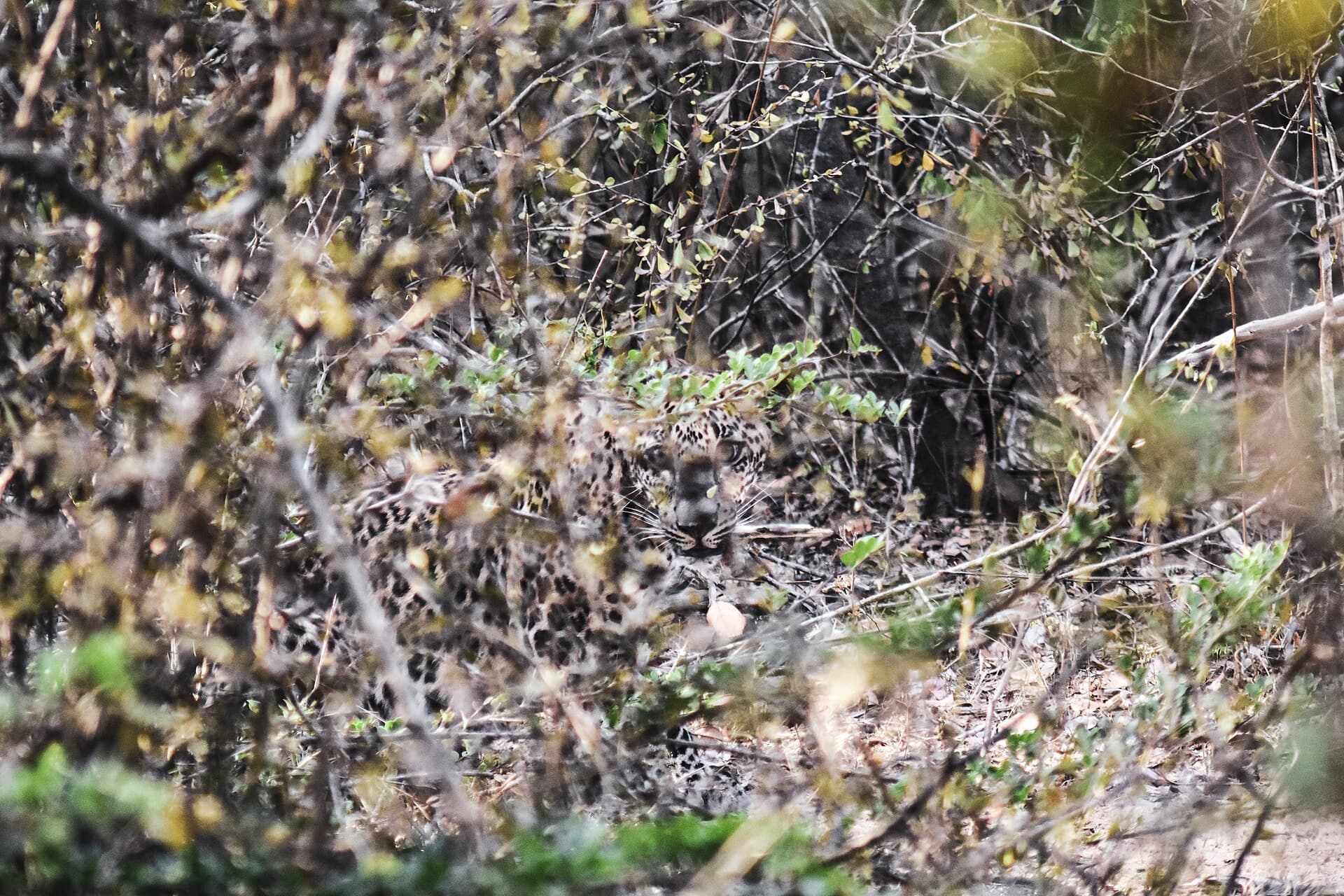
The world's highest leopard density — 1 leopard per km² in Block 1 — makes Yala one of the planet's three best spots to observe this elusive big cat.
Yala National Park is Sri Lanka's most famous and most visited national park. Created in 1900 as a royal hunting reserve then turned into a national park in 1938, it covers 979 km² of dry jungle in the island's southeast, between the Indian Ocean and the foothills of the central mountains. Yala is divided into five administrative blocks, of which only Block 1 (140 km²) is massively open to tourism — it's also the richest in wildlife, and by far the best for spotting the legendary Ceylon leopard.
The leopard density at Yala Block 1 is exceptional: according to surveys by the Sri Lanka Wildlife Conservation Society, there are approximately 1 leopard per km² in this zone, the highest known density in the world for this species (compared to 0.1 leopards/km² in Tanzania's Serengeti). This concentration is explained by several factors: abundance of prey (deer, wild boar, langurs), absence of competing predators (no lions, no tigers, no hyenas), and territory fragmentation into well-defined zones. Yala's leopards (subspecies Panthera pardus kotiya, endemic to Sri Lanka) are also exceptionally large — 30% heavier than their Indian cousins — and surprisingly unfazed by humans: they tolerate jeeps at 10-15 metres, making sightings particularly spectacular. The success rate for seeing a leopard on two Block 1 safaris is 60-70% in high dry season (February to June).
But Yala is not just a leopard park. It also hosts around a hundred Asian elephants (often in family herds, particularly visible at water holes in dry season), marsh crocodiles (one of Asia's largest reptiles), sloth bears (rare but present), wild water buffalo, sambar deer, spotted deer, mongooses, and more than 215 bird species — including some twenty endemic species. Safaris are exclusively in open 4x4 jeeps with a local driver-guide, on a network of drivable tracks; getting out of vehicles is forbidden except in rare designated areas. Morning trips (5-9 am) and late afternoon trips (3-6 pm) are the most productive — wildlife is more active in cool hours. The park closes to visitors at 6 pm.
What we love
- ✅World's highest leopard density in Block 1: 1 leopard/km², 60-70% sighting rate
- ✅Diverse wildlife: elephants, sloth bears, buffalo, crocodiles, 215+ bird species
- ✅Open 4x4 safari with local guide — immersive and accessible experience
- ✅Natural combination with south coast (Tissamaharama 25 km, Mirissa 130 km)
- ✅Quality lodges and tented camps (Wild Coast Tented Lodge, Cinnamon Wild Yala, Jetwing Yala)
What to know
- ❌Block 1 saturated in high season: up to 200 jeeps/day, traffic jams around leopard sightings
- ❌Intense heat in March-May (32-36 °C), uncomfortable in open 4x4s
- ❌Annual closure of Block 1 in September (maintenance) — check dates before booking
- ❌Questionable practices from some guides (chasing to corner leopards)
Situation
Où se situe Yala ?
Ouvrir la carte en grand sur OpenStreetMap →Frequently asked questions
How much does a Yala safari cost?+
When is the best time for a Yala safari?+
Will I really see a leopard?+
Where should I stay near Yala?+
How do I get to Yala from Ella or Mirissa?+
How many days should I plan at Yala?+
How do I choose a responsible safari operator?+
Our verdict
Yala is Sri Lanka's must-visit national park for wildlife enthusiasts, particularly for those dreaming of seeing a leopard in its natural habitat. The exceptional success rate (60-70% on 2 safaris in Block 1) more than justifies the detour, despite the sometimes excessive crowds. Our advice: plan 2 nights in a good lodge near the park (Wild Coast Tented Lodge — the most immersive experience, Cinnamon Wild Yala — good value), with 2 safaris in Block 1 (morning 5-9 am and evening 3-6 pm). Choose a respectful operator that doesn't chase animals (Leopard Trails, Mahoora Tented Safaris). Avoid September (Block 1 closed). Combine naturally with Ella (3 hours north) or the south coast (Mirissa 3 hours west).
Nearby

"Pic touristique haute saison, mer calme sud."
Expert on Yala · 1 contributions
 South-East Asia Desk — Mowando·Editor