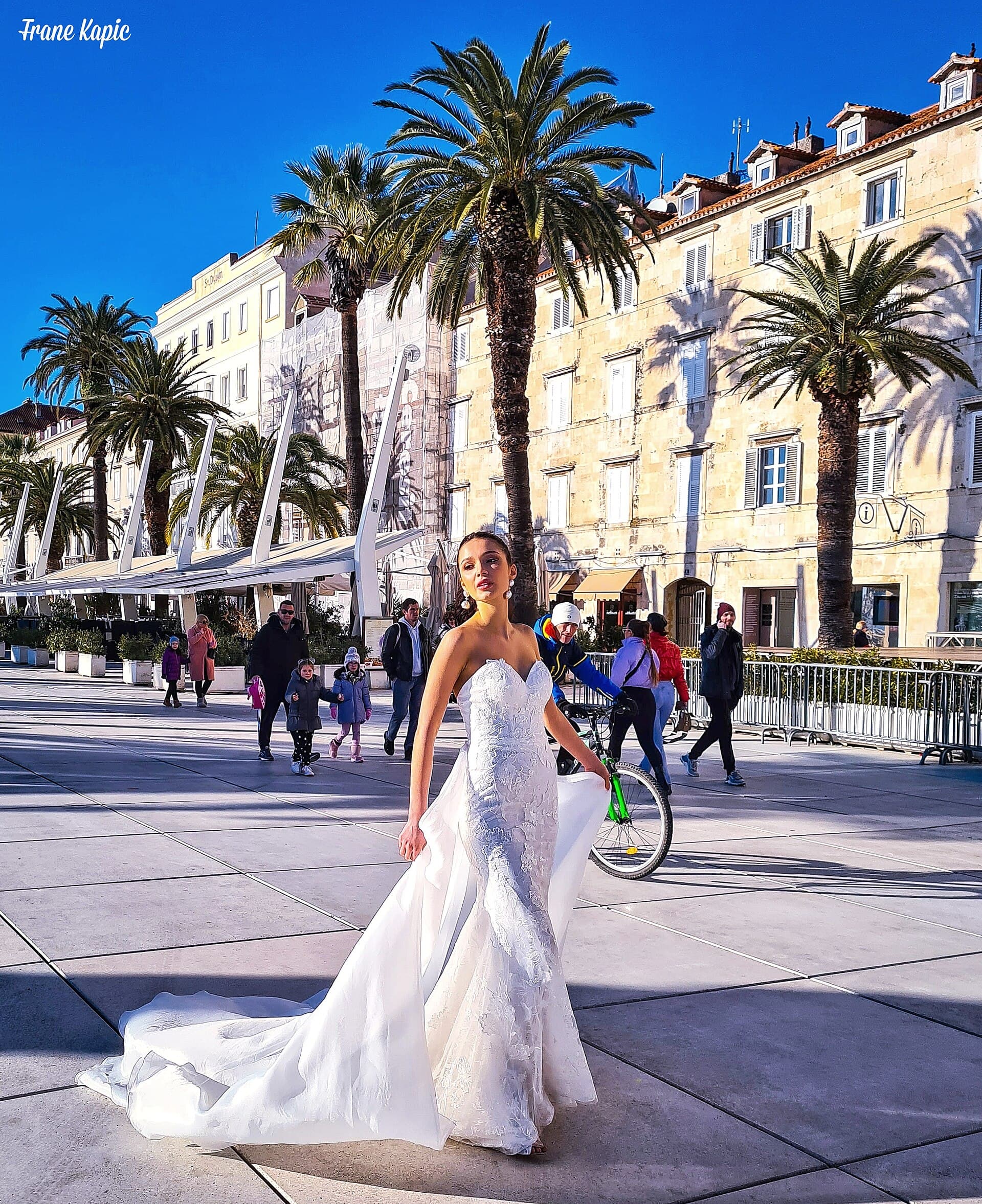
Central Dalmatia enjoys the sunniest climate in Croatia: Split records more than 2,800 hours of sunshine a year, one of the highest figures in continental Europe. The tourist season stretches from late April to late October, with marked intensification between mid-June and early September.
May and June are exceptional months for heritage and hiking. Temperatures in Split are perfect (20-26 °C), Hvar sees its lavender fields explode in bloom toward the end of June, and the sea begins to warm to 22-23 °C in June. The walls of Trogir and the climbs of Vidova Gora on Brač are done in ideal conditions. Hotel rates are 30 to 50% lower than in July-August and ferries run at full frequency from 15 May.
July and August are the months of full beach and festive season. The sea is 25-27 °C, the atmosphere is explosive in Hvar Town (clubs, yachts, international events) and the Zlatni Rat beach on Brač is packed. But the influx brings saturation: Split inside the walls can be stifling in the middle of the day, car ferries must be booked weeks in advance, and hotel prices explode. If you come in summer, prefer accommodations outside the palace in Split (Bačvice, Veli Varoš) and choose Stari Grad or Jelsa rather than Hvar Town for tranquillity.
September is probably the best overall month. The sea is still 24-26 °C, temperatures (24-28 °C) are ideal to combine culture and swimming, the crowd thins after 10 September, harvests begin on Hvar, Brač and Vis, and prices drop quickly. It is the preferred window of seasoned travellers.
October remains pleasant for culture (16-22 °C, sea still 21-23 °C) but connections to the smaller islands thin from mid-October. Hvar Town becomes almost deserted after 15. For dry heritage, Split, Trogir and Salona remain superb.
Winter (November to March) is very calm. Split keeps its local life and historic charm, rentals are cheap and restaurants retain a pleasant local crowd. But ferry connections to Vis and Šolta are reduced to a minimum (1-2 per day), many island hotels close, and the bora can disrupt crossings for several consecutive days.
Read also
- Southern Dalmatia — Dubrovnik UNESCO, the Elaphiti Islands, Mljet and Korčula: the Pearl of the Adriatic.
- Northern Dalmatia — Zadar, Šibenik, Plitvice and the Kornati: the wild coast and national parks.
- Croatia — Complete country guide: visa, budget, regions to explore and best time to visit.
- Istria — Roman Pula, Venetian Rovinj, hilltop villages and white truffles.